
🖥️ Dell R960 vs HPE DL560 Gen11 vs Lenovo SR860 V3
AI-powered analysis across 23 matched specifications


Performance Overview
Scores based on quantifiable specification values (1-10 scale)
Detailed Specifications
| Specification | Dell PowerEdge R960 Dell PowerEdge | HPE ProLiant DL560 Gen11 HPE ProLiant | ThinkSystem SR860 V3 Lenovo ThinkSystem |
|---|---|---|---|
| Key Metrics | |||
| Form Factor | 4U rack-mountable, 4-socket (4P) | 2U rack-mountable, 4-socket (4P) | 4U Rack Server |
| Max Total Cores | 240 (4 × 60-core processor) | 240 (4 × 60-core processor) | 240 (Max cores (4P x 60)) |
| Max Memory | 16 TB at 4800 MT/s | 16 TB (64 × 256 GB) at 4800 MT/s | Up to 16 TB TruDDR5 4800 MHz |
| PCIe Expansion Slots | 12 × x16 PCIe Gen5 | Up to 6 × PCIe Gen5 + 2 OCP 3.0 | Up to 18× PCIe (12× Gen5 + 4× Gen4, or 18× Gen4) + 2× OCP 3.0 |
| Compute | |||
| Processor | Up to four 4th Gen Intel Xeon Scalable, up to 60 cores per processor, with optional Intel QAT | 2 or 4 × 4th Gen Intel Xeon Scalable, 8–60 cores, up to 112.5 MB L3 cache | 2 or 4× 4th Gen Intel Xeon Scalable (LGA 4677), up to 60 cores, 350W TDP |
| Processor TDP | -- | -- | 350W TDP |
| Acceleration | Intel QAT | -- | -- |
| Memory | |||
| Memory | DDR5 RDIMM (Registered ECC) / 64 DIMM slots (16 per processor socket) / 16 TB at 4800 MT/s | HPE DDR5 SmartMemory RDIMM / 64 DIMM slots (16 per processor socket) / 16 TB (64 × 256 GB) at 4800 MT/s | Up to 16 TB TruDDR5 4800 MHz (64 DIMM slots; 3DS RDIMM to 256 GB) |
| Storage | |||
| Storage Options | 8/16/24 × 2.5" NVMe (max 368.64 TB); 32 × 2.5" SAS/SATA (max 491.52 TB); 16 × EDSFF E3.S Gen5 NVMe; mixed NVMe + SAS configs | 8, 16, or 24 × 2.5" SFF (SAS/SATA/NVMe); or 12 × E3.S EDSFF NVMe | Up to 48× 2.5" hot-swap (SAS/SATA/NVMe); 2× 7mm or M.2 boot drives; Up to 24 NVMe direct-connect drives for low-latency I/O |
| RAID Controllers | PERC H965i, PERC H755, PERC H355, HBA355i; BOSS-N1 boot | HPE MR416i-p, MR416i-o, MR408i-o, SR932i-p, SR416i-o, MR216i-p, MR216i-o, SR308i-p/o | -- |
| Boot Devices | BOSS-N1 boot | -- | 2× 7mm or M.2 boot drives |
| Networking | |||
| Network | Optional 2 × 1GbE LOM + OCP 3.0 | 1GbE to 200GbE via OCP 3.0 or PCIe adapter | Two OCP 3.0 slots for 1/10/25/100GbE networking |
| GPU / Accelerators | |||
| GPU Support | Up to 4 × 400W double-wide PCIe GPU | Up to 6 single-wide or 2 double-wide; supports NVIDIA H100 80GB PCIe, L40 48GB PCIe (≤10.5") | Up to 4× double-wide 350W or 8× single-wide 75W GPUs |
| Expansion / PCIe | |||
| PCIe Expansion | 12 × x16 PCIe Gen5 (6 FH full-length DW capable, 4 LP, 2 FH HL) | Up to 6 × PCIe Gen5 (primary + secondary risers) + 2 OCP 3.0 | Up to 18× PCIe (12× Gen5 + 4× Gen4, or 18× Gen4) + 2× OCP 3.0 |
| OCP Slots | OCP 3.0 | 2 OCP 3.0 | 2× OCP 3.0 |
| Management | |||
| Management | iDRAC9 (Redfish API, Direct, Quick Sync 2), OpenManage Enterprise | HPE iLO 6, HPE OneView Standard (download), HPE GreenLake Compute Ops Management | XClarity Controller 2 (XCC2), Redfish; XClarity Administrator |
| Power | |||
| Power Supply | 1100W Titanium / 1400W Platinum / 1800W Titanium / 2400W Platinum / 2800W Titanium; hot-swap redundant | 800W / 1000W / 1600W / 2200W Flex Slot; 1+1, 2+2, 3+1, or 4+0 redundancy | Up to 4× Platinum or Titanium hot-swap; N+N redundancy |
| Physical / Environmental | |||
| Cooling | Air (up to 6 dual-fan hot-plug fan sets); optional DLC | Air (hot-plug redundant fans, standard/performance); liquid cooling solution option | -- |
| Dimensions | 174.3 × 482 × 869 mm (6.86 × 18.97 × 34.22 in without bezel) | 43.31 × 80.66 × 8.75 cm (17.05 × 31.76 × 3.44 in) | -- |
| Weight | Max 60.20 kg (132.71 lb) | Max air config: 38.02 kg (83.82 lb); max liquid config: 36.93 kg (81.42 lb) | -- |
| Security | |||
| Security | Silicon Root of Trust, SCV, MFA, TPM 2.0, Secure Boot, Signed firmware, Secure Erase | -- | TPM 2.0, Root of Trust, PFR, ThinkShield, Chassis Intrusion Switch |
| Software & OS Compatibility | |||
| Operating Systems | Windows Server, RHEL, SLES, Ubuntu, VMware ESXi | Windows Server, VMware ESXi, RHEL, SLES, Ubuntu, Oracle Linux, Citrix, IBM AIX | -- |
| Warranty & Support | |||
| Warranty | 3-year ProSupport (varies by configuration) | 3/3/3 (3-year parts, 3-year labour, 3-year on-site) | 1- or 3-year CRU + Onsite NBD; optional mission-critical upgrades |
Expert Analysis
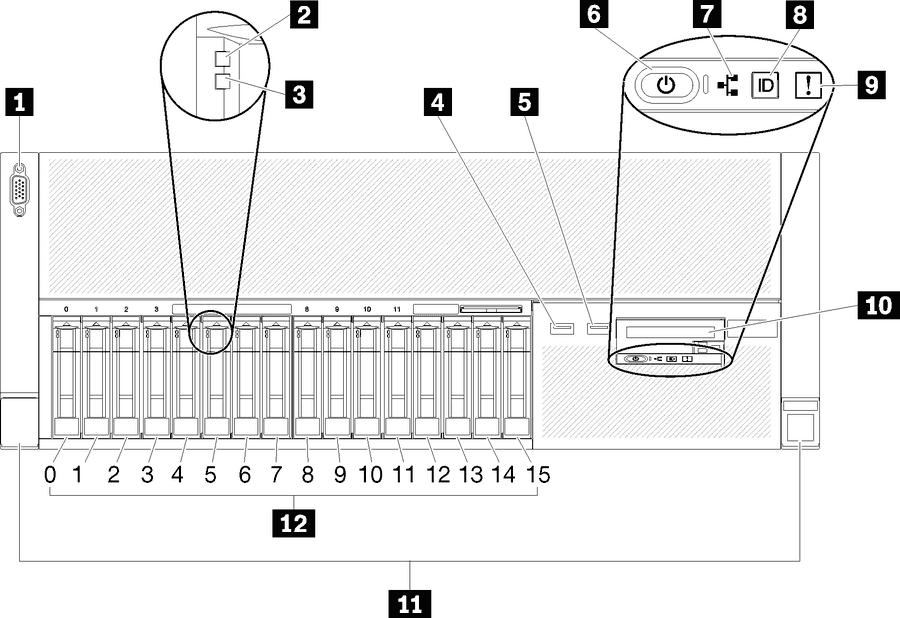
These three four-socket servers represent the pinnacle of enterprise compute density, each offering 240 cores and 16TB of DDR5 memory, but they diverge significantly in their architectural approaches. The Dell PowerEdge R960 and Lenovo ThinkSystem SR860 V3 utilise a 4U chassis, providing superior thermal headroom and expansion capacity. The Dell excels with its 12 PCIe Gen5 slots and support for four 400W GPUs, making it particularly well-suited for AI training and high-performance computing workloads where both CPU and GPU density are critical. Its optional Intel QAT acceleration further enhances its value for data-intensive applications requiring hardware encryption and compression. The Lenovo distinguishes itself with an exceptional 48 drive bays and up to 24 direct-connect NVMe drives, offering unparalleled storage density and low-latency I/O for database, analytics, and virtualisation workloads.
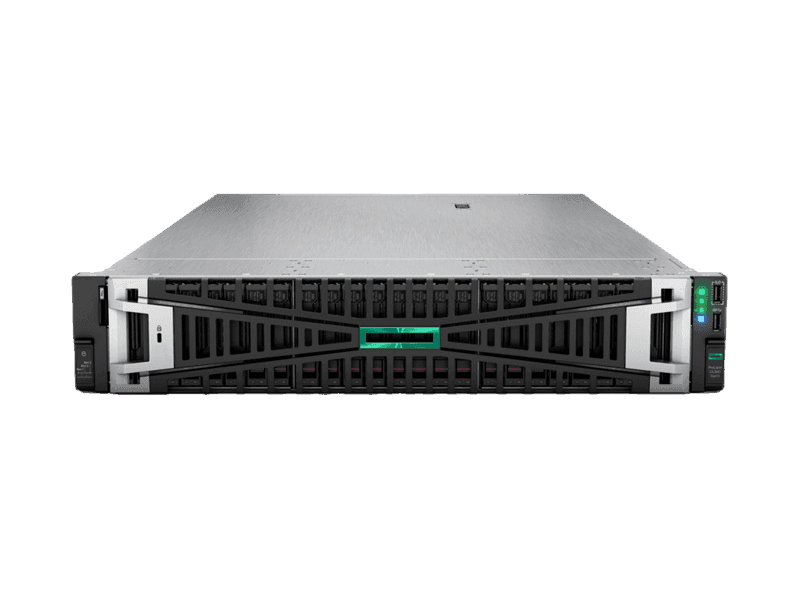
The HPE ProLiant DL560 Gen11 takes a different approach by packing the same core and memory capacity into a 2U form factor, achieving remarkable rack density for consolidation scenarios. While its six PCIe Gen5 slots and two OCP 3.0 slots provide solid expansion, it trails the others in maximum GPU and storage capacity. However, its support for liquid cooling and comprehensive HPE management ecosystem, including GreenLake integration, makes it compelling for modern data centre deployments prioritising density and operational efficiency. The HPE's networking flexibility, supporting up to 200GbE, gives it an edge in high-throughput environments.
Value propositions differ significantly: the Dell offers balanced expansion with strong GPU support; the Lenovo provides unmatched storage density and expansion flexibility; while the HPE delivers maximum rack density with enterprise management integration. Organisations should prioritise the Dell for GPU-intensive AI workloads, the Lenovo for storage-heavy database and virtualisation environments, and the HPE for high-density consolidation where rack space is at a premium.
Ready to proceed?
Want to compare different products or add more to this comparison?
Open Interactive Comparison Tool →