💾 Dell PowerStore 9200T vs NetApp AFF A1K vs Pure FlashArray//XL
AI-powered analysis across 19 matched specifications


Performance Overview
Scores based on quantifiable specification values (1-10 scale)
Detailed Specifications
| Specification | Dell PowerStore 9200T Dell Storage | AFF A1K NetApp | FlashArray//XL Pure Storage |
|---|---|---|---|
| Key Metrics | |||
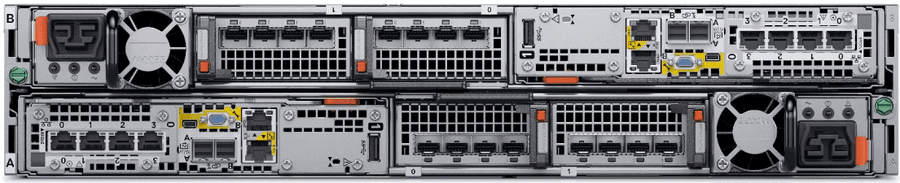
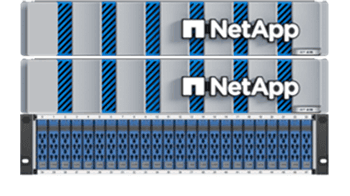
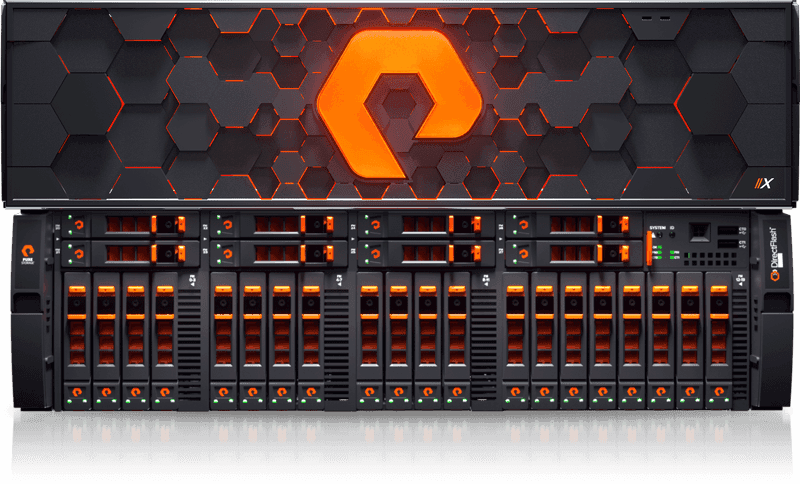
| Form Factor | 2U rack-mountable | Dual 2U chassis HA pair (modular) | 5U chassis (base); 5–11U with DirectFlash Shelf |
| Maximum Effective Capacity | 5.90 PBe per appliance / 23.60 PBe per cluster (4-node) | NAS: 176.3 PB (24-node); SAN: 88.1 PB (6-node) | Up to 9.4 PB (XL190 R5) / 7.4 PB (XL170 R5) / 5.5 PB (XL130 R5) |
| Maximum Raw Capacity | -- | 14.7 PB per HA pair | Up to 2.5 PB (XL190 R5) / 1.97 PB (XL170 R5) / 1.46 PB (XL130 R5) |
| Maximum Volumes | 32,000 | -- | -- |
| Maximum Snapshots | 350,000 | -- | -- |
| Data Reduction Guarantee/Average | 5:1 guaranteed | -- | 5:1 average (dedup + compression + pattern removal); up to 10:1 with thin provisioning |
| Availability | 99.9999% (6-nines) | 99.9999% — government-grade, top-secret validated | Proven 99.9999% — nondisruptive upgrades across generations |
| Latency | -- | -- | As low as 150µs |
| Throughput | -- | -- | 45 GB/s (512K, 100% read) |
| Compute | |||
| Processor | 4 × Intel Xeon, 112 cores, 2.2 GHz | -- | -- |
| Memory | |||
| Memory | 2,560 GB (2.5 TB) per controller node | 2048 GB per controller | -- |
| Storage | |||
| Maximum Drives | 93 NVMe SSDs | -- | -- |
| Expansion | -- | -- | DirectFlash Shelf via NVMe-oF/RoCE at 100Gbps; up to 1,024 TB / 3.8 PB eff. per shelf |
| Networking | |||
| Front-End Ports / Host I/O Ports | Up to 24 (FC 32Gb, iSCSI 25G, NVMe-oF) | 24× 200Gbps, 36× 100GbE, 56× 25GbE Ethernet; 56× 64Gbps NVMe/FC, FC | Up to 32 ports per controller |
| Protocols | FC, iSCSI, NVMe-oF, NFS, SMB | NVMe/FC, NVMe/TCP, NFSv3/RDMA, NFSv4/RDMA, FC, iSCSI, NFS, SMB/CIFS, S3 | NVMe/FC, NVMe/RoCE, NVMe/TCP, iSCSI, FC, NFS, SMB |
| Expansion / PCIe | |||
| PCIe Expansion | -- | 18 slots per controller | -- |
| Security | |||
| Security Features | SafeMode immutable snapshots + Cyber Recovery vault integration | AES-256, FIPS 140-2, SnapLock, ARP, Ransomware Recovery Guarantee | SafeMode Snapshots (default on), AES-256 encryption, ransomware remediation built in |
| Software & OS Compatibility | |||
| Software | -- | NetApp ONTAP 9.16.1 (min. 9.15.1RC2) | -- |
| Warranty & Support | |||
| Warranty | -- | Flex hardware support — 3 or 5 year options | -- |
Expert Analysis
The Dell PowerStore 9200T, NetApp AFF A1K, and Pure Storage FlashArray//XL represent three distinct approaches to high-end enterprise storage, each with compelling strengths for specific scenarios. The Dell PowerStore 9200T excels in compute-intensive workloads with its formidable 112-core Intel Xeon configuration and 2.5 TB of memory per controller, making it particularly well-suited for virtualised environments and database applications requiring high transaction throughput. Its 5:1 guaranteed data reduction and 32,000-volume maximum provide excellent operational efficiency for large-scale deployments. The NetApp AFF A1K offers unparalleled scalability and networking capabilities, with support for up to 24 nodes delivering 176.3 PB of effective NAS capacity and an impressive array of 24× 200 Gbps Ethernet ports. This makes it ideal for hyperscale environments, high-performance computing clusters, and organisations requiring extensive protocol support including S3 object storage. The Pure Storage FlashArray//XL focuses on extreme performance density with its 150µs latency and 45 GB/s throughput, delivering exceptional I/O performance in a compact 5U form factor. Its Evergreen architecture with nondisruptive upgrades provides long-term investment protection, while the DirectFlash Shelf expansion via NVMe-oF offers flexible capacity growth. Each platform delivers proven 99.9999% availability, but they achieve this through different architectural approaches—Dell through controller redundancy, NetApp through government-validated hardening, and Pure through its Evergreen upgrade model. The choice ultimately depends on whether an organisation prioritises raw compute power (Dell), massive scalability and networking (NetApp), or extreme performance density and operational simplicity (Pure).
Ready to proceed?
Want to compare different products or add more to this comparison?
Open Interactive Comparison Tool →