
⚡ Dell XE9680 vs XE9680L vs XE9640
AI-powered analysis across 19 matched specifications
Performance Overview
Scores based on quantifiable specification values (1-10 scale)
Detailed Specifications
| Specification | PowerEdge XE9680 Dell | PowerEdge XE9680L Dell | PowerEdge XE9640 Dell |
|---|---|---|---|
| Key Metrics | |||
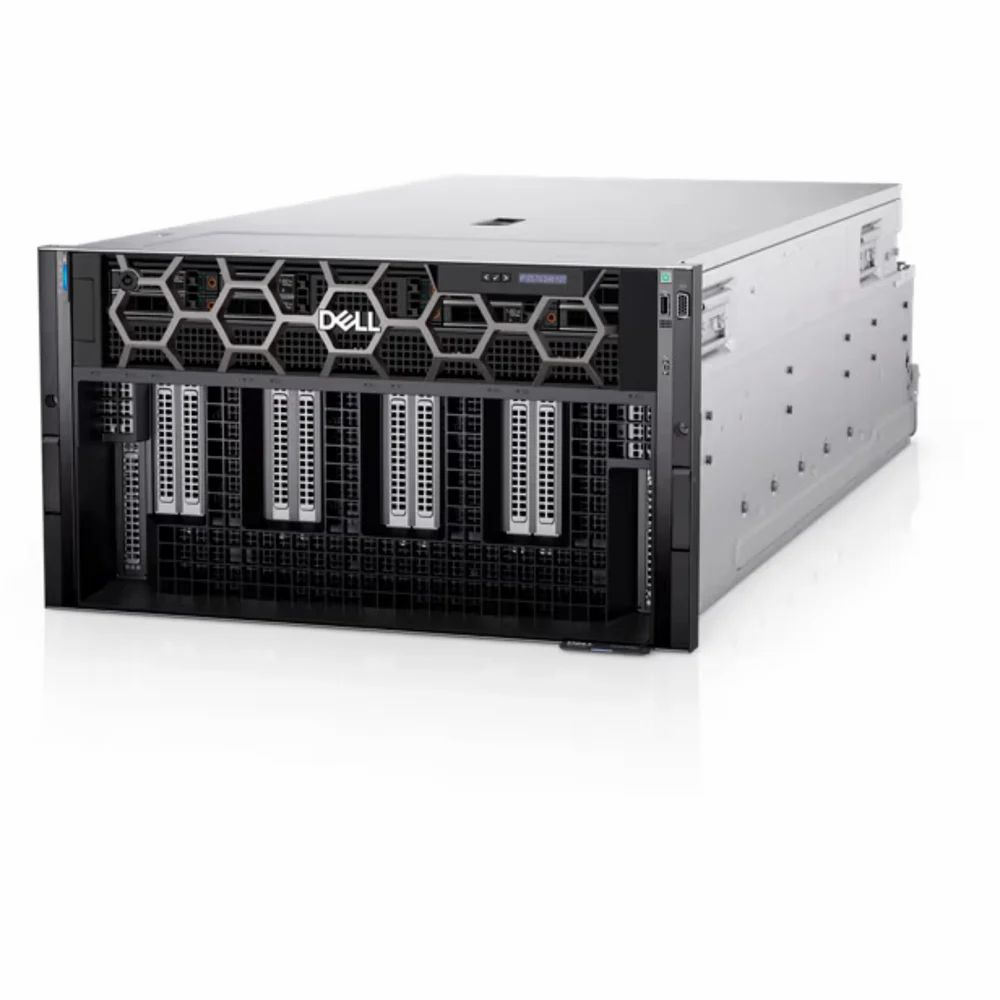
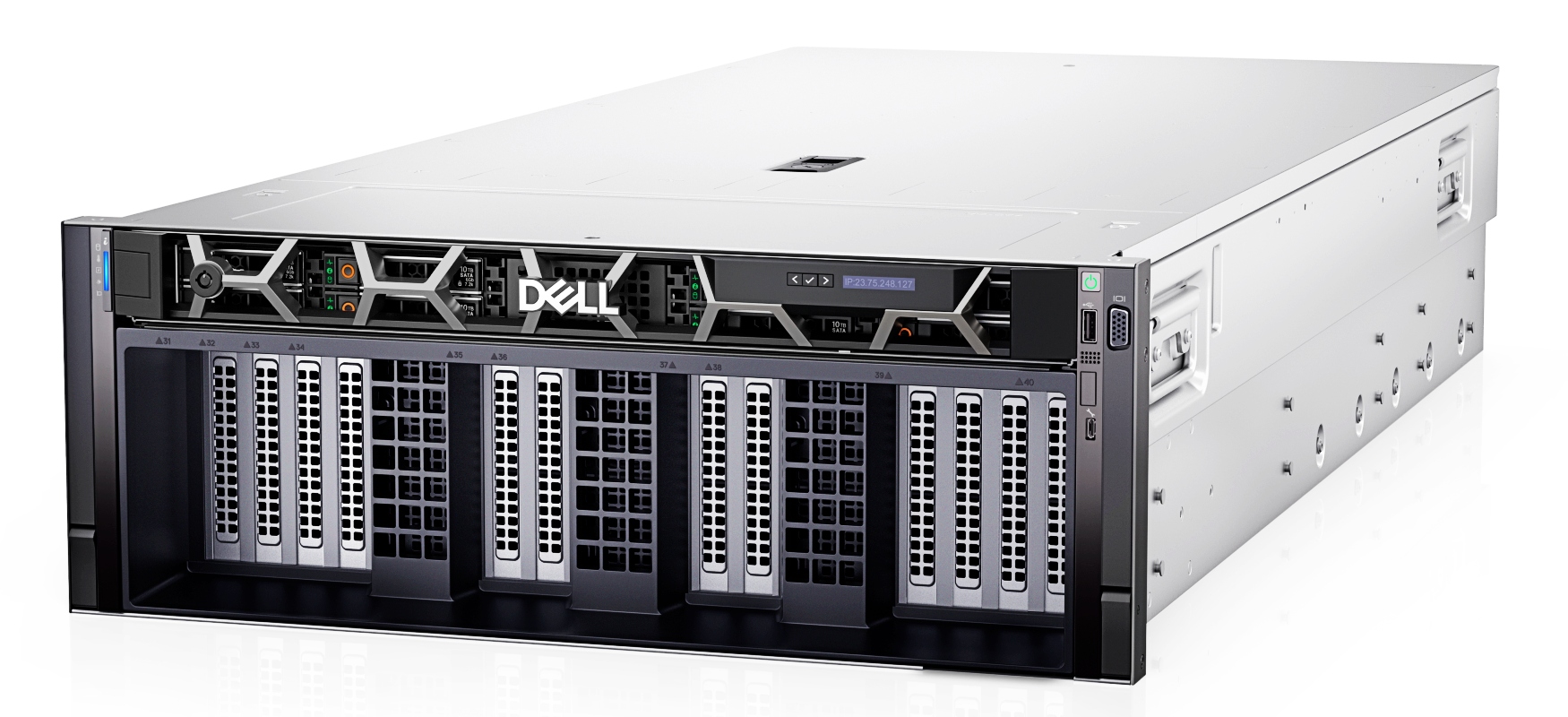
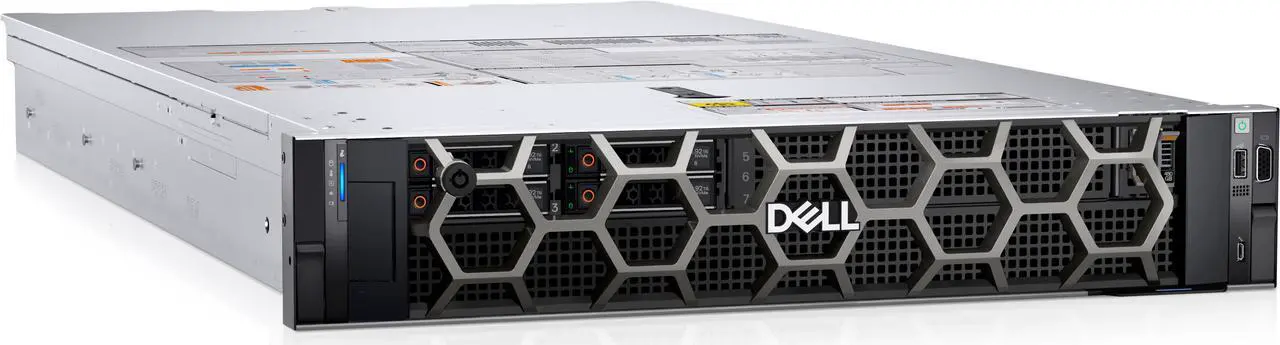
| Form Factor | 6U Rack Server | 4U Rack Server (Liquid Cooled) | 2U Rack Server (Liquid Cooled) |
| GPU Accelerators per Node | 8× (H200/H100/H20/MI300X/Gaudi3) | 8× (B200/H200) | 4× (H100/H200) |
| Total GPU Memory (Max Config) | 1.12 TB (8× H200) | 1.44 TB (8× B200) | 564 GB (4× H200) |
| GPU Interconnect Bandwidth | 900 GB/s (NVLink full-mesh) / Infinity Fabric (AMD) | NVLink full-mesh (B200/H200) | 900 GB/s (NVLink full-mesh) |
| Rack Density Advantage | Air-cooled — no liquid required | 33% higher GPU density per rack vs 6U air-cooled | 2× GPU core density vs air-cooled 6U |
| Cooling Energy Saving | -- | 45% lower energy cost vs air | 45% energy saving over air cooling |
| Compute | |||
| Processor | Dual Intel Xeon Scalable 5th Gen (up to 64 cores) or 4th Gen (up to 56 cores) | Dual Intel Xeon Scalable 5th Gen (up to 64 cores) @ 5600 MT/s | Dual Intel Xeon Scalable 5th Gen (up to 64 cores) or 4th Gen (up to 56 cores) |
| Memory | |||
| System Memory | 32 DDR5 DIMMs, up to 4 TB @ 5600 MT/s (5th Gen) | 32 DDR5 DIMMs, up to 4 TB @ 5600 MT/s (1 DPC) | 32 DDR5 DIMMs, up to 4 TB @ 5600 MT/s |
| Storage | |||
| Storage Options | 8× 2.5" NVMe/SAS/SATA or 16× E3.S NVMe — up to 122.88 TB | 8× 2.5" NVMe SSDs, up to 122.88 TB | Up to 8 NVMe drives |
| Networking | |||
| Networking | 1× OCP 3.0 + 2× 1GbE LOM; PCIe InfiniBand/Ethernet via slots | -- | -- |
| GPU / Accelerators | |||
| GPU Options | 8× NVIDIA HGX H200 (141 GB) / H100 (80 GB) / H20; 8× AMD MI300X (192 GB); 8× Intel Gaudi3 (128 GB) | 8× NVIDIA HGX B200 (180 GB, 1000W) or H200 (141 GB, 700W) | 4× NVIDIA H100 SXM5 (80 GB) or H200 SXM5 (141 GB) — full NVLink |
| GPU Memory | 1.12TB GPU Memory (8× H200 NVLink pool) | 1.44 TB HBM3e (8× B200) / 1.13 TB HBM3 (8× H200) | 320 GB (4× H100) or 564 GB (4× H200) |
| Expansion / PCIe | |||
| PCIe Expansion | 10× PCIe Gen5 x16 (8 with Intel Gaudi3) | 12× PCIe Gen5 x16 | 4× PCIe Gen5 x16 |
| Management | |||
| Management | iDRAC9 Enterprise / Datacenter, Redfish API, CloudIQ, OpenManage Enterprise | iDRAC9 Datacenter, Redfish API, CloudIQ, OpenManage Enterprise | iDRAC9 Enterprise / Datacenter, Redfish API, OpenManage Enterprise |
| Power | |||
| Power Supplies | 6× 3200W Titanium (277V) / 2800W Titanium (200–240V), 3+3 FTR | 3000W Titanium (B200) / 2800W Titanium (H200) | -- |
| Physical / Environmental | |||
| Cooling | Air-cooled, 16 fans, 1200 CFM, 10–35°C ambient | Direct liquid cooling — CPUs, GPUs, NVLink switches | Direct liquid cooling — CPUs and GPUs |
| Dimensions | 10.36" H × 18.97" W × 39.71" D (with bezel) | -- | -- |
| Weight | Up to 251 lbs / 114 kg (configuration dependent) | -- | -- |
| Security | |||
| Security | Silicon Root of Trust, Secure Boot, Secure Component Verification, SEDs | -- | -- |
Expert Analysis
These three Dell PowerEdge servers represent a sophisticated tiered approach to GPU-accelerated computing, each optimised for different deployment scenarios within the data centre. The XE9680 offers exceptional flexibility with its 6U air-cooled design supporting eight GPUs across three vendor architectures (NVIDIA, AMD, Intel), making it ideal for organisations requiring multi-vendor AI/ML strategy or those operating in facilities without liquid cooling infrastructure. Its 10 PCIe Gen5 slots provide outstanding expansion for high-speed networking adapters. The XE9680L represents the pinnacle of density and efficiency with its 4U liquid-cooled chassis supporting eight of NVIDIA's latest Blackwell B200 GPUs, delivering 1.44TB of HBM3e memory and 12 PCIe slots while reducing cooling energy costs by 45% compared to air-cooled alternatives.
The XE9640 occupies a distinct position as a 2U liquid-cooled system with four GPUs, offering the highest rack density for inference workloads and distributed training where space efficiency is paramount. While it provides half the GPU count of its larger siblings, it delivers twice the GPU core density per rack compared to air-cooled 6U alternatives. The trade-offs are clear: the XE9680 provides maximum flexibility and vendor choice, the XE9680L delivers peak performance and efficiency for homogeneous NVIDIA deployments, and the XE9640 maximises rack density for cost-sensitive high-density deployments. Organisations must weigh GPU count requirements against rack space constraints, cooling infrastructure availability, and workload-specific performance needs when selecting between these platforms.
Ready to proceed?
Want to compare different products or add more to this comparison?
Open Interactive Comparison Tool →