
🌐 FortiGate 40F SD-WAN vs Cisco C8200 vs Prisma ION 1200
FortiGate 40F vs Catalyst 8200 vs Prisma SD-WAN ION 1200 compared across 25 matched specifications — scores, the full spec table and a verdict.
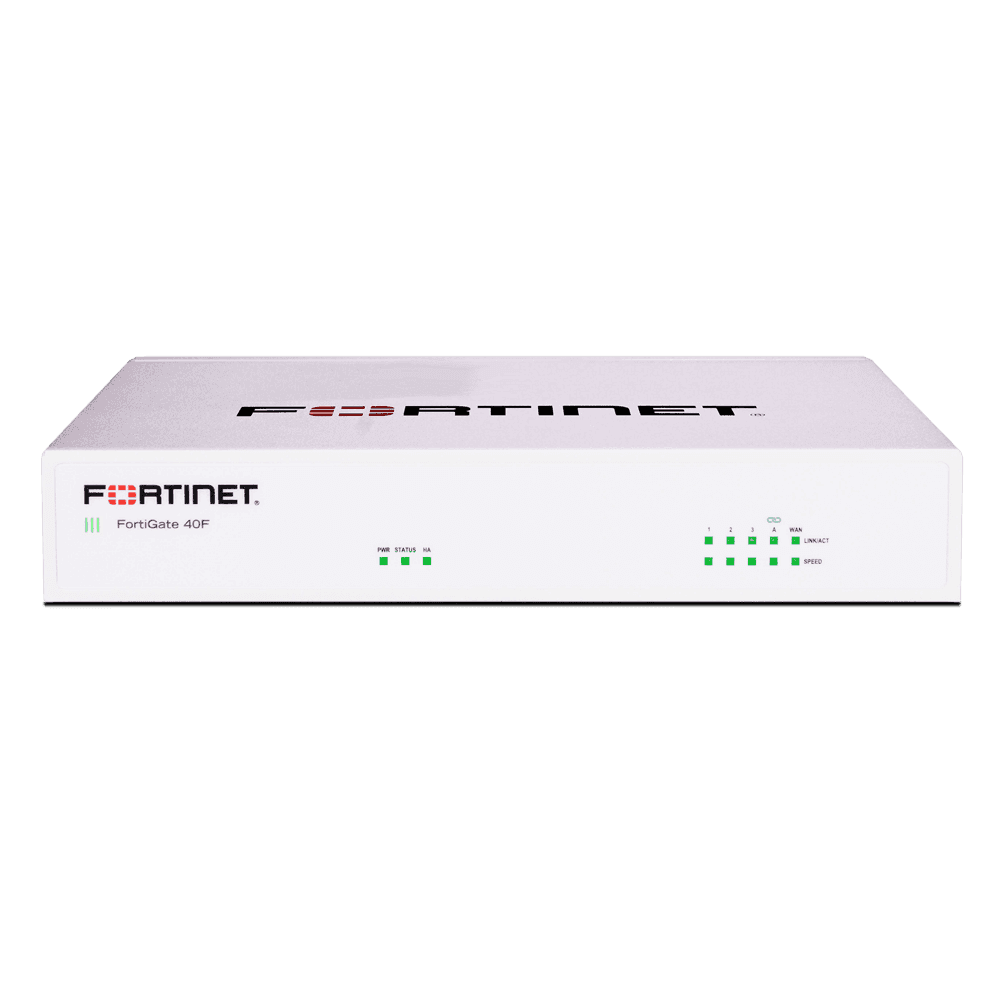
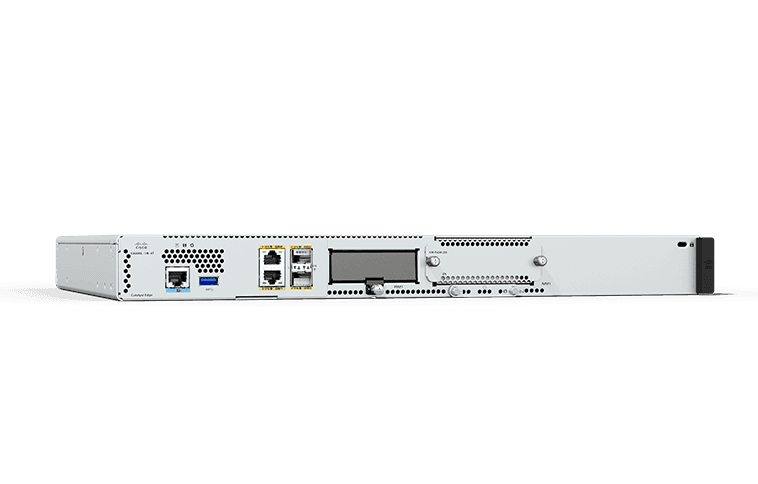
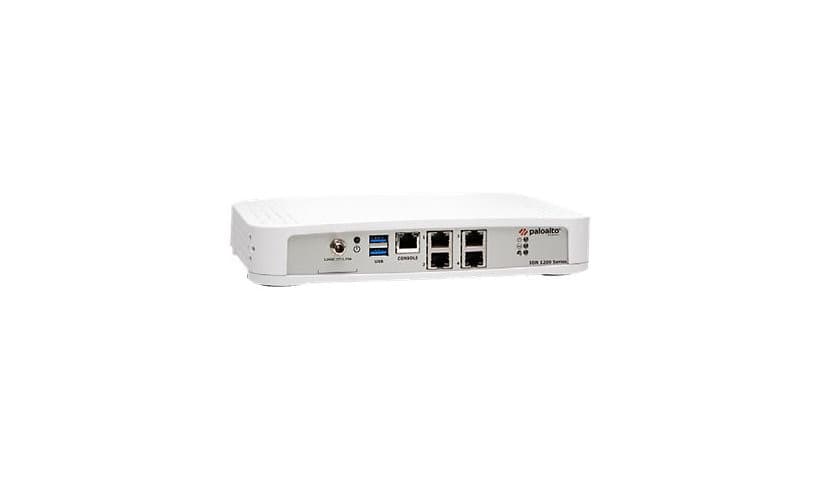
FortiGate 40F SD-WAN vs Cisco C8200 vs Prisma ION 1200: performance overview
Scores based on quantifiable specification values (1-10 scale)
Detailed Specifications
| Specification | FortiGate 40F Fortinet | Catalyst 8200 Cisco | Prisma SD-WAN ION 1200 Palo Alto Networks |
|---|---|---|---|
| Key Metrics | |||
| Firewall Throughput | 5 Gbps | -- | -- |
| NGFW Throughput | 800 Mbps | -- | -- |
| IPS Throughput | 1 Gbps | -- | -- |
| SSL-VPN Throughput | 900 Mbps | -- | -- |
| SD-WAN Throughput | Integrated in FortiOS | Up to 1 Gbps | -- |
| IPsec VPN Throughput | -- | Up to 1 Gbps | -- |
| Max Concurrent Sessions | 700,000 | -- | -- |
| Max FortiAPs | 30 | -- | -- |
| Zero Touch Provisioning | Yes | Yes | Yes |
| WiFi Variant | FortiWiFi 40F — integrated dual-band 802.11ac | -- | -- |
| Cellular Integration | -- | Via PIM slot (pluggable LTE / 5G) or LTE NIM | Integrated 5G/LTE — ION 1200-C-5G model |
| AIOps | -- | -- | AI-powered analytics, anomaly detection, remediation |
| ADEM | -- | -- | Autonomous Digital Experience Management |
| SASE Integration | -- | -- | Prisma Access — ZTNA, SWG, CASB, FWaaS |
| CloudBlades | -- | -- | Third-party service integrations (Zscaler, etc.) |
| Compute | |||
| Processor | -- | 8-core x86 processor | -- |
| Memory | |||
| Memory | -- | 8GB DRAM default (expandable to 32GB) | -- |
| Storage | |||
| Storage | -- | 8GB flash; 16GB M.2 default (up to 600GB NVMe) | -- |
| Networking | |||
| Interfaces | 2x WAN GE RJ45, 1x DMZ, 5x internal GE RJ45, 2x FortiLink | 4x GE (2x RJ45 + 2x SFP); 1x management | Multiple GE RJ45 WAN/LAN (model-dependent) |
| Expansion / PCIe | |||
| Expansion | -- | 1x NIM slot + 1x PIM slot (pluggable LTE/5G) | -- |
| I/O & Ports | |||
| Built-in Ports | 2x WAN GE RJ45, 1x DMZ, 5x internal GE RJ45, 2x FortiLink | 4x GE (2x RJ45 + 2x SFP); 1x management | Multiple GE RJ45 WAN/LAN (model-dependent) |
| Management | |||
| Management | FortiOS GUI/CLI; FortiManager; FortiCloud; REST API | Cisco SD-WAN Manager; DNA Center; NETCONF; REST API | Palo Alto Strata Cloud Manager (cloud-native) |
| Physical / Environmental | |||
| Form Factor | Compact fanless desktop | 1U rack — 1.7"H × 17.3"W × 11.8"D | Compact desktop (wall/rack/desktop mountable) |
| Software & OS Compatibility | |||
| Software | FortiOS | Cisco IOS XE; Cisco Catalyst SD-WAN | -- |
| Integrated Security | NGFW, IPS, SSL-VPN, ZTNA | NGFW, IPS, URL filtering, TrustSec | -- |
Expert Analysis
These three SD-WAN appliances serve distinct niches within the small branch office market. The FortiGate 40F excels as a unified security gateway, offering impressive 5 Gbps firewall throughput and comprehensive threat protection including 800 Mbps NGFW and integrated ZTNA at no extra cost. Its compact fanless design and optional WiFi variant make it particularly suitable for space-constrained retail environments where silent operation is valued. However, its SD-WAN capabilities are software-based rather than hardware-accelerated, which may limit performance in bandwidth-intensive scenarios.
The Cisco Catalyst 8200 represents the most expandable and programmable option, featuring an 8-core x86 processor, up to 32GB RAM, and hardware-accelerated 1 Gbps IPsec VPN throughput. Its NIM expansion slot provides flexible WAN connectivity options including cellular, while IOS XE offers extensive programmability for network automation. This makes it ideal for growing branches requiring future-proof hardware and deep integration with Cisco's enterprise ecosystem, though its security features require additional licensing compared to Fortinet's inclusive approach.
Palo Alto's Prisma SD-WAN ION 1200 stands out with its cloud-native architecture and integrated 5G cellular capabilities, offering the most advanced management experience through Strata Cloud Manager with AIOps and ADEM for autonomous operations. Its tight integration with Prisma SASE provides seamless security service chaining, making it particularly compelling for organisations prioritising cloud-delivered security and superior application experience monitoring. While offering less local hardware flexibility than Cisco's solution, its zero-touch provisioning and third-party CloudBlades integrations simplify deployment in distributed edge environments.
Ready to proceed?
Not sure which one fits your environment?
Our UK specialists will recommend the right option for your workload and send itemised pricing — vendor-neutral, no obligation.
Response within 4 business hours · 20+ yr UK reseller
Want to compare different products or add more to this comparison?
Open Interactive Comparison Tool →Made your choice? Spread the cost.
Whichever you choose, you don't have to pay for it all upfront — finance your new hardware from £258/mo ex VAT on hire purchase or lease. Compare monthly payments and terms in seconds.
See finance from £258/mo →Indicative estimate · subject to change · no credit check at this stage · hire purchase, lease & subscription for UK businesses
Indicative illustration only. Servnet Limited is not authorised or regulated by the FCA and does not provide financial advice or arrange finance. All finance opportunities are referred to Number Eight Business Finance. Finance policy
Related comparisons
Other head-to-heads featuring these models — useful if you’re still shortlisting.
Talk to a UK specialist
Get expert advice or a no-obligation quote — servers, storage, networking, maintenance, finance and cloud. We reply the same working day.