
🌐 FortiGate 40F SD-WAN vs 120G SD-WAN
AI-powered analysis across 28 matched specifications
Performance Overview
Scores based on quantifiable specification values (1-10 scale)
Detailed Specifications
| Specification | FortiGate 40F Fortinet | FortiGate 120G Fortinet |
|---|---|---|
| Key Metrics | ||
| Firewall throughput | 5 Gbps | 39 Gbps |
| Threat protection throughput | 800 Mbps | 5.3 Gbps |
| SSL inspection throughput | -- | 3 Gbps |
| Form factor | Compact desktop, fanless | 1U rack-mount |
| Hardware acceleration | SoC4 ASIC | NP7 ASIC |
| Target deployment | Small branch / teleworker | Mid-size enterprise branch / campus edge |
| Performance | ||
| Firewall throughput | 5 Gbps | 39 Gbps |
| IPS / threat protection | 800 Mbps | 5.3 Gbps |
| SSL/TLS inspection | -- | 3 Gbps |
| NGFW throughput | 1 Gbps (typical published) | 10 Gbps (typical published) |
| Concurrent sessions | 700,000 (typical) | 1.5 million+ (typical) |
| Connectivity | ||
| GE RJ45 interfaces | 5 ports | 12+ ports |
| 10GE interfaces | -- | Yes (SFP+ uplinks) |
| Dedicated WAN ports | 1 WAN (plus PoE/usable WAN on additional ports) | 2+ dedicated WAN |
| Integrated Wi-Fi option | Yes (FortiWiFi 40F variant) | No |
| USB / console | 1× USB, 1× console | 1× USB, 1× console |
| 5G/LTE failover | Via external USB modem | Via external USB modem or partner appliance |
| Security Services | ||
| Integrated Secure SD-WAN | Yes — no separate licence | Yes — no separate licence |
| Universal ZTNA | Yes (FortiOS) | Yes (FortiOS) |
| FortiGuard AI services | Supported | Supported |
| SSL deep inspection at scale | Limited — small-branch sizing | Yes — 3 Gbps headroom |
| SD-WAN overlay tunnels | Suited to single-site low-tunnel count | Hundreds of overlays / hub-and-spoke |
| Management & Operations | ||
| Operating system | FortiOS | FortiOS |
| Centralised management | FortiManager / FortiAnalyzer | FortiManager / FortiAnalyzer |
| Zero Touch Provisioning | Yes | Yes |
| FortiCloud / SASE integration | Yes | Yes |
| Acoustics | Silent (fanless) | Active cooling — rack environment |
| Power supply | External PSU, single | Internal PSU (single, dual on some SKUs) |
Expert Analysis
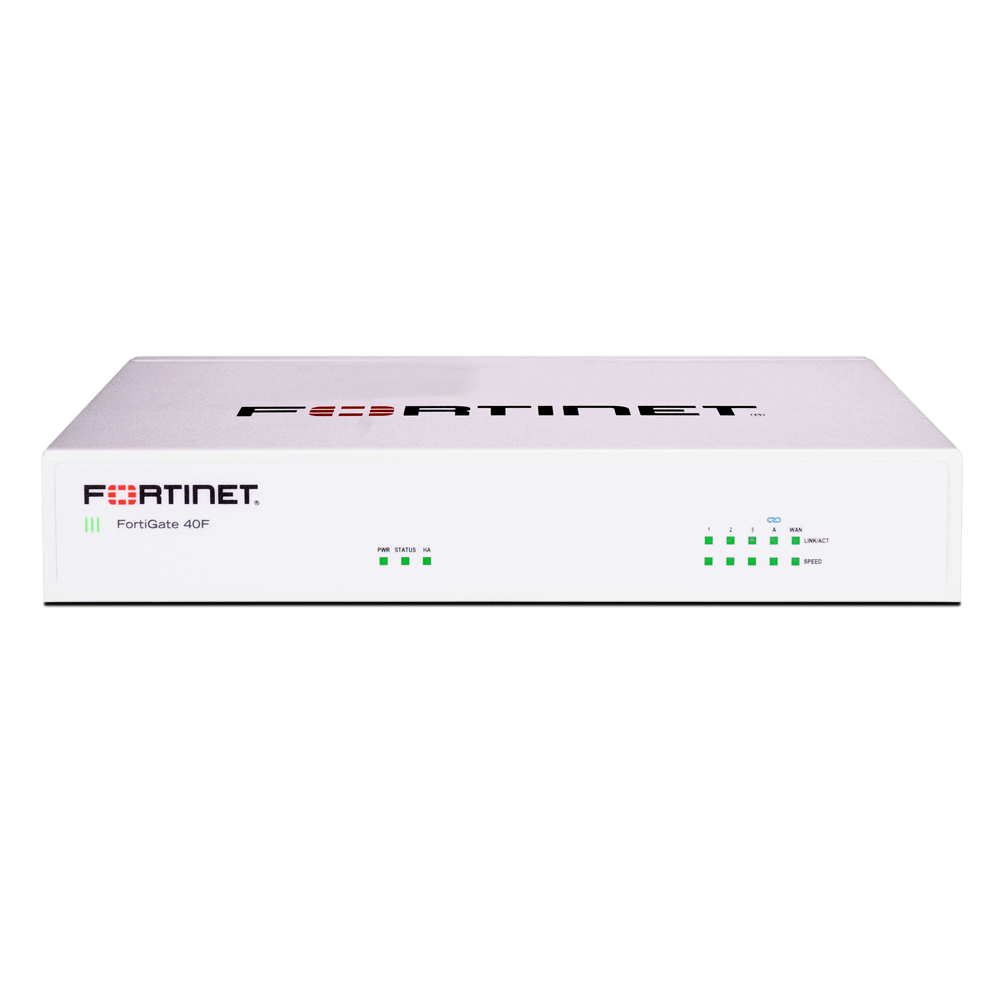
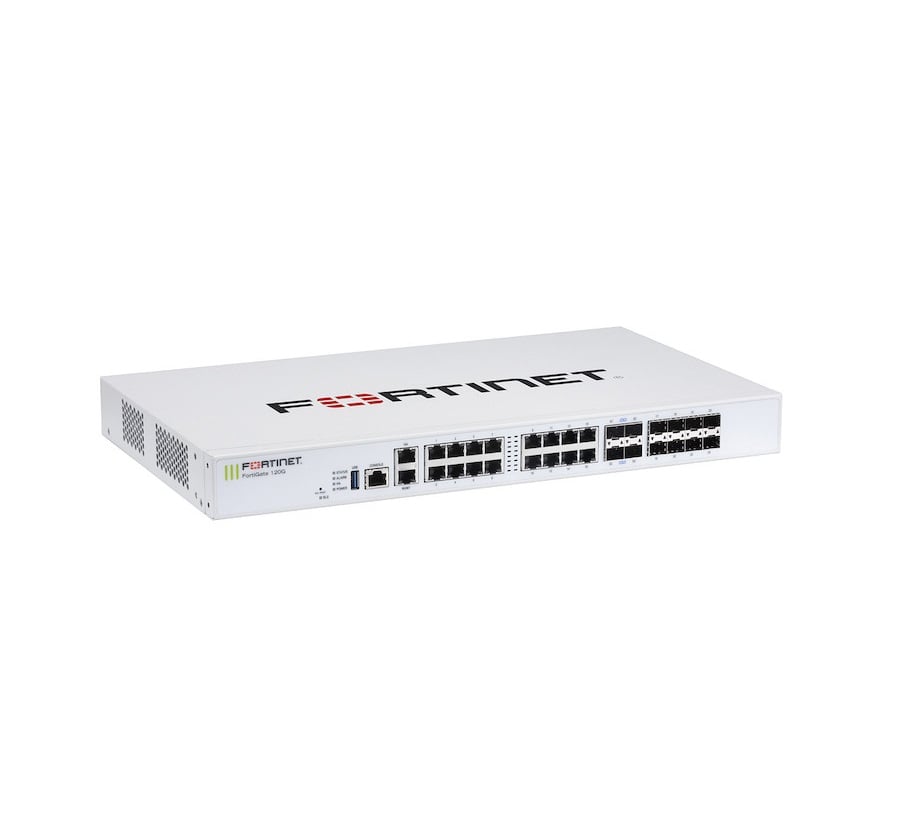
The practical difference here is scale, not feature set. Both appliances run the same FortiOS, include Secure SD-WAN at no extra licence cost, support Universal ZTNA and plug into the same FortiManager/FortiAnalyzer estate. What separates them is the silicon and the port layout: the 40F is a SoC4-based desktop unit aimed at small branches and teleworkers, while the 120G uses Fortinet's NP7 ASIC to deliver roughly eight times the firewall throughput and over six times the threat-protection throughput, with usable SSL deep inspection at 3 Gbps that the 40F simply cannot sustain.
The FortiGate 40F earns its place on the strength of fit. Fanless, silent, compact and available with integrated Wi-Fi (as the FortiWiFi 40F), it is the right answer for a retail unit, a small UK professional-services office, a clinic under the NHS DSPT, or a home-worker who needs corporate-grade inspection on a sub-1 Gbps WAN. Push it beyond around 30–50 users with heavy SSL inspection turned on and it will run out of headroom — that is where the gap to the 120G opens up.
The FortiGate 120G is built for a different problem: a mid-size branch or regional office with a 1 Gbps+ internet circuit, MPLS replacement via multiple SD-WAN overlays, and a genuine need to decrypt and inspect TLS traffic at line rate. The 10GE uplinks and dedicated WAN ports mean it can also sit as a small campus edge or as a regional SD-WAN hub aggregating spokes. It is overkill — and the wrong acoustic and physical fit — for a small office.
As a rule of thumb for UK buyers: pick the 40F where the WAN is sub-gigabit and the site has fewer than ~50 users and minimal SSL inspection requirement; pick the 120G where the WAN is gigabit or above, SSL inspection is non-negotiable (FCA-regulated, healthcare, or NIS2-scoped sites), or the appliance needs to terminate a meaningful number of SD-WAN overlays. Standardising on one FortiOS estate across both tiers is the real win — the management plane is identical.
Ready to proceed?
Want to compare different products or add more to this comparison?
Open Interactive Comparison Tool →