
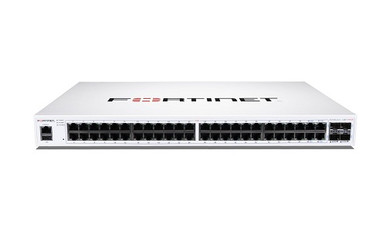
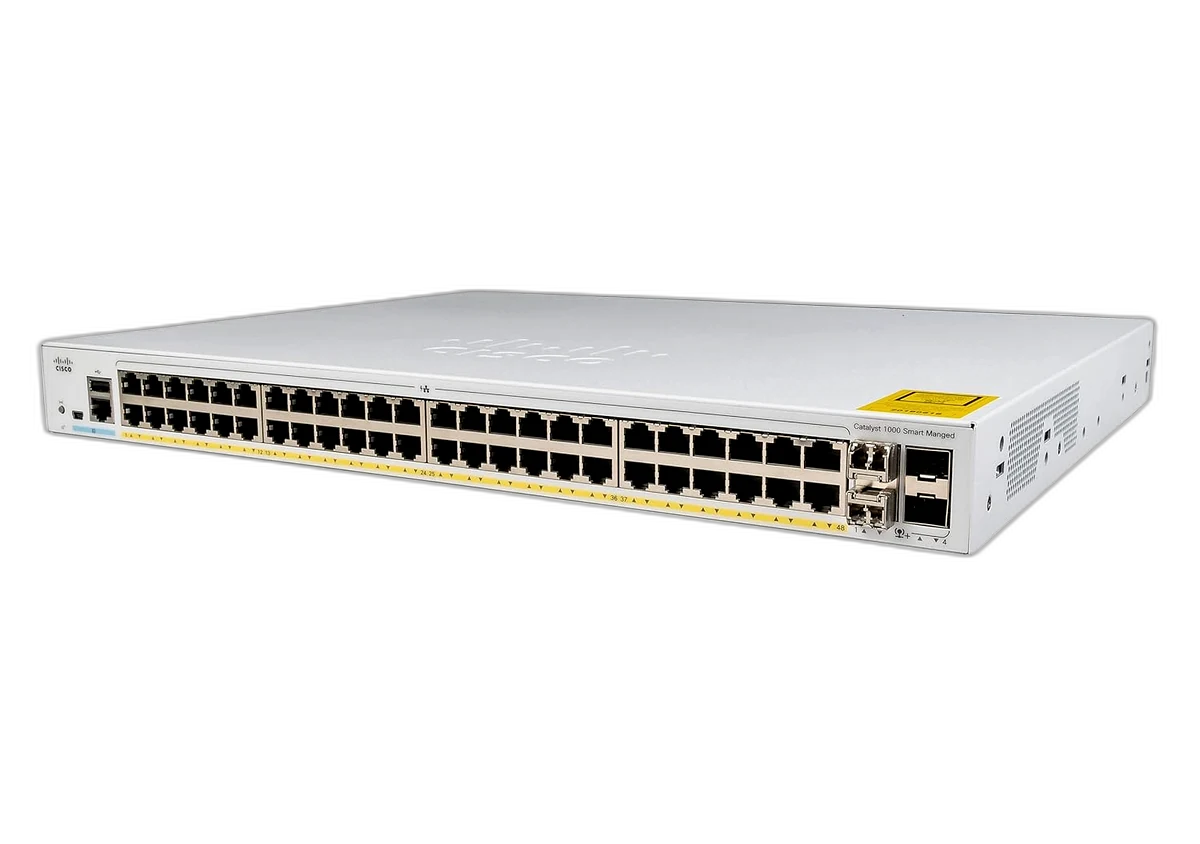
🔀 FortiSwitch FS-148F vs Cisco 1000-48T
AI-powered analysis across 17 matched specifications
Performance Overview
Scores based on quantifiable specification values (1-10 scale)
Detailed Specifications
| Specification | FortiSwitch FS-148F Fortinet | Cisco Catalyst 1000-48T Cisco |
|---|---|---|
| Key Metrics | ||
| Access Ports | 48 × GE RJ45 | 48 × 10/100/1000 Mbps RJ45 |
| Uplink Ports | 4 × 10GE SFP+ | 4 × 10G SFP+ |
| Switching Capacity | 176 Gbps | 104 Gbps |
| Forwarding Rate | 131 Mpps | 77.4 Mpps |
| Networking | ||
| MAC Address Table Size | 32,768 | 16,000 |
| VLAN Support | 4,094 | 255 active |
| Jumbo Frame Support | -- | 9,198 bytes |
| PoE Support | None | None (available in PoE variants) |
| Management | ||
| Management Interface | FortiLink, CLI, Web UI, SNMP | Cisco IOS Layer 2 management |
| Management Features | VLAN, QoS, IGMP, RSTP/MSTP | VLAN, QoS, 802.1X security features |
| Physical / Environmental | ||
| Form Factor | 1U rack-mount, fanless | 1U rack-mount |
| Cooling | Fanless (0dB) | Fanless (non-PoE model) |
| Power Consumption | 60W max | 35W max (non-PoE) |
| Operating Temperature | 0°C to 45°C | -- |
| Weight | -- | 4.5 kg |
| Power Input | -- | Internal AC, 100–240V |
| Software & OS Compatibility | ||
| Operating System / Software | FortiLink management from FortiGate | Cisco IOS |
Expert Analysis
The FortiSwitch FS-148F and Cisco Catalyst 1000-48T are both 48-port gigabit access switches with 10G SFP+ uplinks, but they cater to different operational priorities. The FortiSwitch offers superior raw performance with 176 Gbps switching capacity and 131 Mpps forwarding rate—69% and 69% higher respectively than the Catalyst's 104 Gbps and 77.4 Mpps. It also provides significantly larger MAC address table (32,768 vs 16,000) and VLAN support (4,094 vs 255 active), making it better suited for larger, more complex network environments. The Catalyst, while less performant, draws only 35W maximum power compared to the FortiSwitch's 60W, offering better energy efficiency.
From a management perspective, the FortiSwitch integrates tightly with Fortinet's security ecosystem through FortiLink, providing unified management when paired with FortiGate firewalls—ideal for organisations prioritising security integration. The Catalyst runs Cisco IOS, offering familiar management for existing Cisco shops and robust Layer 2 features including 802.1X security. Both switches offer fanless operation for silent deployment, though the FortiSwitch specifies a wider operating temperature range (0°C to 45°C).
The value proposition differs significantly: the FortiSwitch delivers higher performance and scalability at the cost of higher power consumption, while the Catalyst provides Cisco's ecosystem familiarity and better energy efficiency with more modest performance. Organisations with growing networks or those requiring extensive VLAN segmentation will benefit from the FortiSwitch's capabilities, while those with standard access layer requirements in Cisco environments may prefer the Catalyst's operational consistency.
Ready to proceed?
Want to compare different products or add more to this comparison?
Open Interactive Comparison Tool →