
🔀 FortiSwitch FS-148F-FPoE vs Cisco Catalyst 9200L-48P
AI-powered analysis across 30 matched specifications
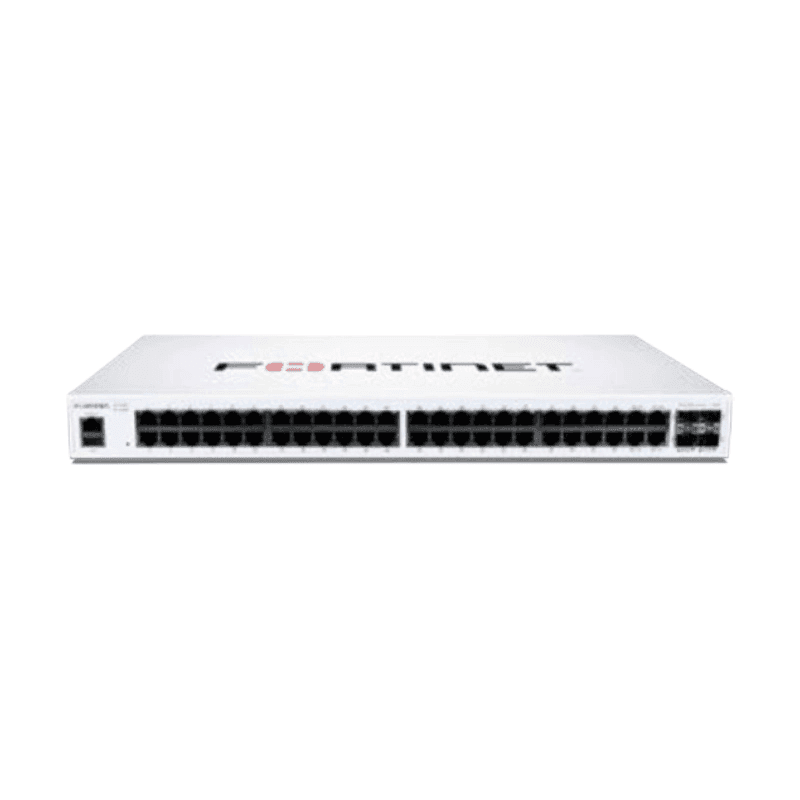
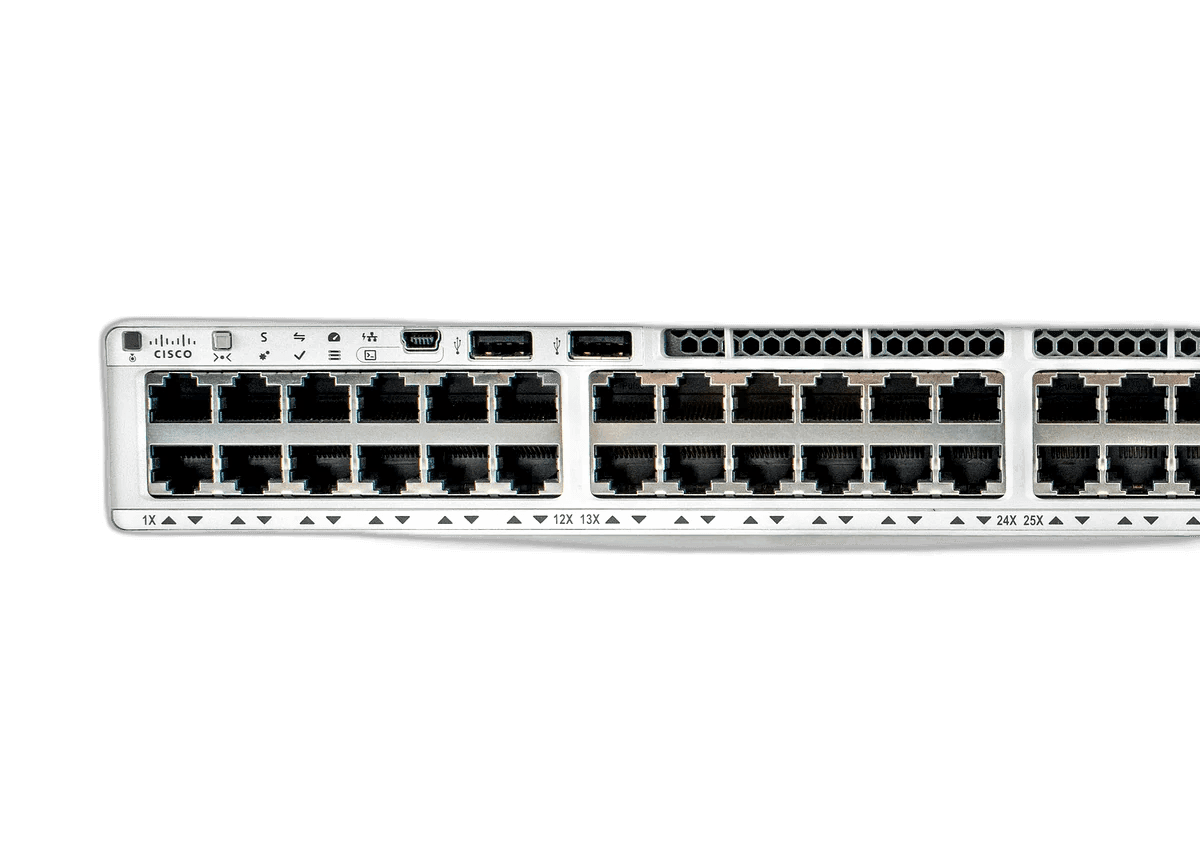
Performance Overview
Scores based on quantifiable specification values (1-10 scale)
Detailed Specifications
| Specification | FortiSwitch FS-148F-FPOE Fortinet | Cisco Catalyst 9200L-48P Cisco |
|---|---|---|
| Key Metrics | ||
| Access ports | 48 × 1GbE RJ45 PoE+ | 48 × 1GbE RJ45 PoE+ |
| Uplinks | 4 × 10GbE SFP+ | 4 × 1GbE SFP |
| Switching capacity | 176 Gbps | 104 Gbps (typical for 48×1G + 4×1G) |
| PoE budget | 740 W | 740 W |
| PoE standard | 802.3af/at (PoE+) | 802.3af/at (PoE+); UPOE on -48U variant |
| Stacking | FortiLink logical stacking via FortiGate | -- |
| Port density & uplinks | ||
| Downlink ports | 48 × 10/100/1000 RJ45 | 48 × 10/100/1000 RJ45 |
| Uplink ports | 4 × SFP+ (1/10G) | 4 × SFP (1G fixed) |
| Uplink aggregate | 40 Gbps | 4 Gbps |
| Console / OOB | RJ45 console, USB | RJ45 console, USB, mgmt port |
| Forwarding performance | ||
| Switching capacity | 176 Gbps | 104 Gbps |
| Forwarding rate | 131 Mpps | 77.3 Mpps |
| MAC addresses | 32,000 | 32,000 |
| Jumbo frames | 9,216 bytes | 9,198 bytes |
| Latency | -- | -- |
| Power & PoE | ||
| PoE budget | 740 W | 740 W |
| Per-port PoE | Up to 30 W (802.3at) | Up to 30 W (802.3at) |
| Full PoE+ on all 48 ports | No — 740 W shared budget | No — 740 W shared budget |
| PSU | Internal, fixed | Internal, fixed (field-replaceable on some SKUs) |
| Higher-wattage option | -- | C9200L-48PXG / -48U variants for UPOE 60 W |
| Management & software | ||
| Operating system | FortiSwitchOS | Cisco IOS-XE |
| Primary management | FortiLink via FortiGate, FortiSwitch Manager | Cisco DNA Center / Catalyst Center, CLI, WebUI |
| Cloud management | FortiCloud | Cisco Catalyst Center, Meraki dashboard (with migration) |
| Telemetry | sFlow, SNMP, syslog | NetFlow, Model-Driven Telemetry, SNMP, syslog |
| Licensing | Included — no recurring switch licence | Network Essentials or Network Advantage (subscription) — -E suffix = Essentials |
| Stacking | FortiLink logical only | StackWise-80 via optional module, up to 8 units |
| Security & resilience | ||
| Access control | 802.1X, MAC-based, dynamic VLAN | 802.1X, MAB, dot1x with Cisco ISE |
| Segmentation | VLAN, private VLAN, FortiGate-driven policy | VLAN, VRF-Lite, SGT/TrustSec (Network Advantage) |
| Integration | Native Security Fabric with FortiGate, FortiAP | SD-Access / ISE / DNA Assurance |
| Warranty | Limited lifetime hardware (FortiCare contract for RMA/firmware) | Enhanced Limited Lifetime (E-LLW) with NBD advance replacement |
Expert Analysis
The single biggest practical difference is the uplink: the FortiSwitch 148F-FPOE ships with four 10GbE SFP+ ports as standard, while the Catalyst 9200L-48P is fixed at four 1GbE SFP uplinks. For any access closet that aggregates Wi-Fi 6/6E APs or carries inter-floor traffic, that 10× headroom on the Fortinet is a meaningful architectural advantage — to match it on Cisco you have to step up to the 9200L-48PXG or a 9300 SKU. PoE budgets are identical at 740 W, so neither switch can sustain full 30 W on all 48 ports; both are honest mid-tier PoE+ access switches, not full-PoE workhorses despite the FPOE branding.
Where Cisco pulls clearly ahead is the software and operational ecosystem. IOS-XE on the Catalyst 9000 family brings model-driven telemetry, NetFlow, StackWise-80 stacking up to eight units, and tight integration with Cisco ISE, TrustSec and DNA/Catalyst Center for assurance and policy. If you already run a Cisco-centric estate — particularly with ISE-driven 802.1X and SGT segmentation — the 9200L-48P slots in without retraining the team. The trade-off is licensing: the -E suffix is Network Essentials, and unlocking the more interesting features (or moving to Catalyst Center) means a DNA/Catalyst subscription on top of the hardware.
Fortinet's pitch is different and unusually clean for UK buyers tired of subscription stacking. FortiSwitchOS is included, FortiLink lets a FortiGate manage the switch fabric as an extension of the firewall, and there is no separate per-switch subscription to keep features alive. For sites that already terminate on a FortiGate — single-site SMBs, branch offices, retail, schools — that is a genuinely lower-friction model, and the 10GbE uplinks future-proof the wiring closet. The downside is that without a FortiGate the FortiSwitch is materially less interesting to manage, and the stacking story is logical rather than true hardware stacking.
Recommendation: pick the FortiSwitch 148F-FPOE if you are a Fortinet Security Fabric site, want 10GbE uplinks at this price point, and value flat licensing; pick the Catalyst 9200L-48P if you are a Cisco shop running ISE/Catalyst Center, need StackWise hardware stacking, or have procurement standards that mandate IOS-XE. For greenfield UK SMB and mid-market deployments without an existing vendor bias, the Fortinet wins on day-one capability per pound; for enterprise estates with established Cisco operations, the 9200L remains the safer institutional choice.
Ready to proceed?
Not sure which one fits your environment?
Our UK specialists will recommend the right option for your workload and send itemised pricing — vendor-neutral, no obligation.
Response within 4 business hours · 20+ yr UK reseller
Want to compare different products or add more to this comparison?
Open Interactive Comparison Tool →Made your choice? Spread the cost.
Whichever you choose, you don't have to pay for it all upfront — finance your new hardware from £172/mo ex VAT on hire purchase or lease. Compare monthly payments and terms in seconds.
See finance from £172/mo →Indicative estimate · subject to change · no credit check at this stage · hire purchase, lease & subscription for UK businesses
Indicative illustration only. Servnet Limited is not authorised or regulated by the FCA and does not provide financial advice or arrange finance. All finance opportunities are referred to Number Eight Business Finance. Finance policy
Related comparisons
Other head-to-heads featuring these models — useful if you’re still shortlisting.
Talk to a UK specialist
Get expert advice or a no-obligation quote — servers, storage, networking, maintenance, finance and cloud. We reply the same working day.