
💾 HPE Alletra 6010 vs Dell PowerStore 500T vs NetApp AFF A30
AI-powered analysis across 18 matched specifications
Performance Overview
Scores based on quantifiable specification values (1-10 scale)
Detailed Specifications
| Specification | Dell PowerStore 500T Dell Storage | AFF A30 NetApp |
|---|---|---|
| Key Metrics | ||
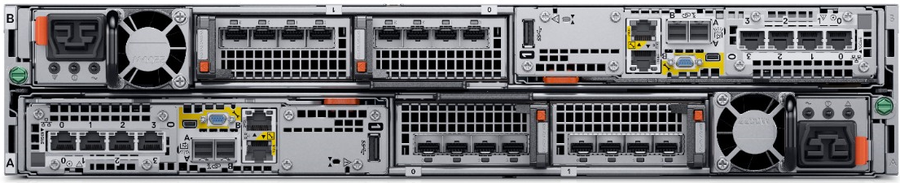
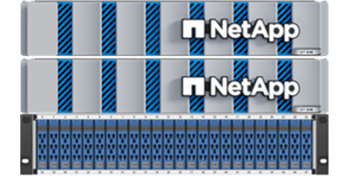
| Form Factor | 2U rack-mountable | 2U chassis, 2 HA controllers, 24 internal NVMe SSD slots |
| Maximum Effective Capacity | 6.16 PBe per appliance, 24.64 PBe per 4-node cluster | 18.8 PB per HA pair (5:1 NAS efficiency) |
| Maximum Raw Capacity | -- | 4.0 PB per HA pair |
| Data Reduction Guarantee | 5:1 guaranteed | 5:1 NAS efficiency |
| Latency | <1ms (block & file) | -- |
| Availability | 99.9999% (6-nines) | 99.9999% (six nines) |
| Maximum Scale-Out Nodes | 4-node cluster | 6 nodes (3 HA pairs) |
| Maximum Volumes | 1,500 | -- |
| Maximum Snapshots | 50,000 | -- |
| Compute | ||
| Processor | 2 × Intel Xeon, 24 cores, 2.2 GHz | -- |
| Controller Memory | 192 GB per controller node | 128 GB per controller |
| Storage | ||
| Maximum Drive Count | 97 NVMe SSDs | 24 internal NVMe SSD slots |
| Protocols | FC, iSCSI, NVMe-oF, NFS, SMB | NVMe/FC, NVMe/TCP, FC, iSCSI, NFS v3/v4.x, SMB/CIFS, S3 |
| Data Services | Deduplication, compression, advanced de-duplication | Deduplication, compression, compaction, SnapMirror, FabricPool, FlexClone |
| Networking | ||
| Front-End Ports | Up to 24 (FC 16/32Gb, iSCSI 10/25G, NVMe-oF) | Up to 12× 100GbE, 32× 25GbE, 24× 64Gbps FC/NVMe/FC ports |
| Security | ||
| Security Features | Zero Trust cybersecurity, native ransomware protection, immutable snapshots | AI/ML ransomware detection, SnapLock Compliance, AES-256 encryption |
| Software & OS Compatibility | ||
| Software Platform | Built-in ML optimisation, AppsON (run apps natively on the array) | NetApp ONTAP 9.16.1 (min. 9.16.1RC1) |
| Warranty & Support | -- | Flex hardware support — 3 or 5 year options |
Expert Analysis
The Dell PowerStore 500T and NetApp AFF A30 represent two distinct approaches to enterprise all-flash storage, each with compelling strengths for specific workloads. The PowerStore 500T excels in raw compute density and per-appliance capacity, offering 24 cores, 192GB memory per controller, and support for up to 97 NVMe drives delivering 6.16PB effective capacity per appliance. Its sub-millisecond latency and AppsON capability for running applications natively on the array make it particularly suitable for performance-sensitive mixed workloads requiring both block and file access simultaneously. The 5:1 data reduction guarantee and 50,000 snapshot limit provide predictable efficiency for virtualised environments and data protection scenarios.
Conversely, the NetApp AFF A30 demonstrates superior networking flexibility and protocol breadth, supporting up to 12×100GbE ports and including S3 object storage alongside traditional block and file protocols. Its 6-node scale-out architecture (versus PowerStore's 4-node maximum) offers greater horizontal scalability for growing enterprises, while the 18.8PB effective capacity per HA pair through ONTAP's efficiency features provides substantial logical capacity in a 2U footprint. The AI/ML ransomware detection with 99%+ accuracy and NetApp's Ransomware Recovery Guarantee present a compelling security proposition for organisations prioritising cyber resilience.
The fundamental trade-off centres on architectural philosophy: PowerStore emphasises maximum performance density per appliance with its end-to-end NVMe design, while AFF A30 prioritises scalable efficiency and comprehensive data services through the mature ONTAP ecosystem. Organisations requiring the lowest possible latency for transactional databases or virtual desktop infrastructure would find PowerStore's sub-millisecond performance advantageous, whereas those needing extensive multi-protocol support, object storage capabilities, or proven scale-out architecture might prefer the AFF A30's broader ecosystem approach.
Ready to proceed?
Want to compare different products or add more to this comparison?
Open Interactive Comparison Tool →