
🖥️ Raritan LX II vs Vertiv MPU8032
AI-powered analysis across 25 matched specifications
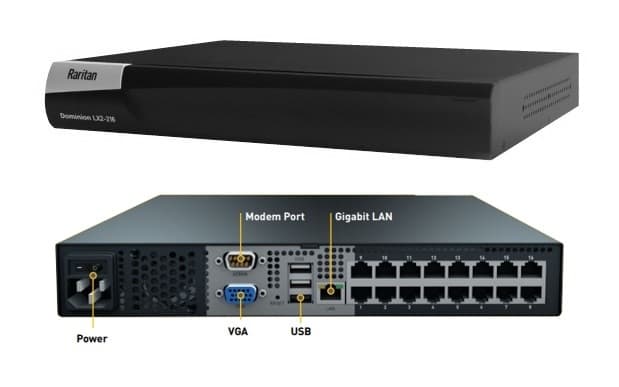
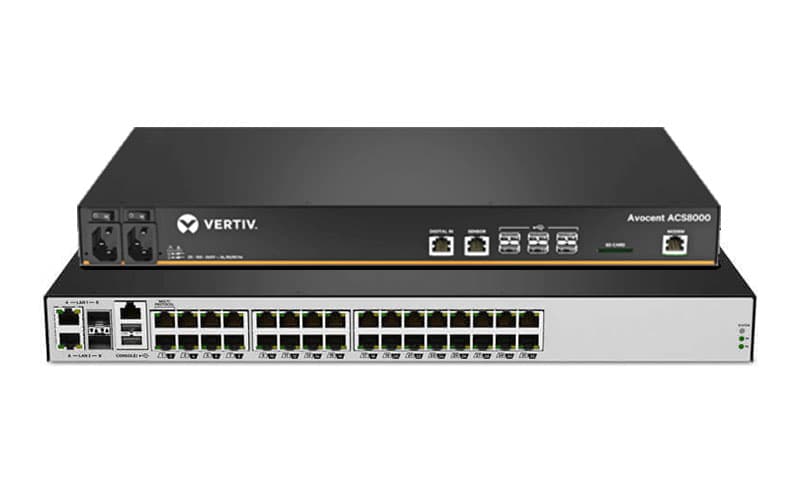
Performance Overview
Scores based on quantifiable specification values (1-10 scale)
Detailed Specifications
| Specification | Dominion LX II Raritan | Avocent MPU8032 Vertiv |
|---|---|---|
| Key Metrics | ||
| Server Ports | 32 (max configuration) | 32 |
| Simultaneous Remote Users | 4 | 4 |
| Form Factor | 1U rack-mount | 1U rack-mount |
| Target Market | SMB, mid-market, branch office | -- |
| Compliance | -- | TAA compliant |
| Cost Positioning | Cost-effective (vs enterprise tier) | -- |
| Compute | ||
| Processor | -- | -- |
| Memory | ||
| Memory | -- | -- |
| Storage | ||
| Storage | -- | -- |
| Networking | ||
| Network | Gigabit Ethernet | Gigabit Ethernet; IPv4 and IPv6 |
| GPU / Accelerators | ||
| GPU | -- | -- |
| Expansion / PCIe | ||
| Expansion | CommandCenter Secure Gateway compatible | Cascading via DSView; IQ Modules (USB+VGA, USB+DVI, USB+HDMI) |
| I/O & Ports | ||
| Server Connection Ports | 8 or 32 (model-dependent) | 32 |
| Local User Port | -- | 1 |
| Video Resolution | Up to 1920×1080 (1080p) | High-resolution video |
| Mouse Synchronisation | Absolute Mouse Synchronisation | Precise keyboard/mouse control |
| Management | ||
| Management Interface | Java-free browser; CommandCenter Secure Gateway compatible | Avocent DSView software; SNMP; web UI |
| Authentication | LDAP, Active Directory; local user database | LDAP, Active Directory; local user database |
| Virtual Media | Yes — drive and ISO mounting | -- |
| Integration | -- | Integration with Avocent ACS8000 for serial + KVM convergence |
| Power | ||
| Power Supplies | -- | Dual hot-swap AC power supplies |
| Physical / Environmental | ||
| Form Factor | 1U rack-mount | 1U rack-mount |
| Security | ||
| Encryption | AES — all remote sessions | -- |
| Software & OS Compatibility | ||
| Software Compatibility | Java-free browser access — no client software | DSView software centralised management platform |
| Warranty & Support | ||
| Warranty & Support | -- | -- |
Expert Analysis
The Dominion LX II and Avocent MPU8032 are both capable 32-port KVM-over-IP switches targeting different segments of the enterprise market. The Dominion LX II is positioned as a cost-effective solution for SMBs and branch offices, offering solid core functionality including 1080p video, AES encryption, and Java-free browser access. Its virtual media support and CommandCenter compatibility provide good value for organisations needing remote OS and firmware management without enterprise-grade redundancy. The Avocent MPU8032, in contrast, is built for environments demanding higher resilience and integration capabilities. Its dual hot-swap power supplies offer critical redundancy for always-on operations, while TAA compliance makes it suitable for US government contracts. The DSView management platform and integration with Avocent's ACS8000 for converged serial and KVM management provide superior scalability for large deployments.
Key trade-offs centre on resilience versus cost. The Dominion LX II sacrifices redundant power and advanced integration features to achieve a lower price point, making it ideal for budget-conscious deployments where occasional downtime is acceptable. The Avocent MPU8032 commands a premium for its dual PSUs and DSView ecosystem, justifying the investment for mission-critical environments requiring high availability. Value propositions differ significantly: the Dominion offers maximum functionality per pound for basic remote management needs, while the Avocent provides enterprise-grade reliability and management integration at higher cost.
Specific capabilities further differentiate these products. The Dominion's 8-port configuration option provides flexibility for smaller installations, while the Avocent's fixed 32-port design assumes larger deployments. Both support four simultaneous users, but the Avocent's 'digital paths' terminology reflects its focus on quality-of-service management. Networking capabilities show a clear divergence: while both offer Gigabit Ethernet, only the Avocent supports dual-stack IPv4 and IPv6, future-proofing for evolving network infrastructures. Organisations should choose based on their specific requirements: the Dominion for cost-sensitive deployments with basic redundancy needs, and the Avocent for environments where uptime and management integration justify additional investment.
Ready to proceed?
Not sure which one fits your environment?
Our UK specialists will recommend the right option for your workload and send itemised pricing — vendor-neutral, no obligation.
Response within 4 business hours · 20+ yr UK reseller
Want to compare different products or add more to this comparison?
Open Interactive Comparison Tool →Made your choice? Spread the cost.
Whichever you choose, you don't have to pay for it all upfront — finance your new hardware from £129/mo ex VAT on hire purchase or lease. Compare monthly payments and terms in seconds.
See finance from £129/mo →Indicative estimate · subject to change · no credit check at this stage · hire purchase, lease & subscription for UK businesses
Indicative illustration only. Servnet Limited is not authorised or regulated by the FCA and does not provide financial advice or arrange finance. All finance opportunities are referred to Number Eight Business Finance. Finance policy
Related comparisons
Other head-to-heads featuring these models — useful if you’re still shortlisting.
Talk to a UK specialist
Get expert advice or a no-obligation quote — servers, storage, networking, maintenance, finance and cloud. We reply the same working day.