UK’s trusted IT infrastructure partner since 2003
sales@servnetuk.com
0800 987 4111
Servnet
ConfiguratorGet in Touch
← Comparison Tool

💾 Dell PowerStore 500T vs NetApp AFF A30 vs Pure FlashArray//C

AI-powered analysis across 22 matched specifications

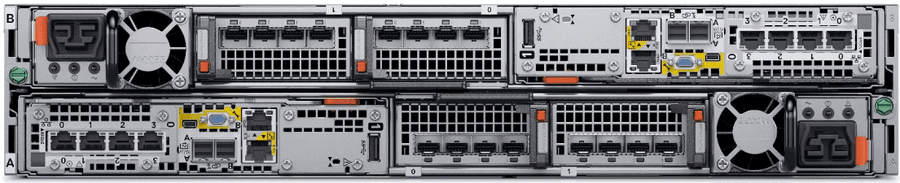
Dell PowerStore 500T Gen2 2U all-flash storage appliance front view
Dell PowerStore 500T
Dell Storage
8.6
Overall Score
Best for: Compute-intensive mixed workloads requiring native application execution on the array with sub-millisecond latency
View Full Details
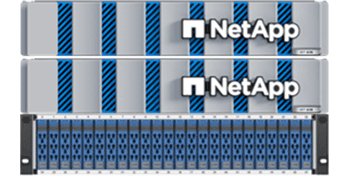
NetApp AFF A30 2U all-flash unified storage system front view
AFF A30
NetApp
8.3
Overall Score
Best for: Environments requiring maximum networking flexibility, comprehensive protocol support including S3, and AI-powered ransomware protection
View Full Details
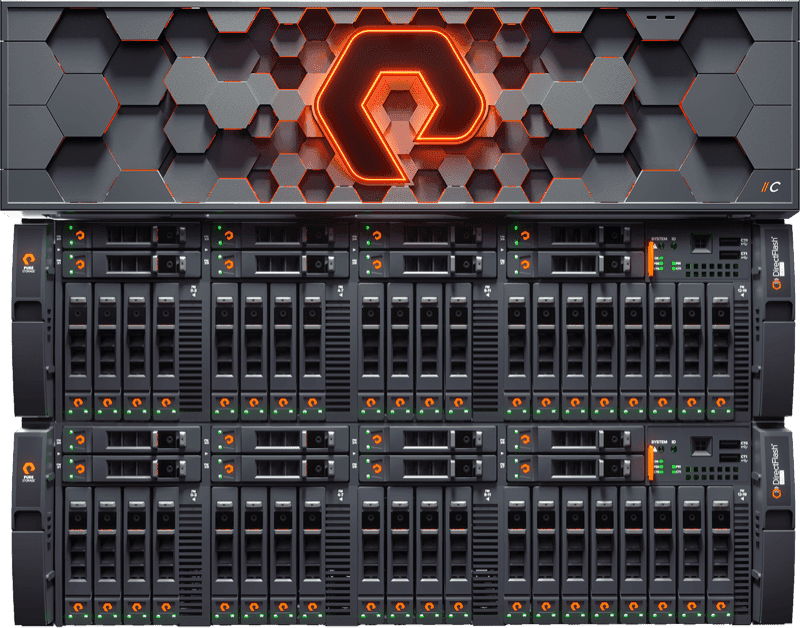
Pure Storage FlashArray C R5 capacity-optimised all-flash storage array front view
FlashArray//C
Pure Storage
7.8
Overall Score
Best for: Large-scale capacity-optimised deployments prioritising operational simplicity, native file services, and nondisruptive upgrades
View Full Details

Performance Overview

Scores based on quantifiable specification values (1-10 scale)

ComputeMemoryStorageNetworkingExpandabilityManagement
Dell PowerStore 500T
AFF A30
FlashArray//C
Compute
Dell PowerStore 500T
9.0
AFF A30
7.5
FlashArray//C
6.0
Memory
Dell PowerStore 500T
9.0
AFF A30
7.0
FlashArray//C
6.0
Storage
Dell PowerStore 500T
8.5
AFF A30
8.0
FlashArray//C
9.5
Networking
Dell PowerStore 500T
8.0
AFF A30
9.5
FlashArray//C
8.5
Expandability
Dell PowerStore 500T
8.5
AFF A30
9.0
FlashArray//C
8.0
Management
Dell PowerStore 500T
8.5
AFF A30
8.5
FlashArray//C
9.0

Detailed Specifications

Specification
Dell PowerStore 500T
Dell Storage
AFF A30
NetApp
FlashArray//C
Pure Storage
Key Metrics
Form Factor2U rack-mountable2U chassis, 2 HA controllers3U base chassis; 3–9U with expansion
Max Effective Capacity6.16 PBe per appliance (24.64 PBe per 4-node cluster)18.8 PB per HA pair (5:1 NAS efficiency)Up to 16.3 PB (C90 R5 model)
Max Raw CapacityNot specified4.0 PB per HA pairUp to 4.2 PB (C90 R5 model)
Data Reduction Guarantee/Average5:1 guaranteed5:1 NAS efficiency5:1 average (up to 10:1 with thin provisioning)
Availability SLA99.9999% (6-nines)99.9999% (six nines)99.9999% (6×9s)
Latency<1ms (block & file)----
Compute
Processor2 × Intel Xeon, 24 cores, 2.2 GHz----
Controller Memory192 GB per controller node128 GB per controller--
Storage
Max Drives / Slots97 NVMe SSDs24 internal NVMe SSD slots--
Flash TechnologyDual-ported NVMe SSDsNVMe SSDsQLC DirectFlash Modules (proprietary)
Max Volumes1,500----
Max Snapshots50,000----
File ServicesNFS, SMBNFS v3/v4.x, SMB/CIFSNative Enterprise File in Purity OS — NFS and SMB
Networking
Front-End Ports / NetworkingUp to 24 (FC 16/32Gb, iSCSI 10/25G, NVMe-oF)Up to 12× 100GbE, 32× 25GbE, 24× 64Gbps FC/NVMe/FC ports--
ProtocolsFC, iSCSI, NVMe-oF, NFS, SMBNVMe/FC, NVMe/TCP, FC, iSCSI, NFS v3/v4.x, SMB/CIFS, S3NVMe/FC, NVMe/RoCE, NVMe/TCP, iSCSI, FC, NFS (v3/v4), SMB
Software & OS Compatibility
Operating System / SoftwareAppsON (run apps natively on the array)NetApp ONTAP 9.16.1 (min. 9.16.1RC1)Purity OS, Everpure Fusion, Pure1 AIOps
Data ServicesDedup, compression, advanced de-duplicationDeduplication, compression, compaction, SnapMirror, FabricPool, FlexCloneGlobal dedup + compression, thin provisioning
Security
Ransomware ProtectionNative ransomware protection, immutable snapshotsAI/ML ransomware detection (99%+ accuracy), SnapLock Compliance, NetApp Ransomware Recovery GuaranteeSafeMode Snapshots (default), ransomware remediation
EncryptionZero Trust cybersecurityAES-256 encryptionAES-256, FIPS 140-2
Management
Management FeaturesBuilt-in ML optimisation--Unified with FlashArray//X and XL
Scale-Out / Clustering4-node clusterUp to 6 nodes (3 HA pairs)--
Warranty & Support
Warranty Options--Flex hardware support — 3 or 5 year optionsEvergreen Architecture across generations

Expert Analysis

AI-generated based on published specifications

These three enterprise storage arrays represent different architectural approaches to high-performance, high-availability storage. The Dell PowerStore 500T stands out with its substantial compute resources—48 cores and 192GB memory per controller—making it particularly well-suited for compute-intensive workloads and the unique AppsON capability that allows applications to run natively on the array. Its 97-drive capacity and sub-millisecond latency make it ideal for mixed block and file workloads requiring both high throughput and low latency.

The NetApp AFF A30 offers the most flexible networking configuration with up to 12×100GbE ports and comprehensive protocol support including S3 object storage. Its six-node scale-out capability provides excellent expansion potential for growing environments, while the AI/ML ransomware detection with 99%+ accuracy and recovery guarantee addresses modern security concerns effectively. The Pure Storage FlashArray//C leverages proprietary QLC DirectFlash technology to deliver the highest effective capacity (up to 16.3PB) while maintaining the same 99.9999% availability as their flagship FlashArray//X series. Its native file services within Purity OS and Evergreen Architecture for nondisruptive upgrades offer compelling operational advantages.

Each product has distinct value propositions: Dell emphasises compute integration and maximum drive density, NetApp focuses on networking flexibility and comprehensive data services, while Pure Storage prioritises capacity efficiency and operational simplicity through their Evergreen model. Organisations should consider their specific workload requirements—whether they need maximum compute at the storage layer, extensive protocol support, or the highest capacity density—when selecting between these capable solutions.

Dell PowerStore 500T
Best for: Compute-intensive mixed workloads requiring native application execution on the array with sub-millisecond latency
AFF A30
Best for: Environments requiring maximum networking flexibility, comprehensive protocol support including S3, and AI-powered ransomware protection
FlashArray//C
Best for: Large-scale capacity-optimised deployments prioritising operational simplicity, native file services, and nondisruptive upgrades

Ready to proceed?

Want to compare different products or add more to this comparison?

Open Interactive Comparison Tool →