
🌐 FortiGate 120G SD-WAN vs Cisco C8300 vs Prisma ION 5200
AI-powered analysis across 30 matched specifications
Performance Overview
Scores based on quantifiable specification values (1-10 scale)
Detailed Specifications
| Specification | FortiGate 120G Fortinet | Catalyst 8300 Cisco | Prisma SD-WAN ION 5200 Palo Alto Networks |
|---|---|---|---|
| Key Metrics | |||
| Firewall / IP throughput | 39 Gbps | 10 Gbps | 4 Gbps (encrypted) |
| IPsec VPN throughput | -- | 9.3 Gbps | -- |
| SD-WAN throughput | -- | 2 Gbps | 4 Gbps |
| Threat protection / IPS throughput | 5.3 Gbps | -- | -- |
| SSL inspection throughput | 3 Gbps | -- | -- |
| Form factor | 1U | 1U | 1U |
| Throughput & Inspection | |||
| Firewall throughput | 39 Gbps | 10 Gbps (IP) | 4 Gbps (encrypted) |
| IPS / threat protection | 5.3 Gbps | -- | Delivered via Prisma Access cloud |
| SSL/TLS inspection | 3 Gbps (on-box) | Software-based (IOS XE) | Offloaded to Prisma SASE |
| Hardware acceleration | NP7 ASIC | Crypto/QAT acceleration | x86 with NVMe |
| On-box NGFW | Yes — full FortiOS | Yes — Snort IPS, AMP, URL | No — cloud-delivered via Prisma SASE |
| Connectivity | |||
| 10GbE ports | 10GE SFP+ (LAN) | -- | 4x 10GbE SFP+ |
| 1GbE copper ports | GE RJ45 (multi-port) | Modular via NIM | 11x 1G RJ45 |
| PoE | -- | Optional via NIM | 4x 2.5G PoE++ (90W budget) |
| WAN expansion | Fixed interfaces | Dual NIM + SM + PIM modular | Fixed interfaces |
| 5G / LTE | Via USB modem | 5G NIM modules supported | Via external modem |
| Compute & Platform | |||
| CPU | NP7 + CP9 ASICs | 12-core x86 | x86 multi-core |
| RAM | -- | 8GB (expandable to 32GB) | 32GB |
| Storage | -- | -- | 240GB NVMe SSD |
| Redundant PSU | -- | Optional dual PSU | Dual hot-swap 450W AC (standard) |
| Operating system | FortiOS | IOS XE | Prisma SD-WAN OS |
| Security & SASE | |||
| Integrated SD-WAN licence | Included in FortiOS | Requires DNA / SD-WAN subscription | Included — subscription-based |
| ZTNA | Universal ZTNA included | Via Cisco Secure Access / Duo | Via Prisma Access |
| Cloud security on-ramp | FortiSASE | Umbrella SIG | Prisma Access (native) |
| Network visibility | FortiMonitor | ThousandEyes | ADEM (Autonomous DEM) |
| CASB / DLP | FortiCASB | Cisco Cloudlock | Prisma SASE native |
| Management | |||
| Controller | FortiManager / FortiGate Cloud | Cisco SD-WAN Manager (vManage) | Prisma SD-WAN Controller (cloud) |
| Analytics | FortiAnalyzer | vAnalytics + ThousandEyes | CloudBlades + AIOps |
| Zero-touch provisioning | Yes | Yes (PnP Connect) | Yes |
| Deployment model | On-prem or cloud-managed | On-prem or cloud-hosted | Cloud-native only |
Expert Analysis
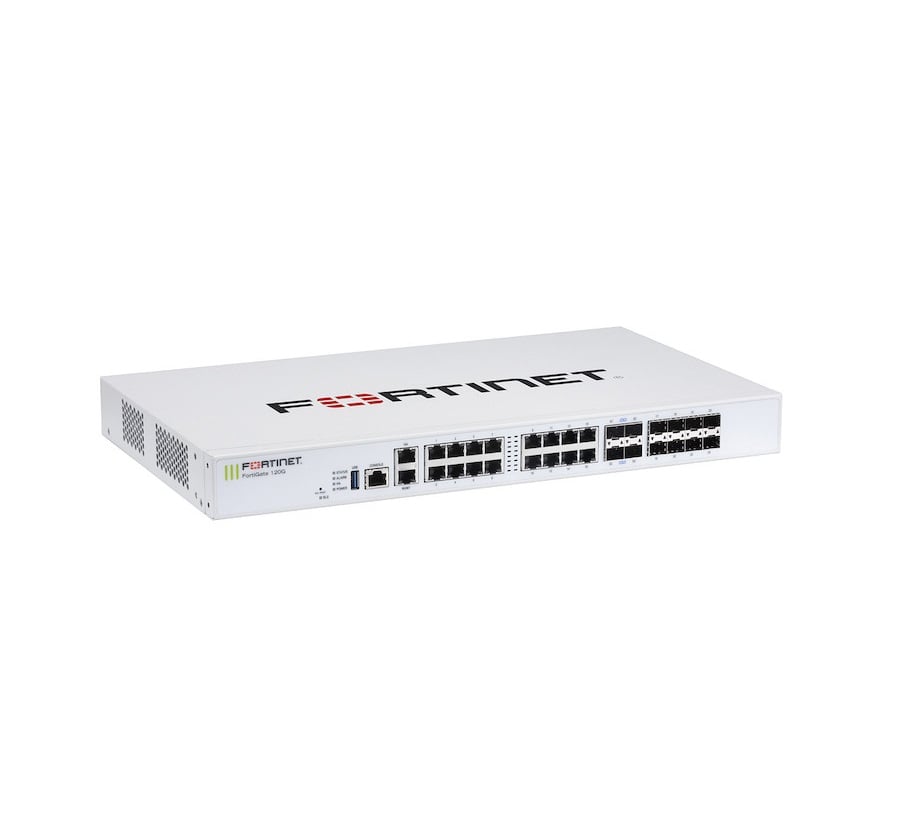
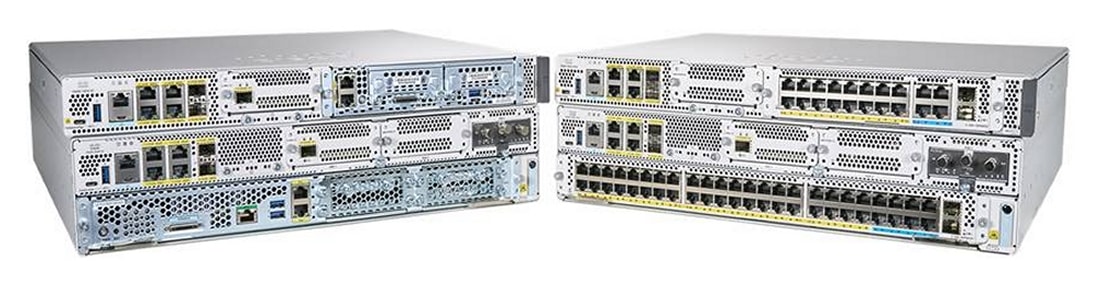
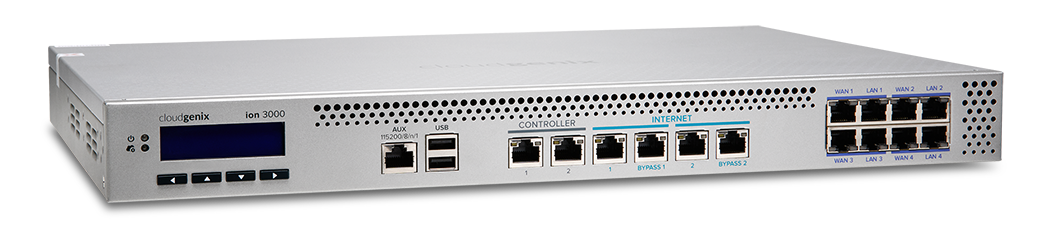
The most important practical difference here is philosophy, not throughput. The FortiGate 120G is a full NGFW that also does SD-WAN; the Cisco Catalyst 8300 is a modular routing platform that does SD-WAN and basic security; the Prisma ION 5200 is a pure SD-WAN appliance that deliberately offloads security to Palo Alto's cloud (Prisma Access). Pick the wrong one and you'll either pay twice for security or find yourself bolting on capabilities the box was never meant to deliver.
On headline numbers the FortiGate 120G is in a different league — 39 Gbps firewall, 5.3 Gbps threat protection and 3 Gbps SSL inspection from NP7 ASIC silicon, with Universal ZTNA included in FortiOS rather than as a separate SKU. For UK branches or regional hubs that want one box to terminate WAN, run SD-WAN, inspect TLS and enforce ZTNA, it is the most cost-effective option of the three and the easiest to justify to a finance director. The trade-off is that you're committing to the Fortinet ecosystem (FortiManager, FortiAnalyzer, FortiSASE) and the 120G's interfaces are fixed — no modular NIM slots.
The Cisco Catalyst 8300 is the most flexible physical platform. Dual NIM plus SM and PIM slots, optional 5G cellular NIMs, dual redundant PSUs and a 12-core CPU expandable to 32GB RAM mean it can be re-roled across a long refresh cycle — useful for organisations with mixed connectivity (MPLS tails, 4G/5G failover, T1/E1 legacy) or strict change-control where ripping and replacing isn't an option. IOS XE plus Cisco SD-WAN Manager, ThousandEyes and Umbrella give a mature, well-instrumented stack, but SD-WAN throughput tops out at 2 Gbps and you'll be paying for DNA subscriptions, ThousandEyes and Umbrella separately. It's the right box for Cisco-standardised estates and for sites where modularity matters more than raw Gbps per pound.
The Prisma ION 5200 is the cleanest fit for organisations that have already bought — or are buying — Prisma Access SASE. It's an app-defined SD-WAN node with strong physical connectivity (4x 10GbE SFP+, 4x 2.5G PoE++, dual hot-swap PSUs, 32GB RAM, NVMe SSD) and best-in-class cloud-native management via ADEM and CloudBlades, but it deliberately has no on-box NGFW — security is consumed from Prisma Access. That's elegant if your security strategy is cloud-first and you have reliable internet at every site; it's a liability if you need local inspection at branches with poor connectivity or strict data-residency constraints. As a buying framework: choose the FortiGate 120G if you want consolidated NGFW + SD-WAN in one licence and the best £/Gbps; choose the Catalyst 8300 if you're a Cisco shop that values modularity, 5G WAN options and operational maturity; choose the Prisma ION 5200 if you're committed to Palo Alto's SASE platform and want the SD-WAN edge to be a thin, cloud-managed extension of it.
Ready to proceed?
Want to compare different products or add more to this comparison?
Open Interactive Comparison Tool →