
☁️ HPE SimpliVity 325 Gen11 vs Nutanix NX-3155-G9 vs Dell AX-770
AI-powered analysis across 26 matched specifications
Performance Overview
Scores based on quantifiable specification values (1-10 scale)
Detailed Specifications
| Specification | SimpliVity 325 Gen11 HPE | Nutanix NX-3155-G9 Nutanix | Dell Integrated System for Azure Stack HCI (AX-770) Microsoft |
|---|---|---|---|
| Key Metrics | |||
| Form factor | 1U single-node | 2U single-node | 2U single-node |
| CPU sockets | 1 (AMD EPYC 9004) | 2 (Intel Xeon Scalable) | 2 (Intel Xeon 6th Gen) |
| Max cores per node | 128 | Varies by SKU | 172 (2× 86C) |
| Max memory per node | 3 TB DDR5 | 4 TB DDR4 | 8 TB DDR5 (32× DIMM, 6400 MT/s) |
| Max raw storage per node | 30 TB (6–8 SSD) | Varies by config (NVMe or hybrid) | 245 TB (16× E3.S NVMe) |
| Hypervisor / stack | VMware vSphere + OmniStack 6.0 | Nutanix AOS + AHV | Microsoft Azure Stack HCI / Azure Local |
| Compute & Memory | |||
| Processor family | AMD EPYC 9004 'Genoa' | Intel Xeon Scalable (Ice Lake era, G9) | Intel Xeon 6 Scalable |
| Socket count | 1 | 2 | 2 |
| Max core count (node) | 128 | Configurable, up to ~80 | 172 |
| Memory type | DDR5 | DDR4 | DDR5 up to 6400 MT/s |
| Max RAM | 3 TB | 4 TB | 8 TB |
| Storage | |||
| Drive form factor | 2.5" SAS/SATA SSD | 2.5" NVMe / SAS SSD / HDD | E3.S NVMe |
| Drive bays | 6 or 8 | Up to 24 (varies) | 16 |
| All-flash option | Yes (SSD) | Yes (NVMe or SSD) | Yes (all-NVMe only) |
| Hybrid (SSD+HDD) | No | Yes | No |
| Max raw capacity | 30 TB | Varies by SKU | 245 TB |
| Inline dedup & compression | Yes — OmniStack ASIC-assisted, ~90% claim | Yes — software (AOS), per-container | Yes — Storage Spaces Direct dedup/compression |
| GPU & Accelerators | |||
| GPU support | Limited (1U thermal envelope) | Up to 4× NVIDIA A/L/H-series | NVIDIA A16, L4, L40S, RTX PRO 6000 Blackwell |
| Primary GPU use cases | Light VDI | VDI, AI/ML training & inference | VDI, AI inference, Azure AI services |
| Networking & Management | |||
| Embedded management | HPE iLO 6 | Nutanix Prism Element/Central + IPMI | iDRAC10 + OpenManage |
| Cluster management | vCenter + SimpliVity plug-in / Morpheus VM Essentials | Prism Central (multi-cluster, single pane) | Windows Admin Center + Azure Arc portal |
| Cloud integration | HPE GreenLake telemetry | Nutanix Cloud Clusters (NC2) on AWS/Azure | Native Azure Arc, Azure services, Azure Local |
| Built-in data protection | Native backup, replication, VM-granular restore | Async/sync replication, Time Stream snapshots | Storage Replica, Azure Site Recovery |
| Lifecycle & Support | |||
| Standard warranty | 3-year HPE Foundation Care options | 3-year Nutanix Production Support | ProSupport tiers (1–5 yr) |
| Deployment service | HPE Pointnext / Factory Express | Nutanix Professional Services | Dell ProDeploy for Azure Stack HCI |
| Microsoft Azure Stack HCI certified | No | No | Yes — Integrated System (catalog validated) |
Expert Analysis
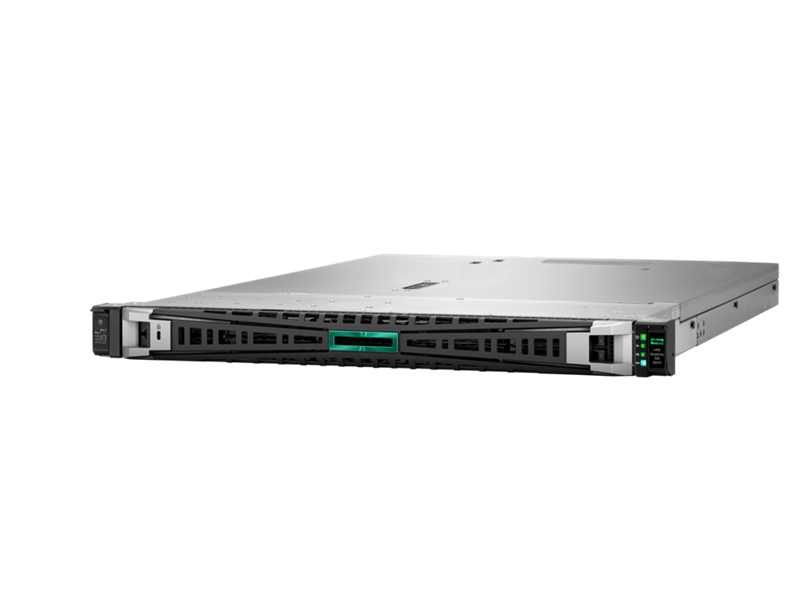
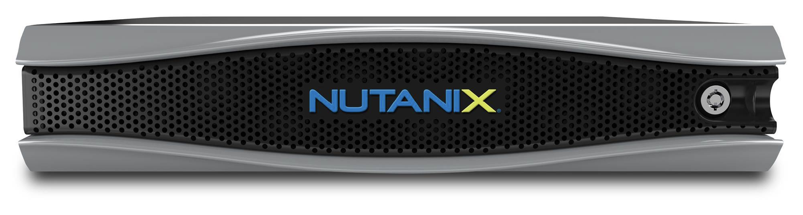
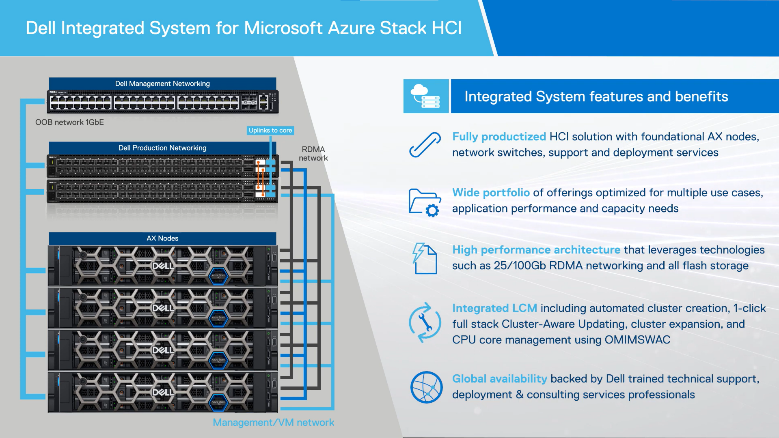
The headline difference here is stack philosophy, not silicon. The SimpliVity 325 Gen11 is a VMware-centric appliance whose value sits in the OmniStack data services layer — inline dedup, compression and VM-granular backup baked into a 1U single-socket box. The Nutanix NX-3155-G9 is a turnkey AOS/AHV node aimed at customers who want to leave VMware (or never joined) and run a software-defined stack with strong multi-cluster management via Prism Central. The Dell AX-770 is a Microsoft-validated Azure Stack HCI node — if your strategic direction is Azure Arc, Azure Local and Hyper-V, it is the only one of the three that is catalog-certified for that path.
On raw hardware, the AX-770 is the heaviest platform: dual 6th-gen Xeon (up to 172 cores), 8 TB DDR5 at 6400 MT/s and 16 E3.S NVMe bays scaling to 245 TB raw per node. It will outscale the other two for dense virtualisation, SQL consolidation and on-prem AI inference with L40S or Blackwell GPUs. The SimpliVity 325 is the opposite design point — a 1U EPYC 9004 box with 128 cores in a single socket and up to 30 TB raw. Per rack unit it is competitive on compute, but storage capacity and GPU options are constrained by the chassis. The Nutanix NX-3155-G9 sits in the middle: a balanced G9-generation 2U node with up to 4 TB RAM and up to four GPUs, well-suited to mixed VDI/AI workloads but using older Ice Lake-class silicon than the Dell.
Where SimpliVity still wins is data efficiency and operational simplicity for VMware shops. OmniStack's always-on dedup/compression and integrated backup remove the need for a separate Veeam-style tier for many SMB and ROBO use cases, and the 1U footprint is genuinely useful in space-constrained UK colocation cabinets. Nutanix wins on management maturity — Prism Central, one-click upgrades and NC2 burst-to-cloud on AWS or Azure are difficult to match if you run more than a handful of clusters. Dell wins on hardware ceiling and on Microsoft alignment, including Azure subscription-based licensing and direct Arc/Defender integration relevant to UK public-sector and regulated buyers tracking NCSC and NIS2 guidance.
Recommendation framework: pick the AX-770 if Azure is the strategic destination and you need maximum cores, RAM or AI-class GPUs per node. Pick the NX-3155-G9 if you want a hypervisor-independent HCI fabric with strong multi-site management and a credible exit from VMware licensing. Pick the SimpliVity 325 Gen11 if you are committed to vSphere, value built-in dedup and backup, and need to fit dense VDI or branch clusters into 1U slots.
Ready to proceed?
Want to compare different products or add more to this comparison?
Open Interactive Comparison Tool →