
💾 NetApp ASA A70 vs Pure FlashArray //X vs Dell PowerStore 3200T
AI-powered analysis across 26 matched specifications
Performance Overview
Scores based on quantifiable specification values (1-10 scale)
Detailed Specifications
| Specification | ASA A70 NetApp | FlashArray//X Pure Storage | Dell PowerStore 3200T Dell Storage |
|---|---|---|---|
| Key Metrics | |||
| Form factor | 4U HA pair | 2U–3U controller chassis (model dependent) | 2U appliance base |
| Max raw / effective capacity | 6.6 PB raw per HA pair | 4.4 PBe (X90 R5, 5:1) | 5.90 PBe per appliance, 23.6 PBe per cluster |
| Peak IOPS | 12M IOPS per HA pair | -- | -- |
| Latency | -- | As low as 250µs | -- |
| Availability | 100% data availability SLA | 99.9999% proven | -- |
| Storage scope | Block-only (SAN) | Block + File (unified) | Block + File (unified) |
| Capacity & Scale | |||
| Drive slots | 48 NVMe SSD per HA pair | -- | -- |
| Scale-out | 3 HA pairs / 6 nodes (SAN) | Single-array scale-up; cluster via Fusion | Up to 4 appliances per cluster |
| Max volumes | -- | -- | 10,000 |
| Max snapshots | -- | Unlimited | 200,000 per appliance |
| Data reduction | Inline dedup + compression (ONTAP) | 5:1 average (guaranteed via Evergreen//One) | 5:1 guaranteed |
| Performance & Controllers | |||
| Controller memory | 256 GB per HA pair | -- | 768 GB per appliance |
| CPU | -- | -- | 64 cores (4× Intel Xeon, 2.1 GHz) |
| Multipathing | Symmetric active-active (all paths load balance) | Active-active | Active-active with ALUA + symmetric for metro |
| Media | NVMe SSD | DirectFlash Modules (proprietary NVMe) | NVMe SSD |
| Connectivity & Protocols | |||
| Block protocols | FC, iSCSI, NVMe/FC, NVMe/TCP | FC, iSCSI, NVMe/FC, NVMe/RoCE, NVMe/TCP | FC, iSCSI, NVMe/FC, NVMe/TCP |
| File protocols | None (SAN-only) | NFS, SMB (FlashArray File Services) | NFS, SMB |
| Replication | SnapMirror sync + async; MetroCluster | ActiveCluster sync; async | Metro volume sync (zero RPO); async |
| Data Services & Security | |||
| Ransomware protection | AI/ML detection + Ransomware Recovery Guarantee | SafeMode immutable snapshots (default) | SafeMode snapshots + anomaly detection |
| Snapshot model | ONTAP redirect-on-write | Unlimited, zero-overhead | Up to 200,000 per appliance |
| Encryption | NetApp Volume/Aggregate Encryption (FIPS 140-2) | AES-256 data-at-rest (FIPS 140-2) | D@RE AES-256 (FIPS 140-2) |
| Upgrade model | ONTAP non-disruptive upgrades | Evergreen — data-in-place controller swaps | Non-disruptive; Anytime Upgrade programme |
| Management & Ecosystem | |||
| Management plane | ASA r2 simplified UI (ONTAP-based) + BlueXP | Pure1 SaaS (AI-driven) | PowerStore Manager + CloudIQ |
| AIOps / telemetry | BlueXP, Active IQ | Pure1 Meta | CloudIQ |
| Cloud integration | FSx for ONTAP, ANF, Cloud Volumes ONTAP | Pure Cloud Block Store (AWS, Azure) | APEX Block Storage for AWS/Azure |
| Consumption model | Keystone STaaS | Evergreen//One STaaS | APEX subscription |
Expert Analysis
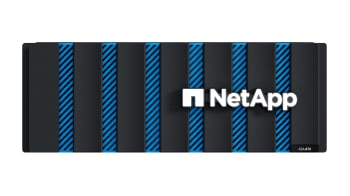
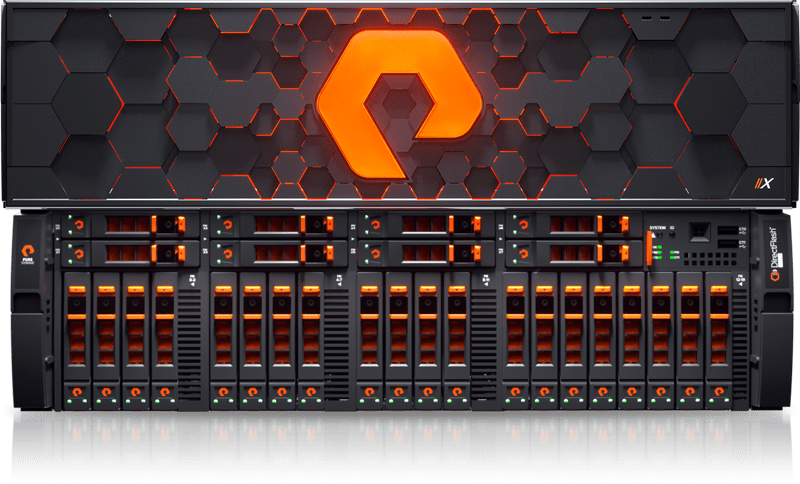
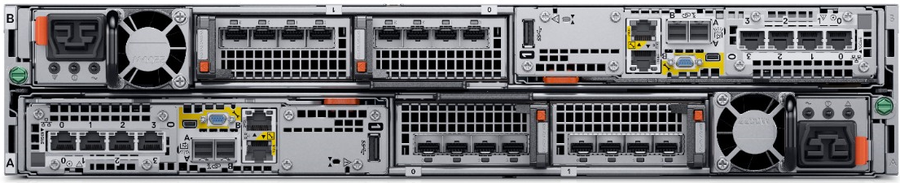
The most important practical difference is scope. NetApp's ASA A70 is a deliberately block-only SAN array — it strips ONTAP back to a simplified SAN operating model and pushes raw performance (12M IOPS, 256 GB controller memory, 6.6 PB raw per HA pair). Pure's FlashArray//X and Dell's PowerStore 3200T are both unified platforms that serve block and file from one box, with broadly similar feature sets but very different operating philosophies.
NetApp wins on headline performance and on scale within a single HA pair, and the 100% data availability SLA plus Ransomware Recovery Guarantee are commercially meaningful for UK financial-services and NHS workloads where downtime carries hard penalties. The trade-off is that ASA r2 is SAN-only — if you also need NFS/SMB you'll need a separate FAS/AFF or a different platform entirely. Pure FlashArray//X is the strongest day-two experience in the group: Pure1's AIOps, the Evergreen non-disruptive upgrade model, and 250µs latency under load make it the easiest to live with for five-plus years, and SafeMode snapshots are genuinely well-implemented. The cost is a proprietary DirectFlash media stack and a premium price point. Dell PowerStore 3200T sits between the two on raw spec but offers the most generous controller resources (64 cores, 768 GB RAM), native unified block+file, metro sync for zero-RPO DR, and typically the most aggressive commercial terms through Dell's UK channel — particularly when bundled with PowerProtect or VxRail.
For a UK buyer the framework is straightforward. Pick the ASA A70 if you run a pure SAN estate (VMware, Oracle, SQL, Epic) and want maximum block performance plus NetApp's data-protection guarantees and Keystone STaaS. Pick FlashArray//X if operational simplicity, predictable latency and a genuinely non-disruptive ten-year roadmap matter more than headline IOPS — it's the lowest-risk choice for teams that don't want to think about their array. Pick PowerStore 3200T if you need unified block and file in one appliance, want metro sync replication built in, or you're already standardised on Dell infrastructure and APEX consumption.
Ready to proceed?
Want to compare different products or add more to this comparison?
Open Interactive Comparison Tool →