
☁️ VMware VCF vs Nutanix Cloud Platform vs Azure Stack HCI
AI-powered analysis across 26 matched specifications
Performance Overview
Scores based on quantifiable specification values (1-10 scale)
Detailed Specifications
| Specification | VMware Cloud Foundation VMware | Nutanix Cloud Platform Nutanix | Azure Stack HCI (Azure Local) Microsoft |
|---|---|---|---|
| Key Metrics | |||
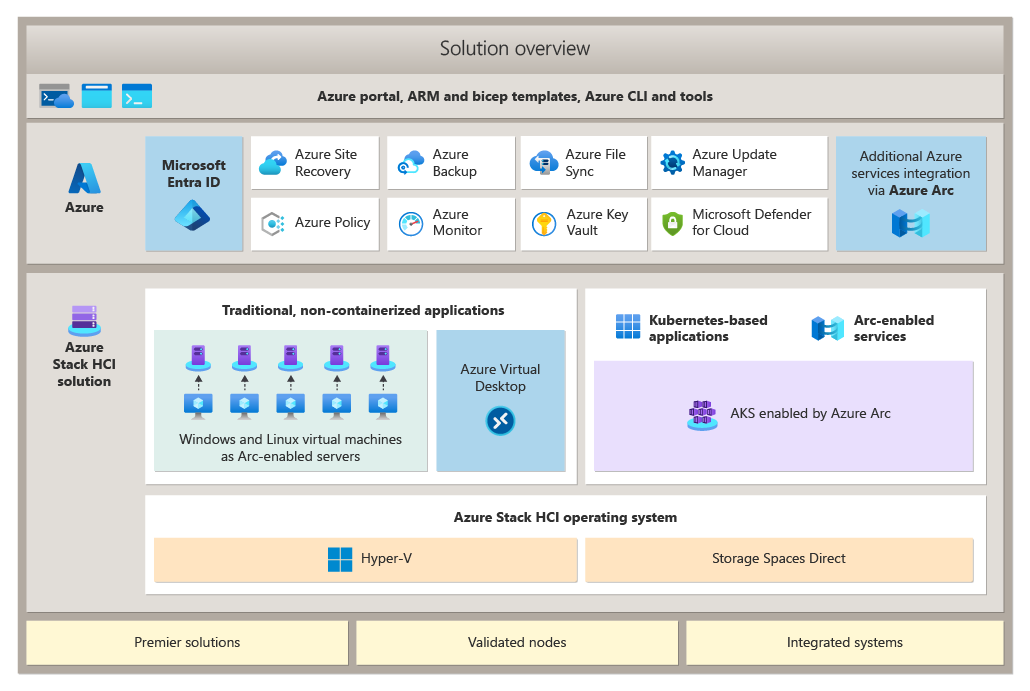
| Hypervisor | VMware ESXi (vSphere 9) | Nutanix AHV (KVM-based) or ESXi | Microsoft Hyper-V |
| Storage layer | vSAN ESA (Express Storage Architecture) | Nutanix AOS distributed storage | Storage Spaces Direct (S2D) |
| Maximum nodes per cluster | 64 (vSAN ESA) | 32 (AOS, hypervisor-dependent) | 16 |
| Maximum VMs per host | -- | -- | 1,024 |
| Maximum cluster storage | -- | -- | 4 PB |
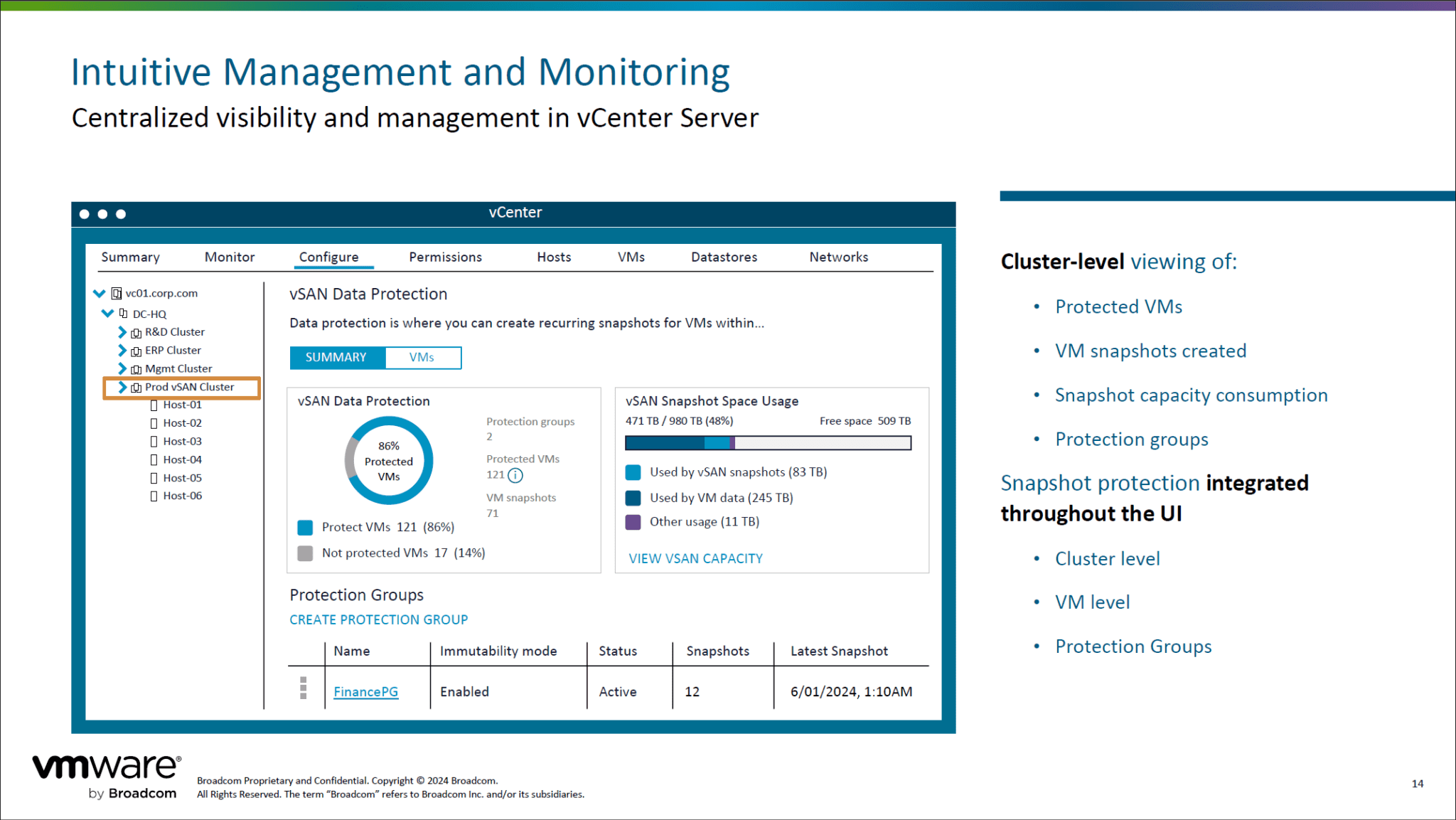
| Licensing model | Per-core subscription, 16-core CPU minimum, 1 TiB vSAN per core included | Per-core subscription (Starter / Pro / Ultimate) | Per-core subscription from $10/core/month |
| Compute & Hypervisor | |||
| Bundled hypervisor cost | Included in VCF subscription | AHV included at no extra licence cost | Hyper-V included in Windows Server / Azure Local |
| Third-party hypervisor support | ESXi only | AHV, ESXi, and limited Hyper-V | Hyper-V only |
| Hardware ecosystem | Broad vSAN ReadyNode catalogue (Dell, HPE, Lenovo, Cisco, Fujitsu) | NX appliances plus Dell XC, HPE, Lenovo, Cisco, Fujitsu | Validated catalogue from Dell, HPE, Lenovo, DataON, Supermicro and others |
| GPU / AI workload support | vGPU via NVIDIA AI Enterprise, Private AI Foundation | GPU passthrough and vGPU; Nutanix GPT-in-a-Box reference architecture | DDA / GPU partitioning; Azure Arc-enabled ML |
| Storage & Data Services | |||
| Architecture | vSAN ESA — single-tier all-NVMe with log-structured filesystem | Distributed shared-nothing with data locality | S2D — software-defined with ReFS and mirror/parity resiliency |
| Inline data reduction | Compression + deduplication (ESA) | Compression, deduplication, erasure coding | Deduplication and compression (ReFS) |
| Storage efficiency claim | Up to 70% more usable capacity vs OSA | Native erasure coding (EC-X) | Nested resiliency for 2-node, mirror-accelerated parity |
| File / object services | vSAN File Services (NFS/SMB) | Nutanix Files (SMB/NFS) and Objects (S3) — licensed separately | SMB native; Azure Blob via Arc |
| Networking & Security | |||
| SDN / overlay networking | NSX — full overlay, distributed routing, VPN, load balancing | Flow Virtual Networking (overlay, microsegmentation) | SDN via Network Controller; integrates with Azure Virtual Network via Arc |
| Microsegmentation / east-west firewall | NSX Distributed Firewall, IDS/IPS, advanced threat prevention | Flow Network Security (policy-based microsegmentation) | Datacenter Firewall; Defender for Cloud integration |
| Zero trust / identity | NSX + vDefend, Entra/AD integration | Prism + AD/SAML; Cloud Manager security compliance | Native Entra ID, RBAC via Azure |
| Management & Cloud Integration | |||
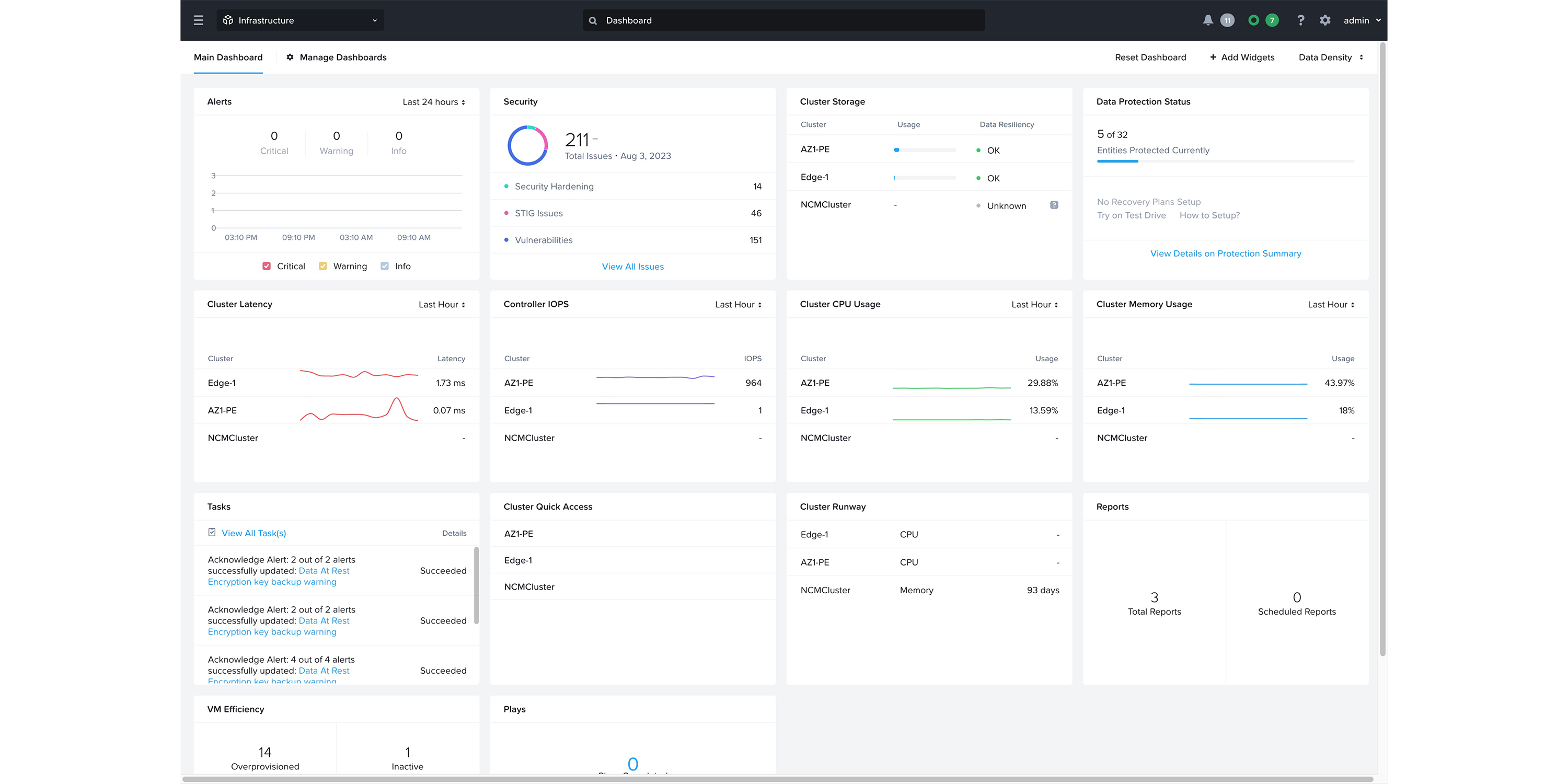
| Management plane | vCenter + Aria Suite (Operations, Automation, Lifecycle) | Prism Central + Nutanix Cloud Manager | Azure portal + Windows Admin Center |
| Lifecycle management | SDDC Manager — full-stack patching and upgrades | One-click LCM across firmware, hypervisor and software | Cluster-aware updating via Azure Update Manager |
| Kubernetes | VKS (vSphere Kubernetes Service) included in VCF | NKP / Nutanix Kubernetes Platform — unlimited clusters on Pro/Ultimate | AKS enabled by Azure Arc |
| Hybrid cloud reach | VCF on-prem + VMware Cloud on AWS, Azure VMware Solution, Google Cloud VMware Engine | NC2 on AWS and Azure; multi-cloud via Cloud Manager | Native Azure extension — unified billing, Arc, Azure services on-prem |
| UK data-residency / sovereignty fit | Strong — runs fully disconnected; suits FCA/NHS DSPT | Strong — fully disconnected operation supported | Requires Azure Arc connection for full functionality; sovereign cloud options via partners |
| Commercial Model | |||
| Pricing basis | Per-core subscription, 16-core minimum per CPU | Per-core subscription, tiered (Starter/Pro/Ultimate) | Per physical core per month, OPEX via Azure billing |
| Indicative entry price | -- | -- | From $10/core/month (≈$23.30 with unlimited Windows Server guests) |
| Included storage entitlement | 1 TiB vSAN per licensed core | Included in AOS | Included in subscription |
| Stated economic outcome | 365% three-year ROI, 6-month payback (IDC 2024) | -- | -- |
Expert Analysis
The clearest practical difference between these three platforms is philosophy. VMware Cloud Foundation is a complete, opinionated software-defined data centre — compute, storage, networking and management all from one vendor, tightly integrated and now consolidated into a single subscription. Nutanix Cloud Platform is the most hardware-agnostic and hypervisor-flexible of the three, built around AHV but happy to run on almost anyone's servers and to manage ESXi clusters too. Azure Stack HCI (now branded Azure Local) is fundamentally an extension of Azure into your data centre: it shines when your operating model is already Azure-first and falls behind when it isn't.
VCF 9 remains the benchmark for feature depth. NSX is still the most capable on-prem SDN and distributed firewall on the market, vSAN ESA delivers genuine storage efficiency gains over the previous OSA architecture, and Aria gives operations teams visibility that Prism and Windows Admin Center can't fully match for heterogeneous estates. The trade-off is cost and complexity: the 16-core-per-CPU minimum and the post-Broadcom subscription model have materially raised the entry price, and the full stack is a lot to operate. Nutanix wins on day-to-day usability — Prism Central is widely regarded as the cleanest HCI management plane, one-click LCM genuinely works, and AHV removes a hypervisor licence line entirely. Its weakness is at the network layer, where Flow is solid but not an NSX replacement, and in some advanced storage features that remain licensed separately.
Azure Stack HCI is the value play and the natural choice for Microsoft-aligned estates. Per-core pricing from $10/month is the lowest headline rate here, AKS and Arc integration are native rather than bolted on, and unified Azure billing is genuinely useful for finance teams already consuming Azure. The catch is that 'on-prem' is a slight fiction — most management paths require an Azure connection, which complicates fully sovereign or air-gapped UK deployments (defence, certain NHS trusts, parts of central government). It also caps at 16 nodes per cluster, which is fine for branch and mid-market but limiting at scale.
For UK buyers, the decision framework is straightforward. If you are a regulated enterprise with an existing VMware estate, NSX microsegmentation requirements, or workloads that need to burst to VMware Cloud on AWS or AVS, VCF still justifies its price — provided you can absorb the new licensing maths. If you want to escape VMware licensing, run a mixed hardware estate, or prioritise operational simplicity over feature breadth, Nutanix is the strongest all-rounder and the safest migration target. If your strategic direction is Azure, you run Windows Server-heavy workloads, and you want OPEX billing with Arc-managed Kubernetes, Azure Local is the most cost-effective and architecturally coherent choice.
Ready to proceed?
Want to compare different products or add more to this comparison?
Open Interactive Comparison Tool →