
🛡️ FortiGate 4200F vs Palo Alto PA-5450 vs Cisco Firepower 9300
AI-powered analysis across 24 matched specifications
Performance Overview
Scores based on quantifiable specification values (1-10 scale)
Detailed Specifications
| Specification | FortiGate FG-4200F Fortinet | Palo Alto PA-5450 Palo Alto | Cisco Firepower 9300 Cisco |
|---|---|---|---|
| Key Metrics | |||
| Firewall Throughput | 800 Gbps | 200 Gbps | Up to 225+ Gbps ASA / ~100+ Gbps FTD |
| IPS/Threat Prevention Throughput | 52 Gbps IPS / 45 Gbps Threat Protection | 189 Gbps Threat Prevention | -- |
| IPSec VPN Throughput | 210 Gbps | 85 Gbps | -- |
| Max Concurrent Sessions | 210,000,000 (450M HyperScale) | 100,000,000 | -- |
| New Sessions/Second | 1,000,000 (7M HyperScale) | 3,600,000 | -- |
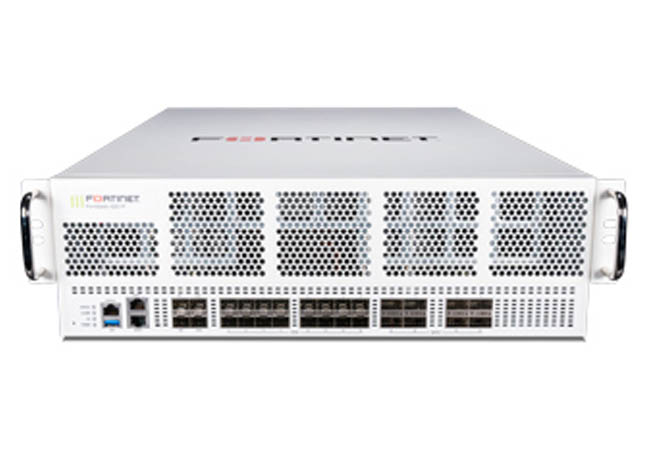
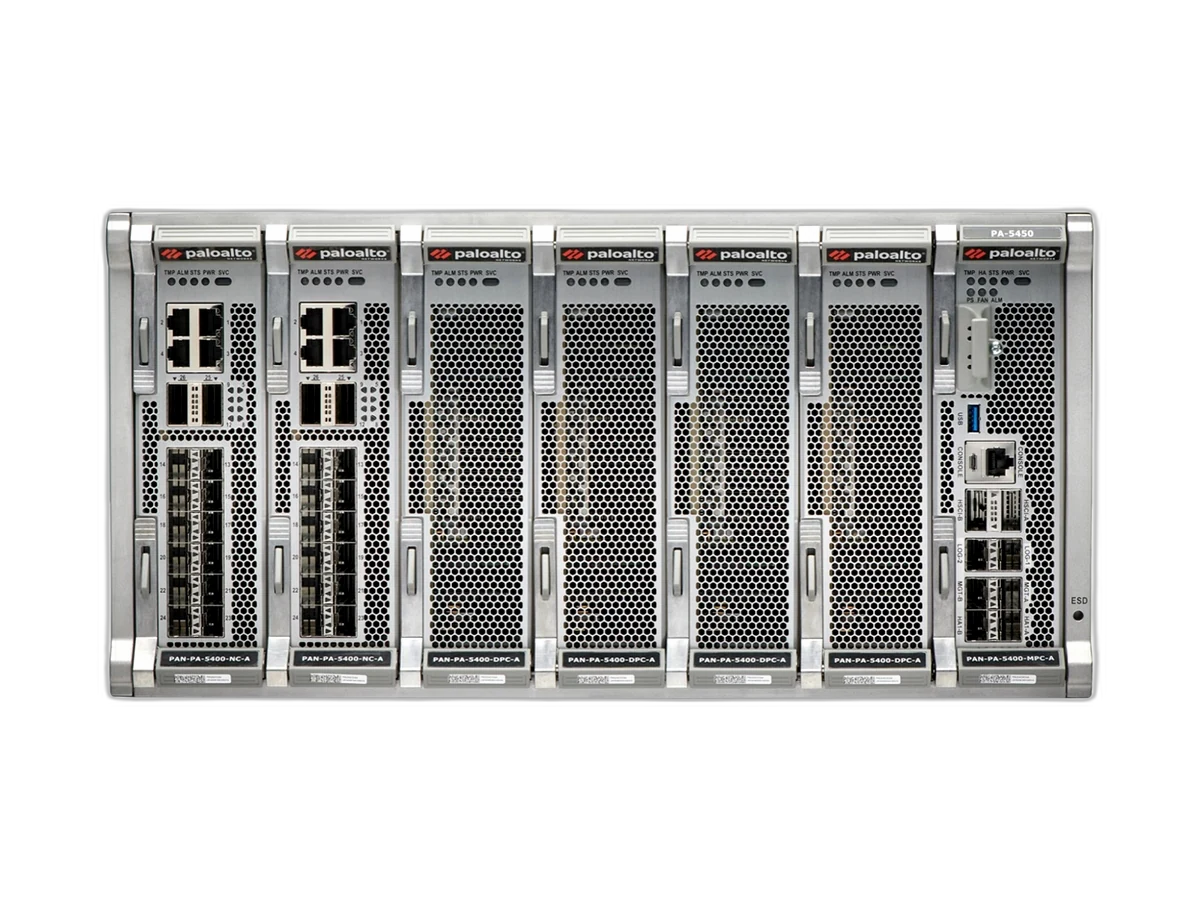
| Form Factor | 2U rack-mount | 5U rack-mount (17.38" W × 30.25" D × 8.75" H) | 3U rack-mount |
| Compute | |||
| Processor | -- | -- | -- |
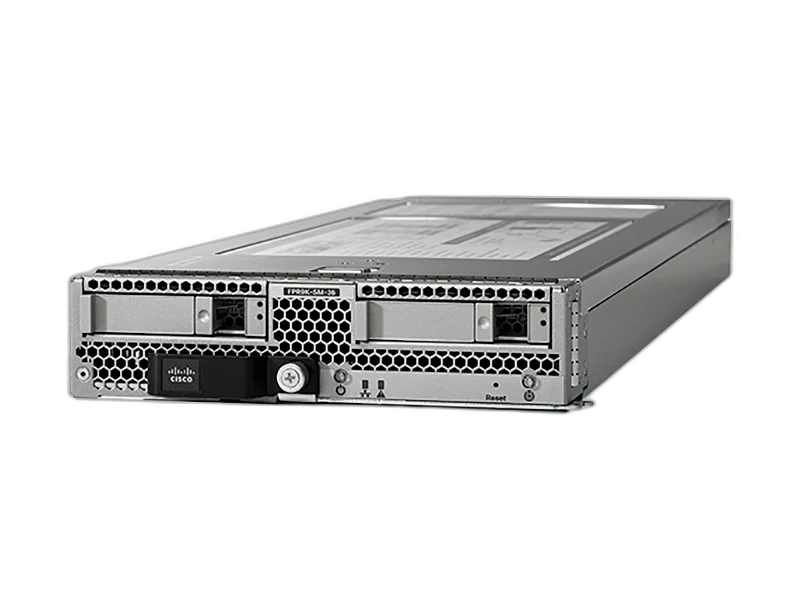
| Security Modules | -- | -- | Up to 3 per chassis (SM-24, SM-36, SM-44, SM-56) |
| Chassis Clustering | -- | -- | Up to 16 chassis |
| Multi-Instance Support | -- | -- | Supported (per module) |
| Memory | |||
| Memory | -- | -- | -- |
| Storage | |||
| Storage | None (2 × 1.92 TB SSD on FG-4201F) | System: 480 GB SSD RAID1 / Log: 4 TB SSD (optional) | -- |
| Networking | |||
| Network Interfaces | 18 × 25GE SFP28 / 10GE SFP+ / GE SFP + 8 × 100GE QSFP28 / 40GE QSFP+ + 2 × 25GE SFP28 HA + 2 × GE RJ45 Management | Up to 8 × 25G/10G + 24 × 1G/10G SFP/SFP+ + 4 × 40G/100G QSFP28 + 1 × 1G SFP out-of-band mgmt + 2 × 1G SFP HA + 1 × 40G QSFP+ HA | 100G QSFP28, 40G QSFP (chassis-level shared) |
| GPU / Accelerators | |||
| GPU / Accelerators | -- | -- | -- |
| Expansion / PCIe | |||
| Expansion / PCIe | -- | -- | -- |
| I/O & Ports | |||
| I/O & Ports | 2 × GE RJ45 Management | 1 × 1G SFP out-of-band mgmt + 2 × 1G SFP HA + 1 × 40G QSFP+ HA | -- |
| Management | |||
| Management | -- | -- | Cisco Secure Firewall Management Center (FMC) |
| High Availability | Active-Active, Active-Passive | Active/Passive, Active/Active | Active/active clustering, dual supervisors |
| Power | |||
| Power Supply | Multi-redundant hot-swap | 2200W AC or DC (2, redundant, expandable to 4) | Hot-swap N+1 (AC or DC) |
| Physical / Environmental | |||
| Cooling | -- | Hot-Swap Fans: Yes | Fan Trays: Hot-swap N+1 |
| Operating Temperature | 0°C to 40°C | -- | -- |
| Security | |||
| Security | -- | -- | -- |
| Software & OS Compatibility | |||
| Operating System | FortiOS (same as all FortiGate) | PAN-OS 11.x (ML-Powered) | Cisco FTD or Cisco ASA (per module) |
| Warranty & Support | |||
| Warranty & Support | -- | -- | -- |
Expert Analysis
These three enterprise firewalls represent distinct architectural approaches to high-performance security. The FortiGate FG-4200F delivers exceptional raw throughput with 800 Gbps firewall performance and 210 Gbps IPSec VPN, making it particularly suited for carrier-grade environments and data centres requiring maximum packet processing capacity. Its 18×25GE and 8×100GE port configuration provides exceptional network density in a compact 2U form factor, though it lacks built-in storage for logging. The Palo Alto PA-5450 offers strong threat prevention capabilities with 189 Gbps throughput and 3.6 million new connections per second, making it well-suited for organisations prioritising deep packet inspection and application-layer security. Its modular interface design and built-in SSD storage provide flexibility for comprehensive logging requirements.
The Cisco Firepower 9300 takes a fundamentally different approach with its modular chassis design, supporting up to three security modules per 3U chassis and scaling to 16 chassis in a cluster for terabit-level aggregate throughput. This architecture provides exceptional flexibility for multi-tenant environments or organisations requiring isolated security domains, though its per-module throughput (up to 225 Gbps ASA or ~100+ Gbps FTD) is lower than the FortiGate's single-appliance performance. The Cisco solution excels in environments requiring gradual scalability and hardware investment protection, while the Fortinet and Palo Alto appliances offer higher single-unit performance for organisations with fixed capacity requirements.
Value propositions differ significantly: Fortinet provides maximum throughput per rack unit with comprehensive port density; Palo Alto delivers strong threat prevention with built-in storage for security analytics; Cisco offers unparalleled scalability and flexibility through modular expansion. Organisations should consider whether they prioritise raw throughput (Fortinet), advanced threat prevention with logging (Palo Alto), or scalable, modular architecture with investment protection (Cisco) when selecting between these solutions.
Ready to proceed?
Want to compare different products or add more to this comparison?
Open Interactive Comparison Tool →