
🔀 FortiSwitch FS-3032E vs Nexus 9336C vs Arista 7060X6
AI-powered analysis across 26 matched specifications
Performance Overview
Scores based on quantifiable specification values (1-10 scale)
Detailed Specifications
| Specification | FortiSwitch FS-3032E Fortinet | Cisco Nexus 9300 — N9K-C9336C-FX2 Cisco | 7060X6 Series Arista |
|---|---|---|---|
| Key Metrics | |||
| Model / Part Number | FS-3032E | N9K-C9336C-FX2 | 7060X6 Series (multiple models) |
| Switching Capacity | 6.4 Tbps | 7.2 Tbps | 25.6 Tbps (1RU) / 51.2 Tbps (2RU) |
| Forwarding Rate | 9,520 Mpps | 5,400 Mpps | 10.6 Bpps (1RU) / 21.2 Bpps (2RU) |
| Maximum Port Density | 32 × 100GE QSFP28 | 36 × 100G QSFP28 | 32 × 800G OSFP800 (1RU) / 64 × 800G OSFP800 (2RU) |
| Breakout Capability | 4 × 25GE per port (128 × 25GE total) | 4 × 25G per port (144 × 25G total) | Flexible: up to 512 × 100G (2RU-B), 320 × 100G (2RU), 64 × 400G (1RU), 128 × 400G (2RU) |
| Compute | |||
| Processor | -- | -- | -- |
| Latency | -- | -- | From 700ns (cut-through, line rate) |
| Buffer | -- | -- | 84MB (1RU) / 165MB (2RU) |
| Memory | |||
| MAC Address Table | 40,000 | 128,000 | 136K entries |
| IPv4 Routes | -- | 256,000 | 860K prefixes |
| IPv6 Routes | -- | -- | 500K prefixes |
| VXLAN Segments | -- | 16,000 | -- |
| Networking | |||
| Layer 3 Routing Protocols | OSPF, BGP, ECMP, VXLAN, EVPN | VXLAN BGP EVPN | BGP, OSPF, IS-IS, VXLAN, EVPN, BFD, PIM, IGMP |
| AI/High-Performance Features | -- | -- | RoCEv2, PFC, ECN, Advanced DCQCN, full lossless RoCEv2 support |
| MACsec | -- | IEEE 802.1AE (all ports) | -- |
| I/O & Ports | |||
| Port Types | 32 × 100GE QSFP28 (40GE QSFP+ compatible) | 36 × 100G QSFP28 | 32 × 800G OSFP800 (1RU) / 64 × 800G OSFP800 (2RU) |
| Management | |||
| Management Modes | FortiLink or standalone management | NX-OS standalone or Cisco ACI fabric | Arista EOS, CloudVision, AI Analyzer, eAPI, OpenConfig, gNMI, ZTP |
| Telemetry & Analytics | -- | Rich streaming telemetry and analytics | AI Analyzer, deep telemetry for GPU cluster congestion visibility |
| Power | |||
| Power Supply | Dual redundant hot-swap | Dual hot-swap AC/DC (FTB and BTF airflow) | AC and DC PSU options; hot-swap redundant |
| Power Consumption | 463.8W max | 500W max | -- |
| Physical / Environmental | |||
| Form Factor | 1U rack-mount | 1U rack-mount | 1RU (7060X6-32PE) or 2RU (7060X6-64PE / 7060X6-64PE-B) |
| Weight | -- | 12 kg | -- |
| Cooling | -- | Redundant fan trays | Front-to-Rear (all models) |
| Operating Temperature | 0°C to 45°C | -- | -- |
| Airflow Options | -- | Front-to-back and back-to-front airflow options | -- |
| Software & OS Compatibility | |||
| Operating System / Software | -- | NX-OS | Arista EOS |
Expert Analysis
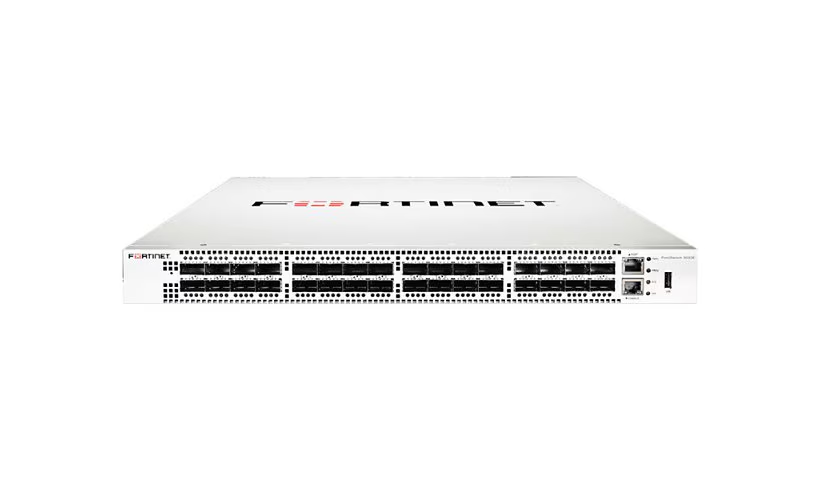
These three spine switches represent distinct generations and architectural approaches for data centre networking. The FortiSwitch FS-3032E offers a solid 100GE foundation with 6.4 Tbps capacity and 9,520 Mpps forwarding, making it suitable for traditional enterprise spine deployments where integration with Fortinet's security ecosystem via FortiLink is valuable. Its 32-port density and 128×25GE breakout capability provide good flexibility for cost-optimised 25G server leaf connections, though its 40,000 MAC table and lack of advanced telemetry may limit very large or dynamic environments.
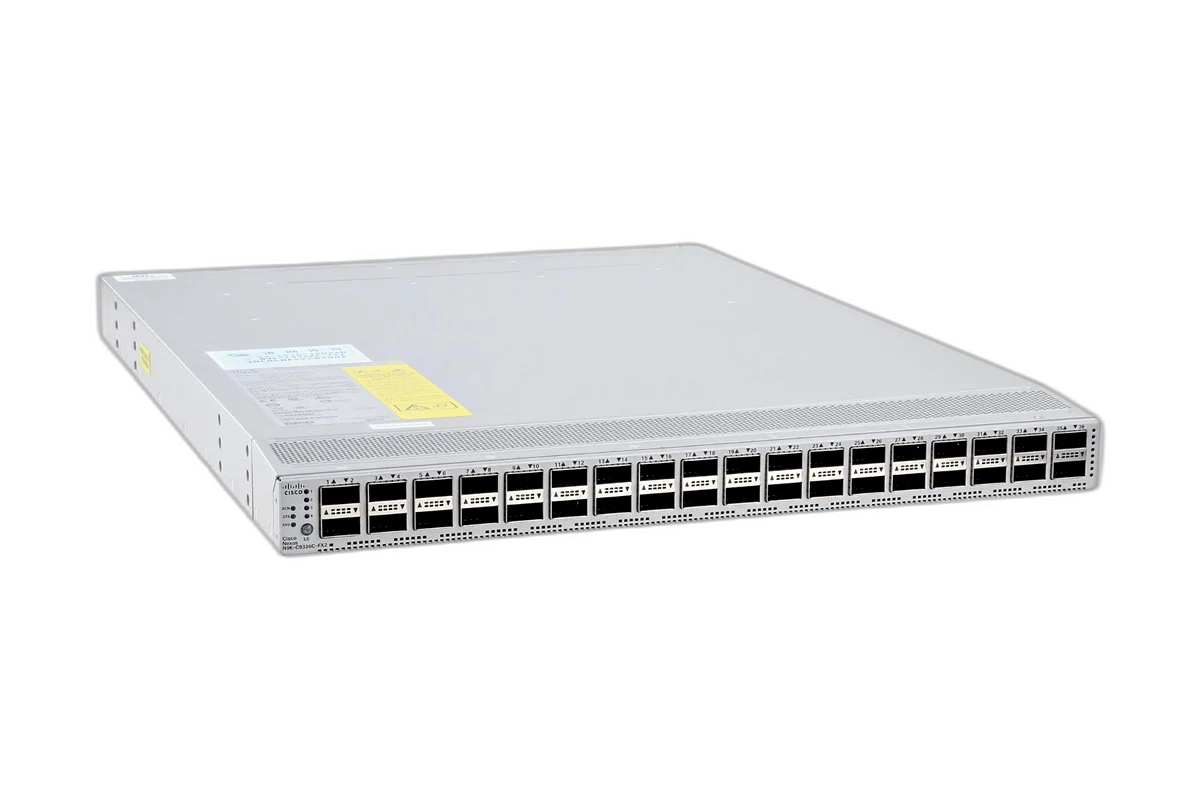
The Cisco Nexus N9K-C9336C-FX2 delivers enhanced scale with 36×100G ports, 7.2 Tbps switching, and substantial tables (128,000 MAC, 256,000 IPv4 routes, 16,000 VXLAN segments). Its dual-mode operation—supporting both traditional NX-OS and Cisco ACI fabric—provides architectural flexibility for organisations transitioning to intent-based networking. The inclusion of MACsec on all ports offers robust encryption, while 5,400 Mpps forwarding, though lower than the FortiSwitch's rate, is sufficient for most Layer 3 spine workloads. This switch excels in enterprise data centres requiring Cisco ecosystem integration, comprehensive security, and either traditional or ACI operational models.
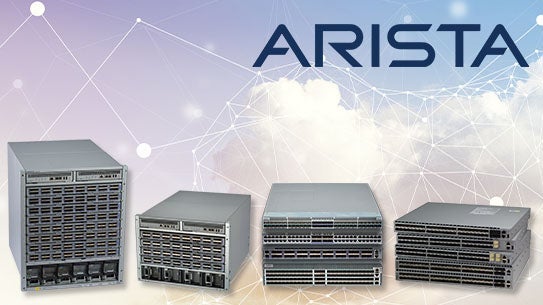
The Arista 7060X6 Series represents a significant leap in performance, targeting next-generation AI/ML and high-performance computing fabrics. With up to 64×800G ports, 51.2 Tbps throughput, 21.2 Bpps forwarding, and sub-microsecond latency (from 700ns), it substantially outperforms the 100GE switches. Its massive buffers (165MB on 2RU models) and advanced congestion management (DCQCN, PFC, ECN) enable lossless RoCEv2 for GPU cluster networking, while flexible breakout to 512×100G provides exceptional density. The AI Analyzer telemetry and CloudVision integration offer unprecedented visibility into AI workload performance. This platform is engineered for hyperscale AI data centres where throughput, latency, and congestion management are critical, albeit at a higher cost and power footprint.
Ready to proceed?
Want to compare different products or add more to this comparison?
Open Interactive Comparison Tool →