
🔀 Juniper EX4650 vs Arista 7050X4 vs Cisco Nexus 93180YC-FX
AI-powered analysis across 31 matched specifications
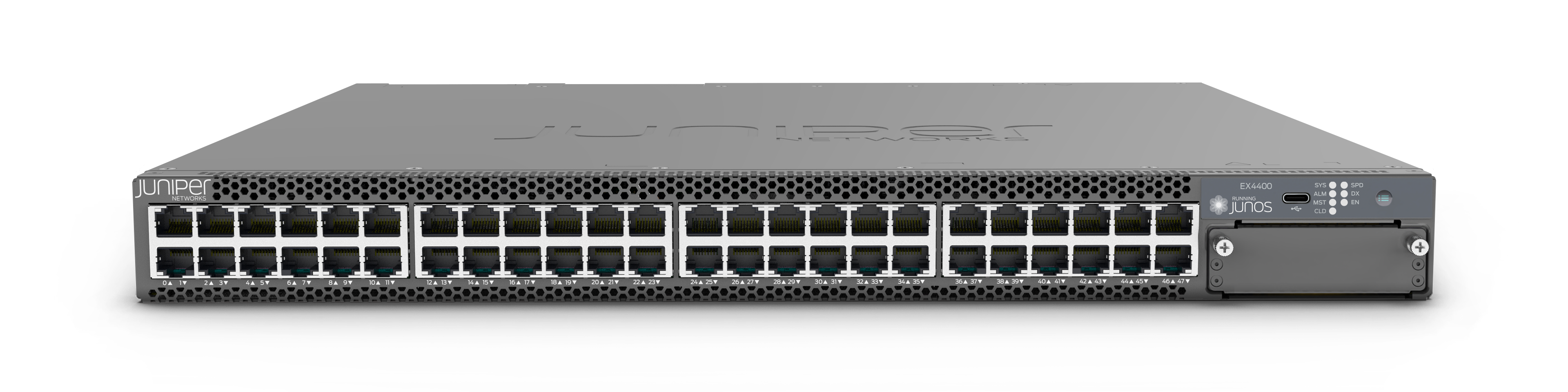
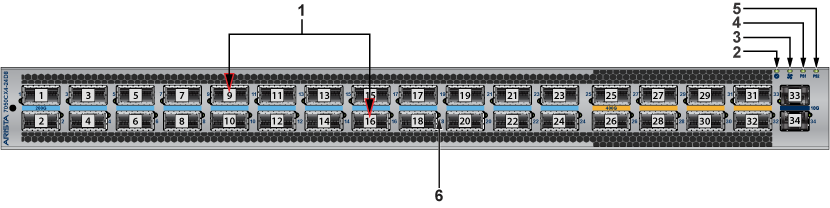
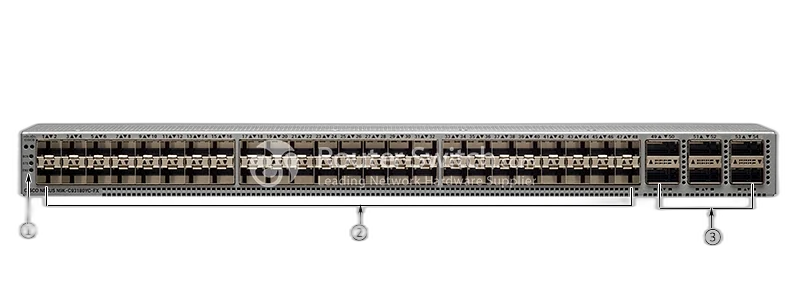
Performance Overview
Scores based on quantifiable specification values (1-10 scale)
Detailed Specifications
| Specification | Juniper EX4650 Juniper | 7050X4 Series Arista | Cisco Nexus 9300 — N9K-C93180YC-FX Cisco |
|---|---|---|---|
| Key Metrics | |||
| Switching capacity | 4 Tbps | 12.8 Tbps | 3.6 Tbps |
| Forwarding rate | -- | 5.3 Bpps | 2.7 Bpps |
| Port configuration | 48× 25GbE SFP28 + 8× 100GbE QSFP28 | Up to 32× 400G or 128× 100G or 128× 25G | 48× 25G SFP28 + 6× 100G QSFP28 |
| Latency | 550 ns | From 900 ns | Sub-microsecond (~1 μs) |
| Form factor | 1RU | 1RU | 1RU |
| Max 25GbE density (with breakout) | 80 | 128 | 48 |
| Port density & connectivity | |||
| Native 25GbE ports | 48 | Up to 128 (via breakout) | 48 |
| Native 100GbE uplinks | 8 × QSFP28 | Up to 128 (or 32× 400G) | 6 × QSFP28 |
| 400GbE support | No | Yes — OSFP or QSFP-DD | No |
| Breakout support | 100G → 4×25G | 400G → 4×100G or 4×25G | 25G → 10G/1G |
| Management port | RJ-45 + console | -- | RJ-45 + console |
| Forwarding & buffers | |||
| Architecture | Non-blocking, cut-through | Non-blocking, cut-through, DLB | Non-blocking, cut-through |
| Packet buffer | -- | 132 MB shared dynamic | -- |
| ECMP paths | -- | 128-way | -- |
| IPv4 route table | -- | 800,000 | -- |
| IPv6 route table | -- | 500,000 | -- |
| MAC table | -- | 128,000 | -- |
| Fabric & security features | |||
| VXLAN / EVPN | Yes — full EVPN-VXLAN | Yes — VXLAN, EVPN | Yes — VXLAN BGP EVPN |
| MPLS / L3VPN | Yes — MPLS, L3VPN, 6PE | No (data-centre focus) | Limited (segment routing on some images) |
| MACsec (802.1AE) | -- | Select models | All ports |
| Fabric mode | Junos EVPN-VXLAN | EOS EVPN-VXLAN | NX-OS standalone or Cisco ACI |
| ECMP / load balancing | Standard ECMP | 128-way ECMP + DLB | -- |
| Management & operations | |||
| Operating system | Junos OS | Arista EOS (single binary) | Cisco NX-OS |
| Cloud/AI management | Juniper Mist AI wired assurance | Arista CloudVision | Cisco Nexus Dashboard / DCNM |
| Zero-touch provisioning | Yes | Yes | Yes (POAP) |
| Streaming telemetry | Yes (Junos Telemetry Interface) | Yes (OpenConfig, gNMI) | Yes (Model-Driven Telemetry) |
| On-box compute | 2.3 GHz quad-core, 16 GB RAM, 64 GB SSD | -- | -- |
| Automation | Junos PyEZ, Ansible, NETCONF | EOS SDK, eAPI, Ansible, Python | NX-API, Ansible, Python, Puppet |
| Power & environment | |||
| Redundant PSU | Yes, hot-swap | Yes, hot-swap | Yes, hot-swap |
| PSU efficiency | -- | >94% | -- |
| Airflow options | Front-to-back / back-to-front | Front-to-back / back-to-front | Front-to-back / back-to-front |
Expert Analysis
The headline difference here is generation. The Arista 7050X4 is a 400G-class platform at 12.8 Tbps, while the Juniper EX4650 (4 Tbps) and Cisco Nexus 93180YC-FX (3.6 Tbps) are both 100G-uplink leaf switches from the previous design cycle. If you are buying for a fabric that needs to live past 2027, or you expect 100GbE server NICs to become the norm in your racks, the 7050X4 is in a different class — it can act as a leaf today with 128× 25G breakouts and graduate to a 400G spine without a forklift.
Within the 25G-leaf tier, the EX4650 and the 93180YC-FX are closely matched on port layout but diverge sharply on philosophy. The Juniper is the more capable Layer 3 box on paper: 550 ns latency, full MPLS / L3VPN / 6PE alongside EVPN-VXLAN, eight 100G uplinks rather than six, and Mist AI for wired assurance, which is genuinely useful for UK enterprises already running Mist for Wi-Fi. The Cisco's distinctive value is the ecosystem — line-rate MACsec on every port, native Cisco ACI mode for shops standardised on APIC, and the deepest integration with Nexus Dashboard, Tetration and the wider Cisco DC stack. If your operations team is Cisco-fluent and you run ACI, the 93180YC-FX remains the path of least resistance even though its silicon is older.
Arista's argument beyond raw bandwidth is EOS. A single binary image across the estate, mature streaming telemetry, CloudVision for change management, and a 132 MB shared buffer with 128-way ECMP and Dynamic Load Balancing make the 7050X4 the strongest choice for AI/ML, storage and HFT fabrics where microbursts and elephant flows actually hurt. The trade-off is price per port at the low end and the lack of MPLS if you were hoping to collapse DCI onto the leaf.
Recommendation framework: pick the Arista 7050X4 if you are building a new spine-leaf fabric with any 100/400G ambition, or if buffering and ECMP behaviour matter (AI training clusters, NVMe-oF, market data). Pick the Juniper EX4650 if you want EVPN-VXLAN plus MPLS in one box, are already invested in Mist/Apstra, or need the lowest latency at 25G for HPC and storage at a sensible price. Pick the Cisco 93180YC-FX if you are extending an existing ACI fabric, need MACsec on every access port for compliance (FCA, NHS DSPT), or your operating model is built around NX-OS and Nexus Dashboard.
Ready to proceed?
Want to compare different products or add more to this comparison?
Open Interactive Comparison Tool →