
🛡️ Cisco Firepower 9300 vs Palo Alto PA-7000 vs Juniper SRX5800
AI-powered analysis across 21 matched specifications
Performance Overview
Scores based on quantifiable specification values (1-10 scale)
Detailed Specifications
| Specification | Cisco Firepower 9300 Cisco | Palo Alto PA-7050 / PA-7080 Palo Alto | Juniper SRX5800 Juniper |
|---|---|---|---|
| Key Metrics | |||
| Firewall throughput (max) | ~225 Gbps (ASA, multi-module) | 590 Gbps (PA-7080) | 2 Tbps |
| Threat prevention / IPS throughput | ~100+ Gbps (FTD, multi-module) | 305 Gbps (PA-7080) | 280 Gbps |
| Concurrent sessions | -- | 416 million (PA-7080) | 512 million |
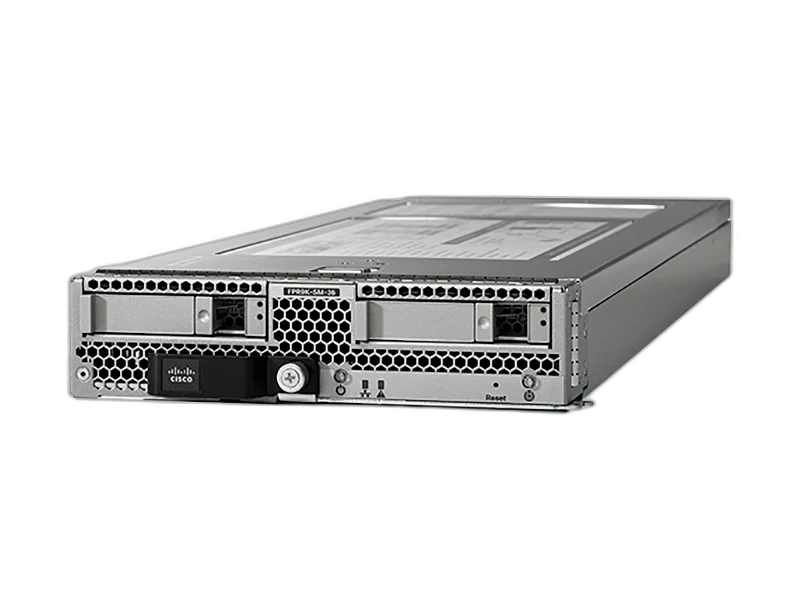
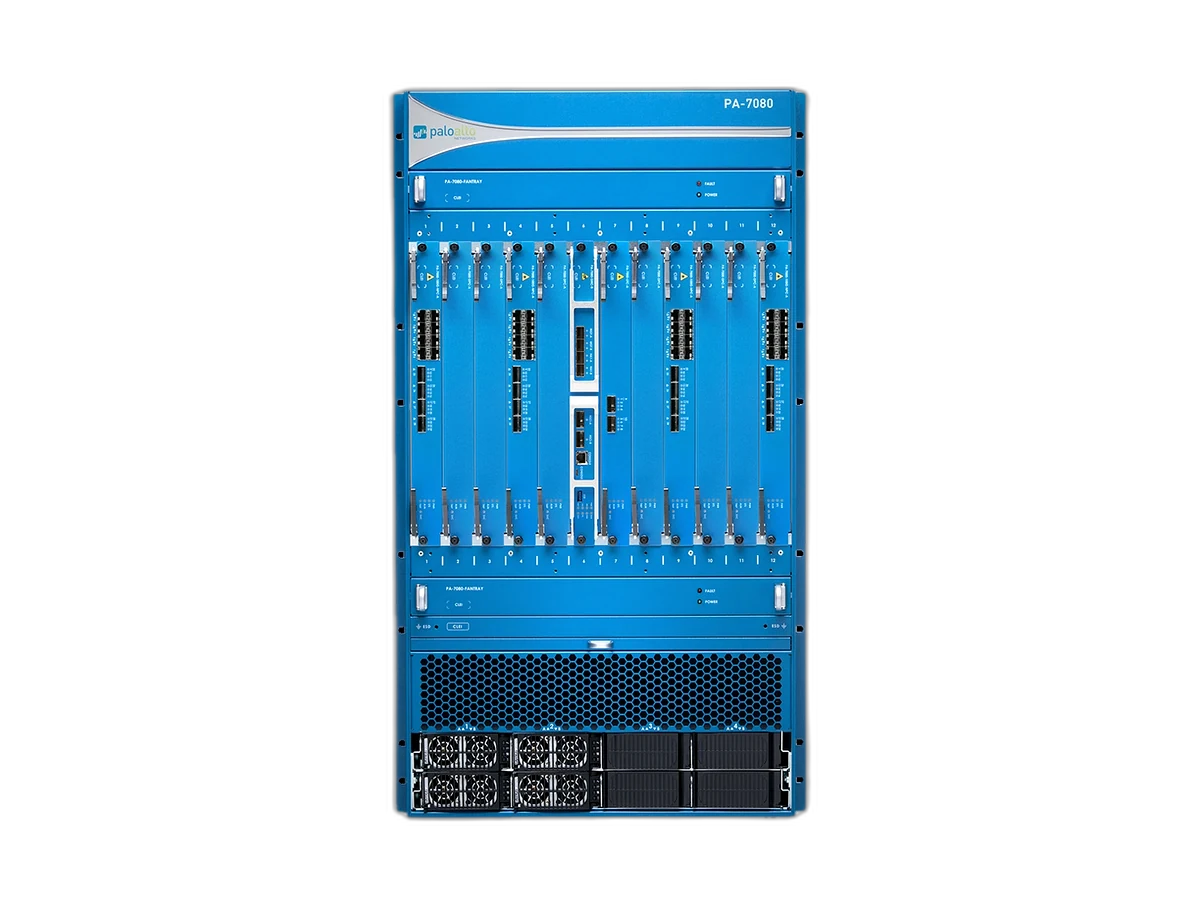
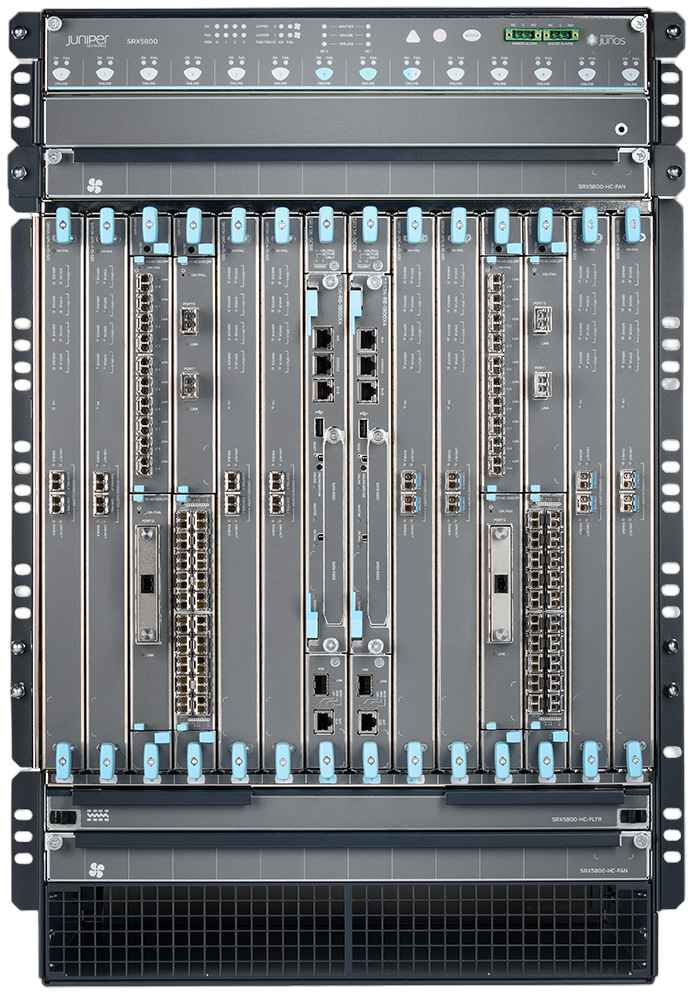
| Chassis form factor | 3-slot modular (security modules) | PA-7050: 9-slot / PA-7080: 14-slot | 11U, 11 I/O + 8 SPC slots |
| Clustering / scale-out | Up to 16 chassis (Tbps aggregate) | Active/Active + Active/Passive HA | Full hardware redundancy, chassis cluster HA |
| Throughput & Performance | |||
| Stateful firewall throughput | Up to ~225 Gbps ASA per chassis | 343 Gbps (PA-7050) / 590 Gbps (PA-7080) | 2 Tbps |
| NGFW / App-ID throughput | ~100+ Gbps FTD per chassis | -- | -- |
| IPSec VPN throughput | -- | -- | 400 Gbps |
| New connections per second | -- | 4M (PA-7050) / 6M (PA-7080) | -- |
| Architecture | Up to 3 hot-swap security modules (SM-24/36/44/56) | Modular line cards with dedicated data, control and switch fabric | Separate SPCs (services) and IOCs across 19 slots |
| Connectivity | |||
| High-speed interfaces | 100G QSFP28, 40G QSFP | 100G, 40G, 10G, 1G line cards | 100G, 40G, 10G, 1G line cards |
| I/O slot count | 3 security module slots (with network modules) | 6 NPC slots (PA-7050) / 12 NPC slots (PA-7080) | 11 I/O slots |
| Supervisor / control redundancy | Dual supervisor, hot-swap | Redundant supervisors | Dual Routing Engines, dual SCBs |
| Security Services | |||
| Software stack | Cisco FTD (Firepower Threat Defense) or ASA | PAN-OS with App-ID, User-ID, Content-ID | Junos OS with AppSecure, IDP, SkyATP / ATP Cloud |
| Threat intelligence | Cisco Talos | Palo Alto WildFire + Unit 42 | Juniper ATP Cloud + SecIntel feeds |
| SSL/TLS decryption | Supported (FTD) | Supported, hardware-assisted | Supported via SPCs |
| Multi-tenancy | Multi-instance: isolated FTD/ASA instances per chassis | Virtual systems (vsys) | Logical Systems (LSYS), tenant systems |
| Management & Operations | |||
| Primary management plane | Cisco FMC / Cisco Defense Orchestrator | Panorama | Junos Space Security Director / Mist-managed roadmap |
| API / automation | REST API, Ansible, Terraform | XML/REST API, Terraform, Ansible | NETCONF, REST API, Ansible, Terraform |
| Carrier-grade routing | BGP, OSPF, limited MPLS | BGP, OSPF, basic MPLS | Full MPLS, BGP, L3VPN, carrier-grade Junos |
| Typical deployment | Service provider edge, large DC perimeter | Large enterprise / DC perimeter, internet edge | Service provider, mobile core, hyperscale DC |
Expert Analysis
The headline difference between these three chassis is what they were optimised for. The Juniper SRX5800 is a carrier-class routing platform that happens to do firewalling extremely well — 2 Tbps of stateful throughput, 512 million sessions and full Junos MPLS/BGP make it the natural choice when the firewall sits inside a service-provider core or mobile packet core. The Palo Alto PA-7000 series is the opposite philosophy: lower raw throughput (590 Gbps on the PA-7080) but the deepest Layer 7 inspection, App-ID, User-ID and WildFire integration of the three, which is why it tends to win large enterprise and data-centre perimeter deals. The Cisco Firepower 9300 sits between them — a 3-module chassis designed to scale out horizontally to 16 nodes, with the unique ability to run ASA and FTD instances side-by-side on the same hardware.
For UK enterprise buyers, the practical decision usually comes down to three questions. First, do you need genuine carrier features — RSVP-TE, L3VPN, large-scale BGP, logical systems for tenants? If yes, the SRX5800 is in a class of its own and the others are compromises. Second, is the dominant workload deep threat inspection, SSL decryption at scale and granular application policy across a hybrid estate? Then Palo Alto's PAN-OS and Panorama remain the benchmark, and the PA-7080's 305 Gbps of Threat Prevention with 6M CPS is more than most UK data centres will ever consume. Third, are you already a Cisco shop running ACI, SD-Access or Catalyst with FMC/CDO in place? The FPR9300's multi-instance model and 16-chassis clustering make it the lowest-friction option, even if its per-chassis numbers trail the other two.
None of these are cheap and none should be specified without a proof-of-value against your own traffic mix — synthetic datasheet throughput drops sharply once SSL decryption, logging and threat prevention are enabled, and the gap between vendors narrows considerably in the real world. UK buyers in regulated sectors (FCA-regulated finance, NHS, CNI under NIS2) should also weight the management plane heavily: Panorama and FMC are mature, Junos Space less so, and that operational cost dwarfs the list-price delta over a five-year refresh.
Recommendation framework: pick the SRX5800 if you are a telco, MSP or hyperscaler and the firewall is part of a routed fabric; pick the PA-7000 if security efficacy and unified policy across on-prem and Prisma is the priority; pick the Firepower 9300 if you need ASA/FTD coexistence, multi-tenant isolation on a single chassis, or you want to scale linearly via clustering rather than buying a bigger box.
Ready to proceed?
Want to compare different products or add more to this comparison?
Open Interactive Comparison Tool →