
🔀 FortiSwitch FS-3032E vs Cisco Nexus 9336C-FX2 vs Arista 7050X4
AI-powered analysis across 29 matched specifications
Performance Overview
Scores based on quantifiable specification values (1-10 scale)
Detailed Specifications
| Specification | FortiSwitch FS-3032E Fortinet | Cisco Nexus 9300 — N9K-C9336C-FX2 Cisco | 7050X4 Series Arista |
|---|---|---|---|
| Key Metrics | |||
| Form factor | 1RU | 1RU | 1RU |
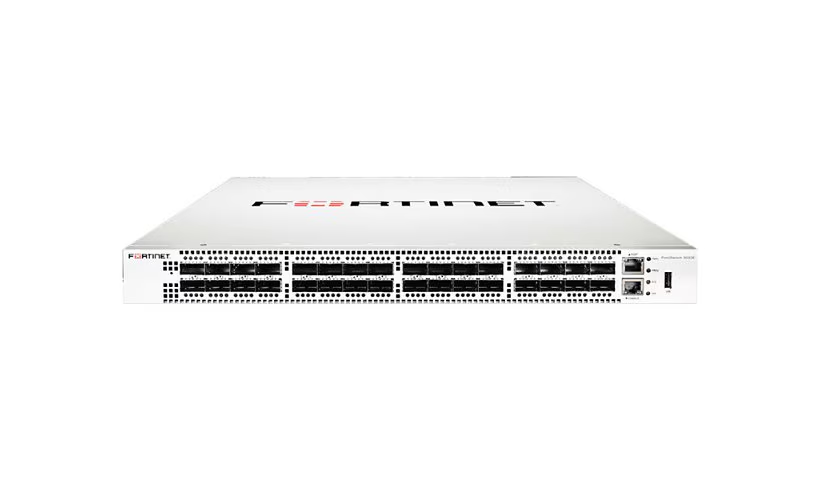
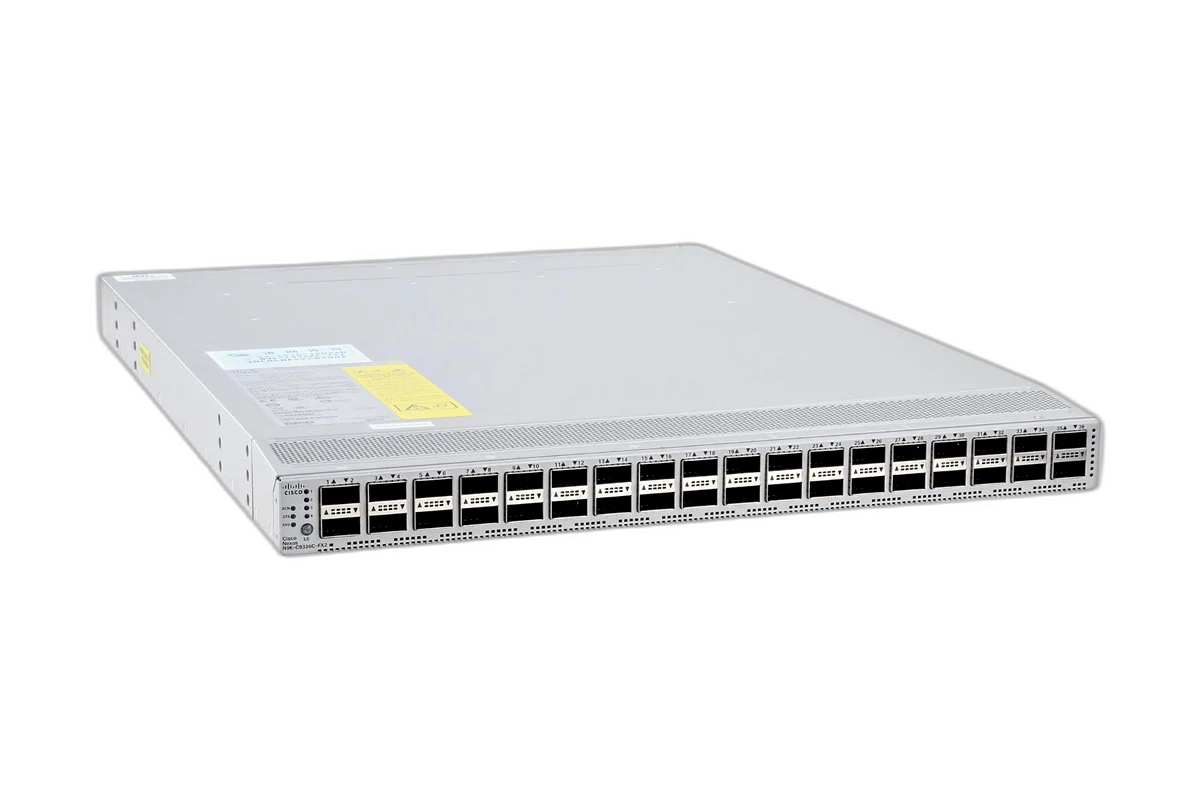
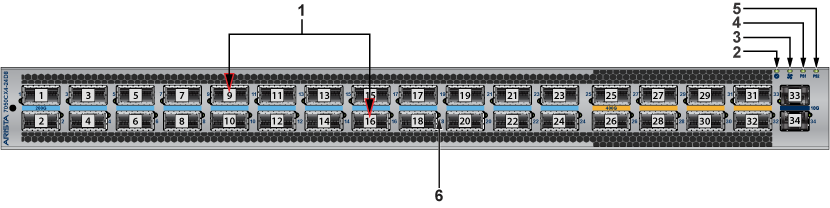
| Headline port density | 32 × 100GE QSFP28 | 36 × 100G QSFP28 | 32 × 400G (OSFP/QSFP-DD) |
| Switching capacity | 6.4 Tbps | 7.2 Tbps | 12.8 Tbps |
| Forwarding rate | 9,520 Mpps | 5,400 Mpps (5.4 Bpps) | 5,300 Mpps (5.3 Bpps) |
| Max 25GE breakout density | 128 × 25GE | 144 × 25GE | 128 × 25GE |
| Latency | -- | -- | From ~900 ns |
| Port Density & Connectivity | |||
| 100G ports (native) | 32 | 36 | Up to 128 via breakout |
| 400G ports | None | None | Up to 32 |
| 40GE backward compatibility | Yes (QSFP+) | Yes | Yes |
| Breakout options | 4 × 25GE per QSFP28 | 4 × 25G or 4 × 10G per port | 4 × 100G / 4 × 25G / 8 × 50G per OSFP/QSFP-DD |
| Management port | 1 × RJ45 + console | -- | 1 × RJ45 + USB + console |
| Forwarding, Buffers & Scale | |||
| Packet buffer | -- | -- | 132 MB shared, dynamic allocation |
| MAC table | -- | -- | 128K |
| IPv4 route prefixes | -- | -- | 800K |
| IPv6 route prefixes | -- | -- | 500K |
| ECMP | Yes | Yes | 128-way + Dynamic Load Balancing |
| Data Centre Features | |||
| VXLAN / EVPN | Yes | Yes (BGP EVPN) | Yes |
| Routing protocols | OSPF, BGP | OSPF, BGP, IS-IS | OSPF, BGP, IS-IS |
| Fabric role | Standalone spine/leaf | ACI spine/leaf or NX-OS standalone | EOS spine/leaf, any open fabric |
| MACsec (802.1AE) | -- | Yes — all ports | Yes (select SKUs) |
| Telemetry | SNMP, sFlow | Streaming telemetry, Tetration-ready | EOS streaming telemetry, CloudVision analytics |
| NAT in hardware | -- | -- | Yes |
| Management & Software | |||
| Operating system | FortiSwitchOS | Cisco NX-OS / ACI | Arista EOS (single binary) |
| Controller / orchestration | FortiLink via FortiGate or standalone | Cisco DCNM / Nexus Dashboard / APIC | CloudVision (on-prem or SaaS) |
| Zero-touch provisioning | Yes | Yes (PoAP) | Yes (ZTP) |
| Automation | REST API, CLI | NX-API, Ansible, Python on-box | eAPI, Ansible, Python, Linux shell |
| Power & Physical | |||
| Power supplies | Dual hot-swap redundant | Dual hot-swap redundant | Dual hot-swap redundant |
| PSU efficiency | -- | -- | >94% |
| Fans | Hot-swap redundant | Hot-swap redundant, F2B or B2F | Hot-swap redundant, F2B or B2F |
Expert Analysis
The headline difference is generational. The Arista 7050X4 is a 400G-class switch with 12.8 Tbps of capacity, sub-microsecond latency and a 132 MB shared buffer; the Cisco Nexus 9336C-FX2 and Fortinet FS-3032E are both 100G fixed switches from the previous fabric generation. If you are building a new spine in 2024-2025 and expect 400G uplinks within the asset's lifetime, only the Arista can absorb that without a forklift.
That does not make the other two obsolete. The Cisco 9336C-FX2 remains the natural choice for any UK site that is standardised on ACI or NX-OS VXLAN BGP EVPN — it gives you 36 × 100G with MACsec on every port, deep streaming telemetry, and tight integration into APIC, Nexus Dashboard and the wider Cisco operational toolchain. For an enterprise already running Catalyst access and ISE, the operational gravity is significant. The Fortinet FS-3032E sits in a different bracket commercially: 32 × 100G, VXLAN/EVPN and dual PSUs at a materially lower acquisition cost, particularly attractive when the fabric is managed alongside FortiGate via FortiLink, or as a standalone L3 spine in a smaller private cloud or co-lo cage.
Arista's strength is breadth as well as speed — EOS as a single binary across the estate, CloudVision for telemetry and change control, 128-way ECMP with DLB, and route scale (800K IPv4 / 500K IPv6) that is comfortably ahead of the other two. The trade-off is price and the assumption that your team is comfortable in an EOS/Linux operating model rather than a vendor-prescribed fabric.
Recommendation framework: pick the Arista 7050X4 if you are designing a new leaf-spine that needs 400G headroom, deterministic latency or large EVPN route scale. Pick the Cisco 9336C-FX2 if you are extending an existing ACI/NX-OS fabric, need MACsec everywhere, or your operations team is Cisco-certified end to end. Pick the FortiSwitch FS-3032E if you want 100G spine capability at the lowest capex, especially where Fortinet is already the security platform and FortiLink simplifies day-two operations.
Ready to proceed?
Want to compare different products or add more to this comparison?
Open Interactive Comparison Tool →