
🌐 Cisco SD-WAN Manager vs FortiManager SD-WAN
Cisco SD-WAN Manager vs FortiManager compared across 27 matched specifications — scores, the full spec table and a verdict.
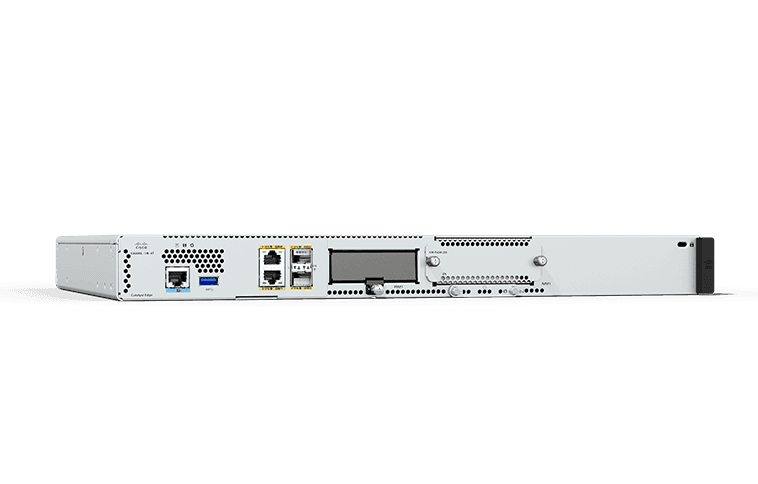
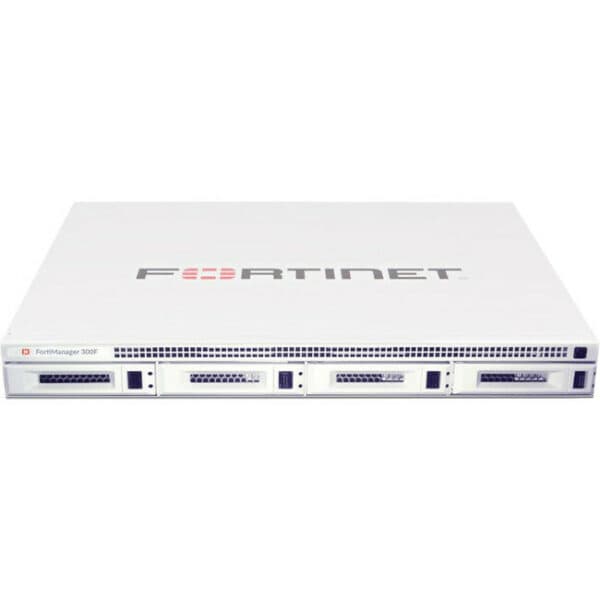
Cisco SD-WAN Manager vs FortiManager SD-WAN: performance overview
Scores based on quantifiable specification values (1-10 scale)
Detailed Specifications
| Specification | Cisco SD-WAN Manager Cisco | FortiManager Fortinet |
|---|---|---|
| Key Metrics | ||
| Vendor | Cisco | Fortinet |
| Product | Catalyst SD-WAN Manager (vManage) | FortiManager + SD-WAN Orchestrator |
| Managed edge platform | Catalyst 8000 / ISR / vEdge | FortiGate (physical + VM) |
| Deployment model | On-prem, cloud-hosted, Cisco-hosted SaaS | On-prem appliance, VM (AWS, Azure, VMware, KVM) |
| Zero Touch Provisioning | Yes | Yes |
| Multi-tenancy | Yes — segment/VPN-level | Yes — ADOM-based |
| Orchestration & Policy | ||
| Policy model | Centralised templates, programmable policy, per-VPN segmentation | Provisioning templates, policy packages, per-ADOM scoping |
| Bulk device onboarding | ZTP via PnP Connect / smart account | ZTP via FortiDeploy / FortiManager |
| Intent-based / app-aware routing | Yes — SLA classes per application | Yes — SD-WAN rules with SLA targets |
| REST API | Yes — full REST API | Yes — JSON-RPC API |
| Change preview / rollback | Yes — config preview and rollback | Yes — revision history and ADOM rollback |
| Visibility & Analytics | ||
| Real-time SLA telemetry | Yes — per-tunnel loss/latency/jitter | Yes — per-link performance SLA |
| Application performance monitoring | ThousandEyes integration (native) | FortiMonitor / third-party integration |
| Long-term analytics & reporting | Built-in dashboards; richer with Cisco Catalyst Center | FortiAnalyzer (separate product) for deep analytics |
| NetFlow / flow export | Yes | Yes |
| Security Integration | ||
| Native SSE / SASE | Cisco Umbrella, Cisco Secure Access | FortiSASE |
| On-box NGFW at branch | Snort IPS, URL filtering via Catalyst 8000 | Full FortiGate NGFW (IPS, AV, web filter, app control) |
| ZTNA | Via Cisco Secure Access / Duo | Native FortiClient ZTNA |
| Threat intelligence | Talos | FortiGuard |
| Cloud & Scale | ||
| Cloud on-ramp | AWS, Azure, GCP — automated gateway provisioning | AWS, Azure, GCP — SD-WAN Connector / templates |
| SaaS optimisation | Cloud OnRamp for SaaS with per-app path selection | Internet service database with per-app steering |
| Typical scale ceiling | Thousands of edge devices per controller cluster | 10,000+ FortiGate devices per FortiManager |
| High availability | Active/active controller cluster | Active/passive HA pair |
| Commercial & Operations | ||
| Licensing model | DNA / Cisco Networking subscription tiers | Per-device FortiManager licence + FortiGate subscriptions |
| Typical buyer profile | Existing Cisco estates, large enterprise, MSPs | Existing Fortinet estates, mid-market to enterprise |
| UK channel availability | Cisco Gold/Premier partners (incl. Servnet) | Fortinet Advanced/Expert partners (incl. Servnet) |
| Learning curve | Steep — template hierarchy, CLI familiarity helps | Moderate — familiar to FortiGate admins |
Expert Analysis
The practical difference between these two controllers is philosophical, not just technical. Cisco Catalyst SD-WAN Manager is a dedicated SD-WAN control plane with deep telemetry, ThousandEyes-grade application visibility and an opinionated template model — it assumes you will run security as a separate layer (Umbrella, Secure Access, Snort on the edge). FortiManager treats SD-WAN as one feature inside a unified security fabric, so policy, IPS, web filtering, ZTNA and SD-WAN steering are all configured from the same object database and pushed to the same FortiGate at the branch.
Cisco wins on pure SD-WAN sophistication. The per-tunnel SLA telemetry, the ThousandEyes correlation between underlay, overlay and SaaS, and the granular multi-VPN segmentation are still ahead of the market for large, complex WANs — particularly multi-tenant MSP deployments and enterprises with hundreds of segments. The cost is operational: the template hierarchy is unforgiving, and you generally need Cisco-fluent engineers (or a partner) to keep it clean. Licensing under the Cisco Networking subscription is also materially more expensive per site than the Fortinet equivalent.
FortiManager wins on consolidation and total cost of ownership. For a UK mid-market organisation that already runs FortiGates for perimeter security, turning on SD-WAN Orchestrator is essentially a licensing and template exercise rather than a new platform. You get NGFW, SD-WAN, ZTNA and (with FortiSASE) cloud-delivered security under one vendor, one support contract and one skill set — which matters for lean IT teams and for NIS2/Cyber Essentials Plus evidencing. The trade-off is analytics depth: meaningful long-term reporting requires FortiAnalyzer as a separate product, and application-layer visibility doesn't match ThousandEyes out of the box.
Recommendation: if you are a large enterprise, service provider or regulated organisation where SD-WAN performance and per-application path analytics drive the business case, Cisco is worth its premium. If you are a UK mid-market or multi-site retail/professional-services buyer who wants SD-WAN and security from one console with predictable per-device licensing, FortiManager is the more pragmatic choice. Existing estate almost always decides it — neither is compelling enough to justify ripping out the other vendor's edge.
Ready to proceed?
Not sure which one fits your environment?
Our UK specialists will recommend the right option for your workload and send itemised pricing — vendor-neutral, no obligation.
Response within 4 business hours · 20+ yr UK reseller
Want to compare different products or add more to this comparison?
Open Interactive Comparison Tool →Made your choice? Spread the cost.
Whichever you choose, you don't have to pay for it all upfront — finance your new hardware from £258/mo ex VAT on hire purchase or lease. Compare monthly payments and terms in seconds.
See finance from £258/mo →Indicative estimate · subject to change · no credit check at this stage · hire purchase, lease & subscription for UK businesses
Indicative illustration only. Servnet Limited is not authorised or regulated by the FCA and does not provide financial advice or arrange finance. All finance opportunities are referred to Number Eight Business Finance. Finance policy
Related comparisons
Other head-to-heads featuring these models — useful if you’re still shortlisting.
Talk to a UK specialist
Get expert advice or a no-obligation quote — servers, storage, networking, maintenance, finance and cloud. We reply the same working day.