
🛡️ FortiGate 40F vs FGR-60F Rugged vs FortiWiFi 60F
FortiGate FG-40F vs FortiGate Rugged FGR-60F vs FortiWiFi FWF-60F compared across 30 matched specifications — scores, the full spec table and a verdict.
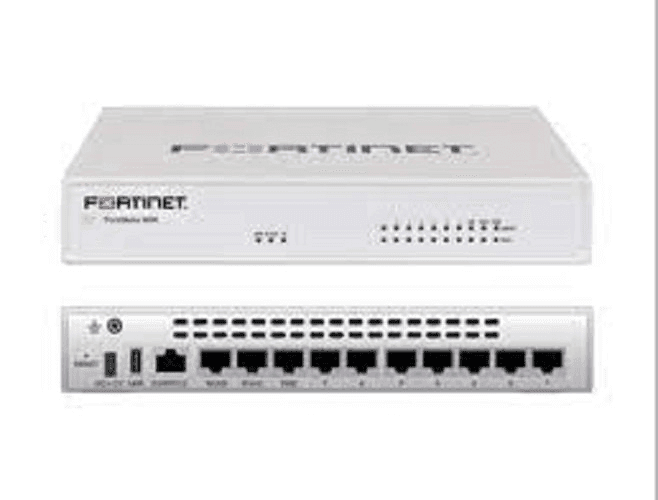
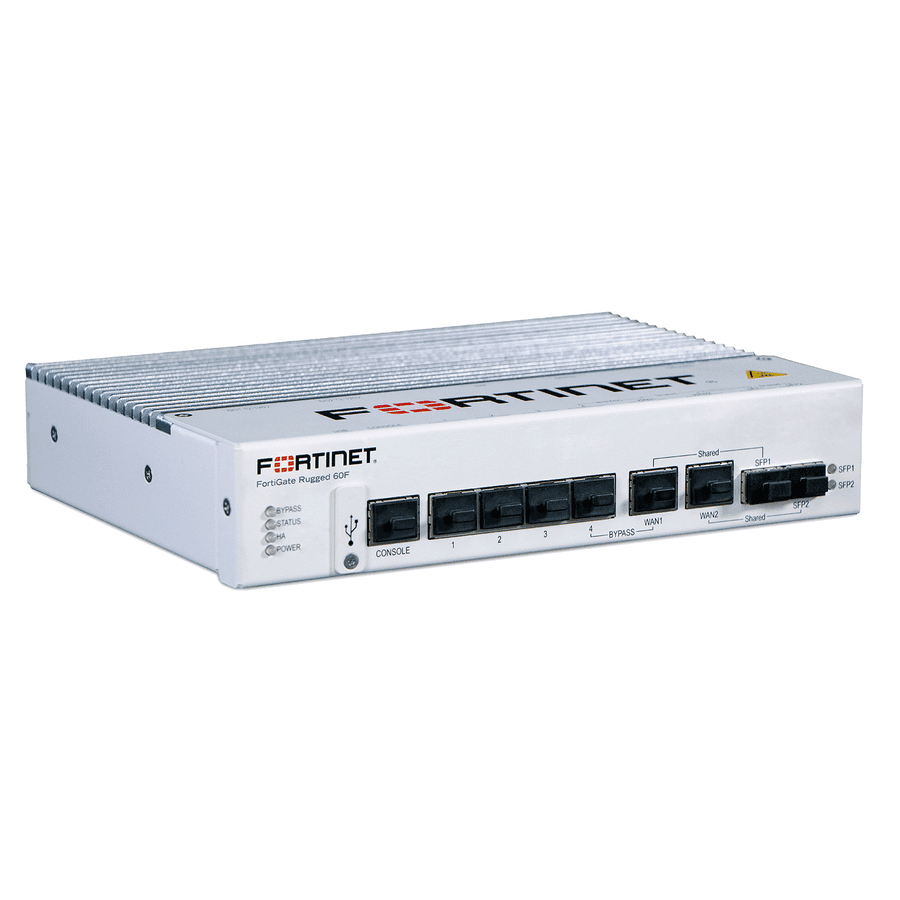
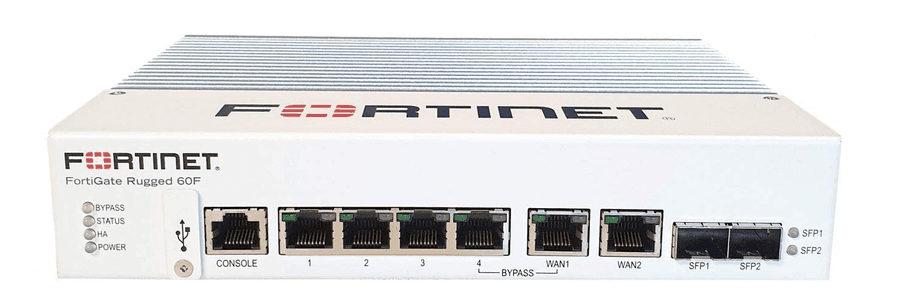
FortiGate 40F vs FGR-60F Rugged vs FortiWiFi 60F: performance overview
Scores based on quantifiable specification values (1-10 scale)
Detailed Specifications
| Specification | FortiGate FG-40F Fortinet | FortiGate Rugged FGR-60F Fortinet | FortiWiFi FWF-60F Fortinet |
|---|---|---|---|
| Key Metrics | |||
| Firewall throughput | 5 Gbps | 6 Gbps | 10 Gbps |
| IPS throughput | 1 Gbps | 950 Mbps | 1.4 Gbps |
| NGFW throughput | 800 Mbps | 550 Mbps | 1 Gbps |
| Threat Protection throughput | 600 Mbps | 500 Mbps | 700 Mbps |
| Concurrent sessions | 700,000 | 700,000 | 700,000 |
| Form factor | Fanless desktop | Fanless DIN rail / wall-mount rugged | Fanless desktop with integrated Wi-Fi |
| Throughput & Inspection | |||
| IPsec VPN throughput | 4.4 Gbps | 6.5 Gbps | 6.5 Gbps |
| SSL inspection throughput | 310 Mbps | 285 Mbps | 715 Mbps |
| SSL VPN throughput | -- | -- | 900 Mbps |
| New sessions/second | 35,000 | 30,000 | 35,000 |
| SD-WAN | Built-in | Built-in (incl. OT-aware) | Built-in |
| OT/ICS protocol inspection | Limited (via app control) | Modbus, DNP3, IEC 61850, others | Limited (via app control) |
| Connectivity | |||
| GE RJ45 ports | 5 (1 WAN, 3 LAN, 1 FortiLink) | 4 | 10 (2 WAN, 7 LAN, 1 DMZ) |
| GE SFP / shared media | -- | 2 × GE RJ45/SFP shared | null |
| USB ports | 1 | 1 | 1 |
| Console | RJ45 | RJ45 | RJ45 |
| Integrated Wi-Fi | No | No | Yes — 802.11ac Wave 2, dual-band 2.4/5 GHz simultaneous |
| Integrated LTE/5G | No | No (external modem option) | No |
| Environment & Resilience | |||
| Operating temperature | 0°C to 40°C | -40°C to +75°C | 0°C to 40°C |
| Cooling | Fanless | Fanless, no moving parts | Fanless |
| Mounting | Desktop | DIN rail or wall-mount | Desktop / wall-mount |
| Industrial certifications | -- | IEC 61850-3, IEEE 1613 | null |
| Redundant power | No | Dual DC input | No |
| Storage (eMMC/SSD) | -- | -- | -- |
| Security Services & Management | |||
| FortiGuard AI services | Supported | Supported | Supported |
| SSL inspection | Yes | Yes | Yes |
| Application control | Yes | Yes (incl. OT signatures) | Yes |
| Cloud management | FortiManager / FortiCloud / FortiGate Cloud | FortiManager / FortiCloud | FortiManager / FortiCloud / FortiGate Cloud |
| Zero-touch provisioning | Yes | Yes | Yes |
| AP management (FortiLink) | Yes (1 dedicated FortiLink port) | Yes | Yes (plus integrated radio) |
Expert Analysis
The headline difference is scope, not silicon. All three units run FortiOS with the same FortiGuard AI services and broadly the same management story, so the decision comes down to where the box is being installed and what else it has to replace. The FG-40F is the cheapest, lowest-throughput option aimed at small UK sites with up to roughly 25 users; the FGR-60F trades port density and a bit of inspection throughput for the ability to sit in a substation cabinet at -40°C; the FWF-60F is effectively a FortiGate 60F with a Wave 2 access point glued on, and is by some margin the highest-performing of the three.
For a typical small office, the FWF-60F is the most flexible buy. 10 Gbps of firewall throughput, 1.4 Gbps IPS, 10 GE ports and an integrated dual-band radio mean one SKU covers routing, NGFW, SD-WAN and Wi-Fi without a separate FortiAP — useful for retail units, surgeries, professional-services branches and home-working executives. The FG-40F is the right choice only when budget is genuinely tight and Wi-Fi is being handled separately (or not at all); its 800 Mbps NGFW and four usable copper ports will hit the ceiling quickly once SSL inspection is enabled, where it manages just 310 Mbps.
The FGR-60F is a different conversation. The IEC 61850-3 and IEEE 1613 certifications, -40°C to +75°C range, DIN-rail mounting and native Modbus/DNP3/IEC 61850 inspection make it the only one of the three that belongs in a UK water utility, rail trackside cabinet, manufacturing OT cell or NIS2-scoped energy site. Putting an FG-40F or FWF-60F into that environment is a false economy — they will not survive the thermal cycling, and they cannot inspect the OT protocols you actually need to segment. Conversely, deploying an FGR-60F in a carpeted office wastes most of what you paid for.
Recommendation framework: pick the FG-40F for very small carpeted sites where Wi-Fi is handled elsewhere and inspected throughput requirements are modest; pick the FWF-60F as the default branch box where one appliance must cover NGFW plus Wi-Fi for up to ~50 users; pick the FGR-60F whenever the install location is industrial, outdoor, trackside or temperature-extreme, or where OT protocol visibility is a compliance requirement.
Ready to proceed?
Not sure which one fits your environment?
Our UK specialists will recommend the right option for your workload and send itemised pricing — vendor-neutral, no obligation.
Response within 4 business hours · 20+ yr UK reseller
Want to compare different products or add more to this comparison?
Open Interactive Comparison Tool →Made your choice? Spread the cost.
Whichever you choose, you don't have to pay for it all upfront — finance your new hardware from £258/mo ex VAT on hire purchase or lease. Compare monthly payments and terms in seconds.
See finance from £258/mo →Indicative estimate · subject to change · no credit check at this stage · hire purchase, lease & subscription for UK businesses
Indicative illustration only. Servnet Limited is not authorised or regulated by the FCA and does not provide financial advice or arrange finance. All finance opportunities are referred to Number Eight Business Finance. Finance policy
Size on real Threat Protection throughput rather than datasheet maximums, with switches, APs and licensing included.
Related comparisons
Other head-to-heads featuring these models — useful if you’re still shortlisting.
Talk to a UK specialist
Get expert advice or a no-obligation quote — servers, storage, networking, maintenance, finance and cloud. We reply the same working day.