
🔀 Cisco Catalyst 9300L-48P vs Juniper EX4400
Cisco Catalyst 9300L-48P vs Juniper EX4400 compared across 25 matched specifications — scores, the full spec table and a verdict.
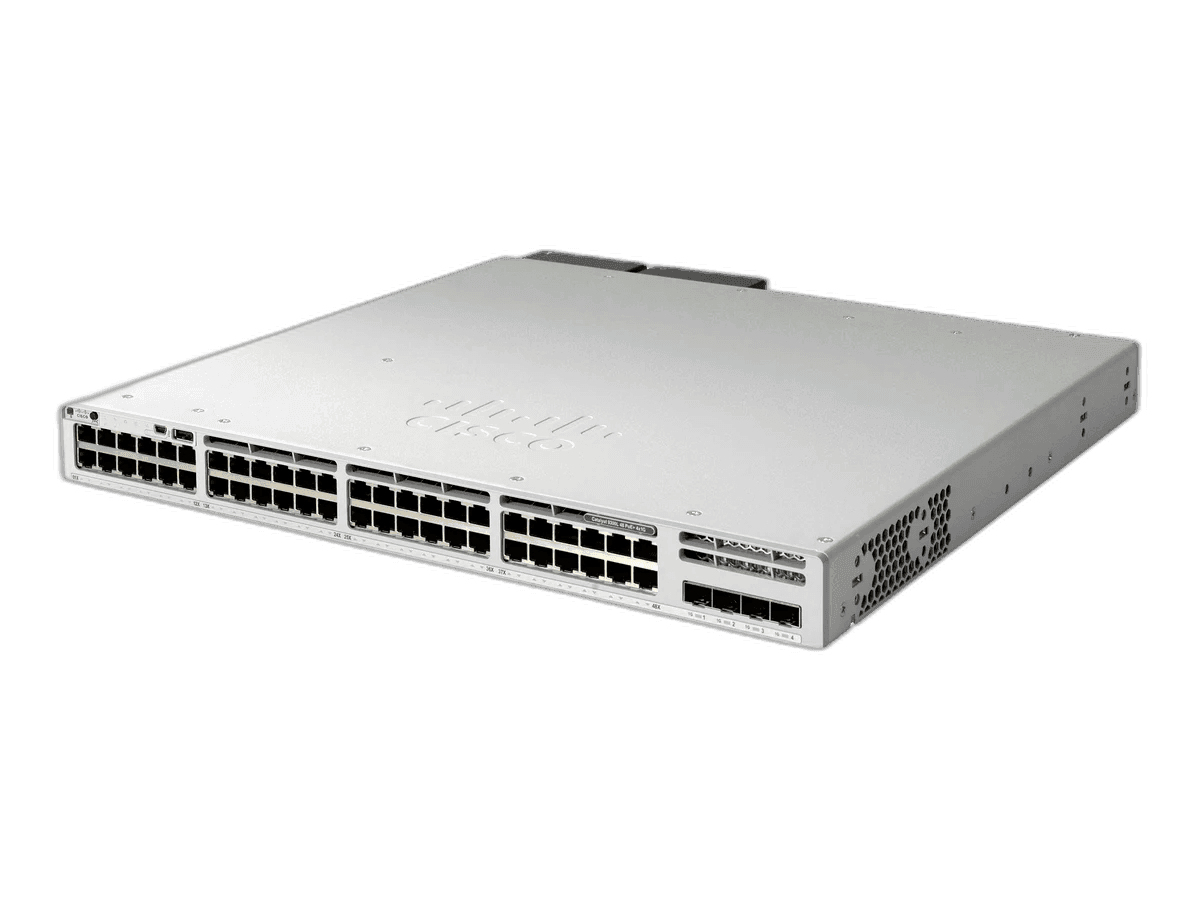
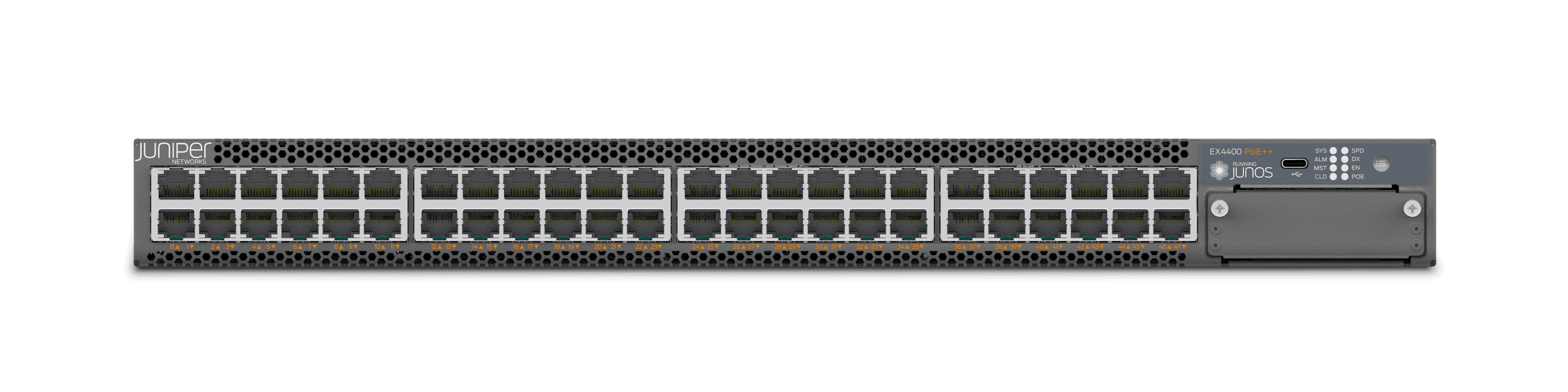
Cisco Catalyst 9300L-48P vs Juniper EX4400: performance overview
Scores based on quantifiable specification values (1-10 scale)
Detailed Specifications
| Specification | Cisco Catalyst 9300L-48P Cisco | Juniper EX4400 Juniper |
|---|---|---|
| Key Metrics | ||
| Access ports | 48 × 1GbE RJ45 PoE+ | 24 or 48 × 1GbE / mGig (model dependent) |
| Uplinks | 4 × 1G SFP (fixed) | 4 × 10GbE SFP+, or modular 4 × 10/25GbE SFP28 / 1 × 100GbE QSFP28 |
| PoE standard | 802.3at PoE+ (30W/port) | 802.3bt PoE++ (up to 90W/port) |
| PoE budget | 505W | Up to 2,200W (model dependent) |
| Stacking | StackWise-160, up to 8 units | Virtual Chassis, up to 10 units |
| Management | IOS-XE, Cisco DNA Center / Catalyst Center | Junos OS, Mist AI cloud with wired SLEs |
| Port density & uplinks | ||
| Downlink speeds | 10/100/1000 Mbps only | 1GbE, multigigabit up to 10GbE, or 10GbE SFP+ (SKU dependent) |
| Uplink bandwidth (max) | 4 Gbps (4 × 1G SFP) | 100 Gbps (1 × QSFP28) or 100 Gbps (4 × 25G) |
| Multigigabit support | Not on this SKU (L-48P is 1G only) | Yes, on mGig SKUs (up to 10GbE on copper) |
| Fibre access option | -- | Yes (48 × 10GbE SFP+ SKU) |
| PoE & power | ||
| Per-port max | 30W (PoE+) | 90W (PoE++) |
| Total PoE budget | 505W | Up to 2,200W |
| Suitable for 802.3bt devices | No (PoE+ only) | Yes — Wi-Fi 6E/7 APs, PTZ cameras, building systems |
| Forwarding, security & fabric | ||
| ASIC | Cisco UADP 2.0 Mini | Juniper custom (Trio-class campus ASIC) |
| MACsec | Yes, hardware MACsec | Yes, AES-256 on all ports |
| EVPN-VXLAN | Supported on IOS-XE (Network Advantage licence) | Native, included; campus fabric ready |
| Layer 3 / routing | Full L3 with Network Advantage; OSPF, BGP, EIGRP | Full L3; OSPF, BGP, IS-IS in Junos |
| Management & operations | ||
| Operating system | Cisco IOS-XE | Junos OS |
| Cloud management | Catalyst Center (on-prem) / Meraki dashboard (separate hardware) | Juniper Mist AI (cloud-native, included with subscription) |
| AI / assurance | Cisco AI Network Analytics within Catalyst Center | Marvis AI assistant, wired SLEs, anomaly detection |
| Zero-touch provisioning | Yes (PnP) | Yes (ZTP via Mist) |
| Licensing model | DNA / Network Essentials or Advantage (term-based) | Juniper Flex licences; Mist subscription per switch |
| Stacking & resilience | ||
| Stack technology | StackWise-160 (160 Gbps) | Virtual Chassis (up to 320 Gbps with 100G VCPs) |
| Max stack members | 8 | 10 |
| Redundant PSU | Optional (dual field-replaceable) | Optional (dual field-replaceable) |
Expert Analysis
The single biggest practical difference is generation: the Catalyst 9300L-48P is a 1GbE, PoE+, 4×1G-uplink access switch designed for traditional desk-and-phone deployments, while the Juniper EX4400 family is a current-generation campus switch with 802.3bt PoE++, multigigabit and 10GbE access options, and 25/100GbE uplinks. If your access-layer refresh has to support Wi-Fi 6E/7 APs, 4K PTZ cameras or smart-building endpoints drawing more than 30W, the 9300L simply doesn't have the PoE headroom — 505W total and 30W per port versus up to 2,200W and 90W per port on the EX4400.
Where the Catalyst still wins is ecosystem gravity. Most UK enterprises already run IOS-XE, have CCNP-certified staff, existing DNA/Catalyst Center deployments and TAC contracts, and a procurement path through established Cisco Gold partners. For a like-for-like replacement of older 3650/3850 switches in an office that is 1GbE end-to-end and PoE+ is sufficient, the 9300L-48P is the path of least operational resistance and typically the cheaper line item once licences are normalised.
The EX4400's advantage is forward-looking architecture. Mist AI with wired SLEs and the Marvis assistant is genuinely ahead of Catalyst Center for day-2 troubleshooting, EVPN-VXLAN is included rather than a licence upgrade, and the modular uplink slot means a single SKU covers branch access today and 25/100G aggregation tomorrow. Virtual Chassis up to 10 members also gives more density than StackWise-160's 8.
Recommendation: choose the Catalyst 9300L-48P when you're standardising on Cisco, the endpoints are 1GbE and PoE+ class, and operational continuity matters more than headroom. Choose the Juniper EX4400 when you're deploying Wi-Fi 6E/7, need multigigabit or 10GbE to the desk/AP, want cloud-managed AIOps out of the box, or are building an EVPN-VXLAN campus fabric. For a 5–7-year refresh cycle in 2025, the EX4400 is the more future-proof platform; for a tactical refresh inside an established Cisco estate, the 9300L is the safer choice.
Ready to proceed?
Not sure which one fits your environment?
Our UK specialists will recommend the right option for your workload and send itemised pricing — vendor-neutral, no obligation.
Response within 4 business hours · 20+ yr UK reseller
Want to compare different products or add more to this comparison?
Open Interactive Comparison Tool →Made your choice? Spread the cost.
Whichever you choose, you don't have to pay for it all upfront — finance your new hardware from £172/mo ex VAT on hire purchase or lease. Compare monthly payments and terms in seconds.
See finance from £172/mo →Indicative estimate · subject to change · no credit check at this stage · hire purchase, lease & subscription for UK businesses
Indicative illustration only. Servnet Limited is not authorised or regulated by the FCA and does not provide financial advice or arrange finance. All finance opportunities are referred to Number Eight Business Finance. Finance policy
Related comparisons
Other head-to-heads featuring these models — useful if you’re still shortlisting.
Talk to a UK specialist
Get expert advice or a no-obligation quote — servers, storage, networking, maintenance, finance and cloud. We reply the same working day.