
💾 HPE Alletra 9060 vs Dell PowerMax 2000
AI-powered analysis across 23 matched specifications
Performance Overview
Scores based on quantifiable specification values (1-10 scale)
Detailed Specifications
| Specification | HPE Alletra 9060 HPE | Dell PowerMax 2000 Dell Storage |
|---|---|---|
| Key Metrics | ||
| IOPS (8KiB Random Read) | Over 2,000,000 | -- |
| Read Latency | 75% of I/O within 250 μs | Under 100μs |
| Effective Capacity (with data reduction) | 6,103 TiB (4:1 estimated data compaction) | -- |
| Availability Guarantee | 100% availability guarantee | 99.9999% (6-nines) |
| Data Reduction Ratio | 4:1 estimated data compaction | 3.5:1 average (dedup + compression) |
| Bandwidth | -- | Up to 350 GB/s sustained |
| vVol Support | -- | Up to 64,000 VMware vVols |
| Storage | ||
| Raw Capacity | 1,966 TiB | -- |
| Drive Media | NVMe SFF SSD; NVMe SFF FIPS encrypted SSD; NVMe SFF FIPS encrypted TAA SSD | End-to-end NVMe SSD (eMLC, QLC) |
| Maximum Drives | 144 (Alletra 4N + four Alletra 2240 drive enclosures) | -- |
| RAID Level | RAID 6 (10+2) | -- |
| Storage Controller | HPE Alletra 9060 2N Controller | -- |
| Cache | 1,024 GiB | -- |
| Networking | ||
| Host Interfaces | 32Gb/s FC; 16Gb/s FC; 25GbE; 10GbE; 10GBaseT Ethernet | FC 32Gb, NVMe-oF, iSCSI 25G, FICON (mainframe) |
| Protocols | -- | Open systems + IBM z/OS mainframe + IBM i |
| Management | ||
| Replication | Active Peer Persistence (synchronous, RPO zero / RTO zero) | SRDF synchronous, asynchronous, Metro (active/active) |
| Cloud Tiering | -- | AWS S3, Azure Blob, Dell ECS, S3-compatible |
| Redundancy Features | Redundant power & cooling, battery, fans; dual to quad controller nodes | -- |
| Architecture | -- | Dynamic Virtual Matrix (DVM) architecture — no single point of failure |
| Upgrade Capability | Non-disruptive controller upgrades — no forklift replacements | -- |
| Software & OS Compatibility | ||
| Compatible Operating Systems | Windows Server, VMware ESXi, RHEL, SLES, Oracle Linux, Solaris, IBM AIX, HP-UX | -- |
| Physical / Environmental | ||
| Form Factor | Base chassis: 4U (483 × 839 × 174 mm); Drive enclosure: 2U | Rack-mounted (multiple enclosures) |
| Weight | 49.1 kg (2-node); 70.9 kg (4-node) | -- |
Expert Analysis
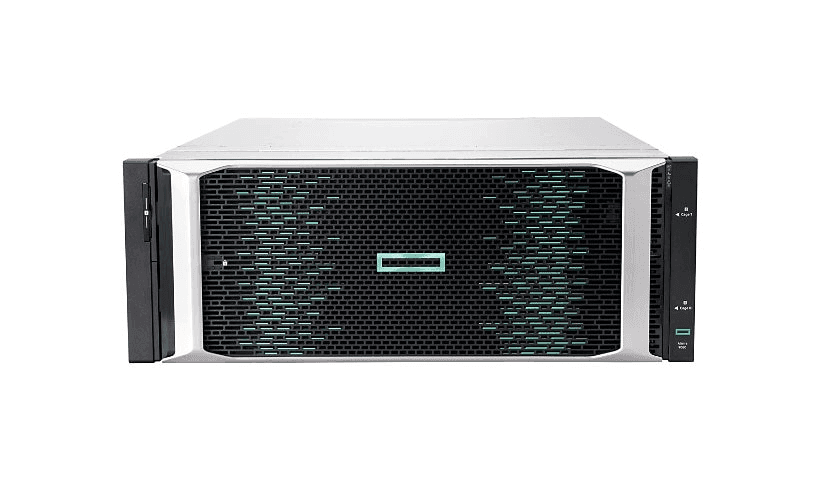
The HPE Alletra 9060 and Dell PowerMax 2000 represent two distinct approaches to enterprise all-flash storage, each excelling in different operational contexts. The Alletra 9060 delivers exceptional raw performance with over 2 million IOPS and a 100% availability guarantee, making it particularly suitable for high-transaction environments like financial trading platforms, real-time analytics, and large-scale virtualisation where maximum throughput and absolute uptime are paramount. Its 4:1 data compaction estimate and RAID 6 (10+2) configuration provide robust data protection, while the non-disruptive controller upgrades offer excellent long-term investment protection.
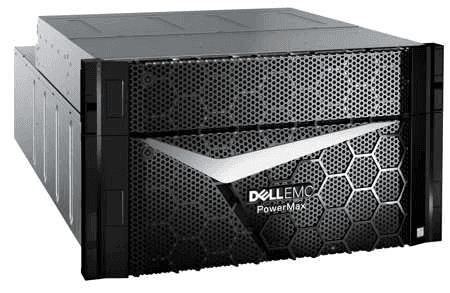
Conversely, the PowerMax 2000 focuses on ultra-low latency and heterogeneous environment support, with sub-100μs read latency and comprehensive protocol support including IBM mainframe connectivity. The 40-year heritage of SRDF replication and 99.9999% availability guarantee make it ideal for mission-critical applications requiring guaranteed performance SLAs and sophisticated disaster recovery capabilities. Its 3.5:1 data reduction ratio and cloud tiering options provide better storage efficiency for mixed workloads, while the support for up to 64,000 VMware vVols offers superior virtualisation integration.
The key trade-off lies between the Alletra's higher raw performance metrics versus the PowerMax's lower latency and broader ecosystem compatibility. Organisations requiring maximum transaction throughput and simple, guaranteed availability would find better value in the HPE solution, while those operating mixed open/mainframe environments or requiring proven disaster recovery heritage would benefit more from Dell's offering. Both systems represent top-tier storage solutions, with the choice ultimately depending on specific workload characteristics and existing infrastructure investments.
Ready to proceed?
Not sure which one fits your environment?
Our UK specialists will recommend the right option for your workload and send itemised pricing — vendor-neutral, no obligation.
Response within 4 business hours · 20+ yr UK reseller
Want to compare different products or add more to this comparison?
Open Interactive Comparison Tool →Made your choice? Spread the cost.
Whichever you choose, you don't have to pay for it all upfront — finance your new hardware from £1,290/mo ex VAT on hire purchase or lease. Compare monthly payments and terms in seconds.
See finance from £1,290/mo →Indicative estimate · subject to change · no credit check at this stage · hire purchase, lease & subscription for UK businesses
Indicative illustration only. Servnet Limited is not authorised or regulated by the FCA and does not provide financial advice or arrange finance. All finance opportunities are referred to Number Eight Business Finance. Finance policy
Talk to a UK specialist
Get expert advice or a no-obligation quote — servers, storage, networking, maintenance, finance and cloud. We reply the same working day.