
💻 ASUS Zenbook 14 OLED: Core Ultra Series 2 vs UX3405 (2024) vs UX3402 (2023)
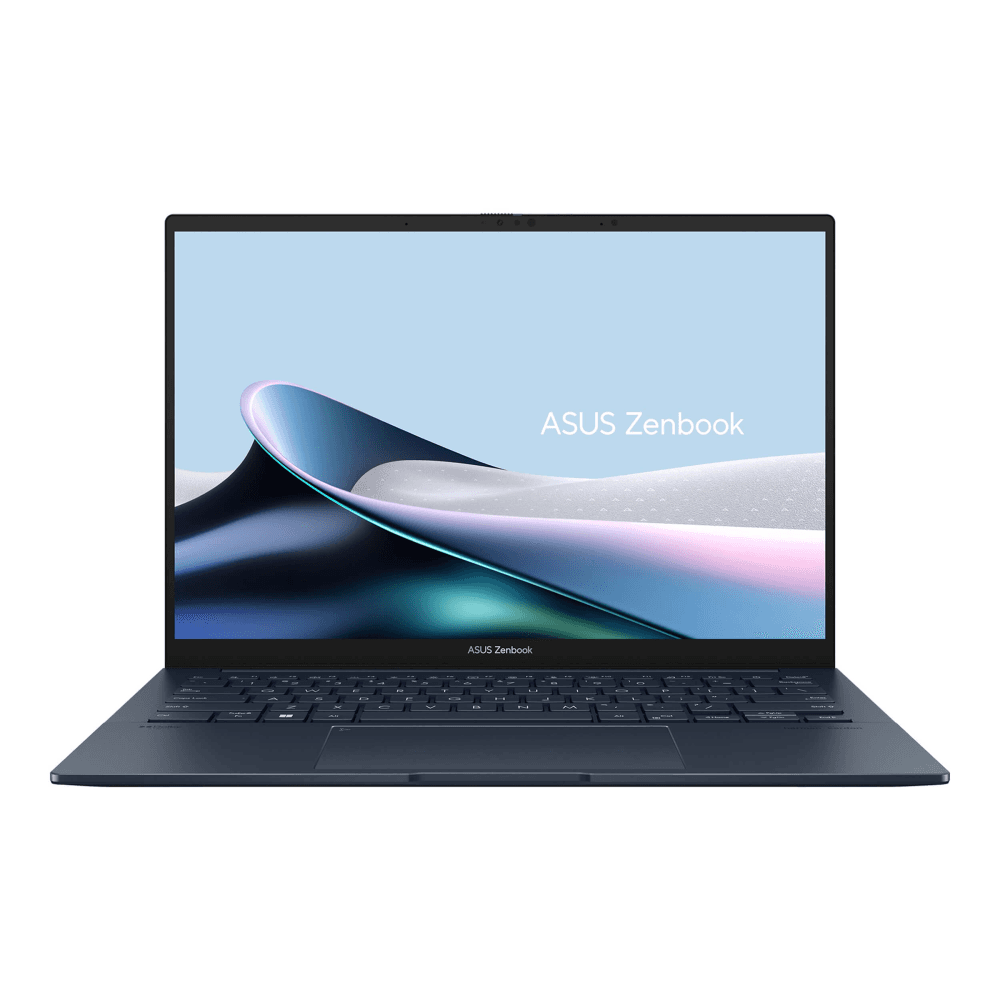
Zenbook 14 OLED (UX3405) vs ASUS Zenbook 14 OLED (UX3402VA, 2023) vs ASUS Zenbook 14 OLED (UX3405MA, 2024) compared across 37 matched specifications — scores, the full spec table and a verdict.
ASUS Zenbook 14 OLED: performance overview
Scores based on quantifiable specification values (1-10 scale)
Detailed Specifications
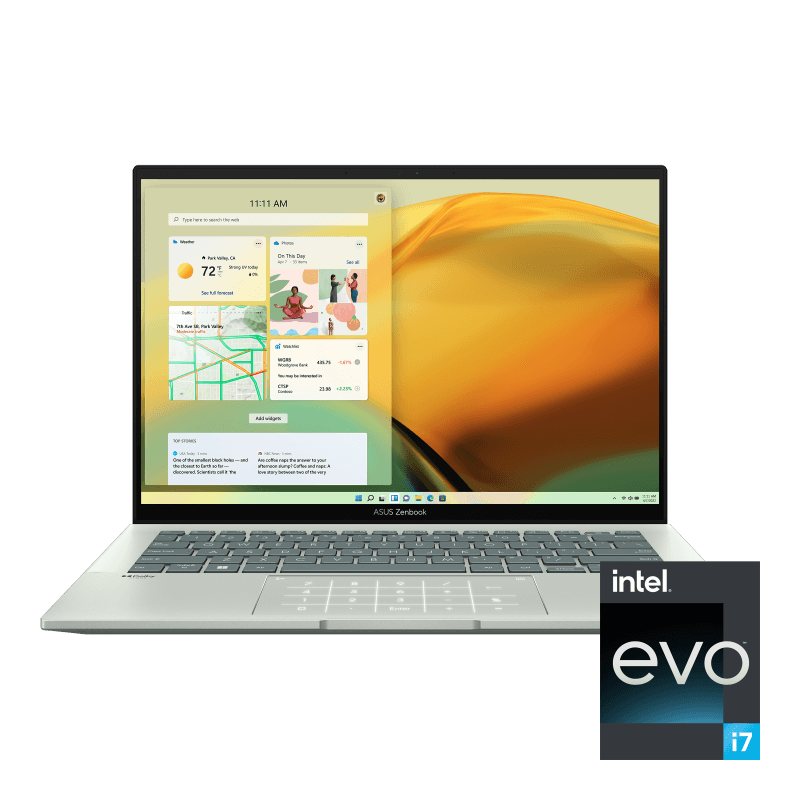
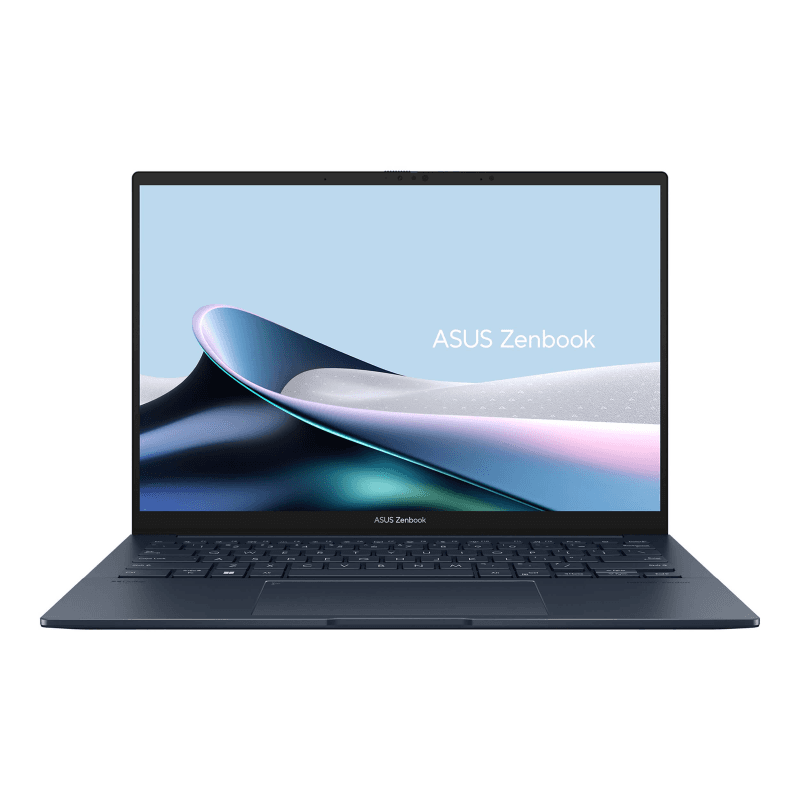
| Specification | Zenbook 14 OLED (UX3405) ASUS | ASUS Zenbook 14 OLED (UX3402VA, 2023) ASUS | ASUS Zenbook 14 OLED (UX3405MA, 2024) ASUS |
|---|---|---|---|
| Key Metrics | |||
| Launch year | 2025 | 2023 | 2024 |
| Model code | UX3405 (Core Ultra Series 2) | UX3402VA | UX3405MA |
| Platform | Intel Core Ultra Series 2 (Arrow Lake-H) | Intel 13th Gen (Raptor Lake-H / Raptor Lake-P) | Intel Core Ultra Series 1 (Meteor Lake) |
| Top processor | Core Ultra 9 285H (16-core) | Core i9-13900H (14-core) | Core Ultra 9 185H (16-core) |
| Copilot+ PC (40+ TOPS NPU) | No (NPU up to 13 TOPS) | No (no dedicated NPU) | No (NPU ~11 TOPS) |
| Maximum memory | 32 GB LPDDR5X (soldered) | 16 GB LPDDR5 (soldered) | 32 GB LPDDR5X (soldered) |
| Battery (Wh) | 75 Wh | 75 Wh | 75 Wh |
| Typical weight | 1.20–1.28 kg | 1.39 kg | 1.20–1.28 kg |
| Display | |||
| Panel | 14" 3K (2880×1800) or WUXGA (1920×1200) OLED | 14" 2.5K (2560×1600) OLED | 14" 3K (2880×1800) or FHD (1920×1200) OLED |
| Refresh rate | 120 Hz (3K) / 60 Hz (WUXGA) | 90 Hz | 120 Hz (3K) / 60 Hz (FHD) |
| Brightness (SDR / HDR peak) | 400–500 nits / up to 1,000 nits HDR | 400 nits / 550–600 nits HDR | 400 nits / 500–600 nits HDR |
| Colour gamut | 100% DCI-P3, Pantone Validated | 100% DCI-P3, Pantone Validated | 100% DCI-P3, Pantone Validated |
| Touch option | Optional touch | Optional touch (with stylus support) | Optional touch |
| HDR certification | VESA DisplayHDR True Black 500 / 600 / 1000 (by panel) | VESA DisplayHDR True Black 500 / 600 (by panel) | VESA DisplayHDR True Black 500 / 600 (by panel) |
| Compute & Memory | |||
| CPU architecture | Arrow Lake-H (up to 16 cores) | Raptor Lake-H / Raptor Lake-P (up to 14 cores) | Meteor Lake-H, 16 cores (6P+8E+2LP) |
| Integrated graphics | Intel Arc Graphics | Intel Iris Xe (96 EU) | Intel Arc Graphics |
| NPU (on-device AI) | Intel AI Boost (up to 13 TOPS) | None | Intel AI Boost (~11 TOPS) |
| Memory type | LPDDR5X (soldered) | LPDDR5 (soldered) | LPDDR5X (soldered) |
| Memory upgradeable later | No (soldered on board) | No (soldered on board) | No (soldered on board) |
| Maximum storage | 1 TB PCIe Gen4 NVMe | 1 TB PCIe Gen4 NVMe | 1 TB PCIe Gen4 NVMe |
| Connectivity & Ports | |||
| Thunderbolt 4 (USB-C) | 2× Thunderbolt 4 (DP/PD) | 2× Thunderbolt 4 (DP/PD) | 2× Thunderbolt 4 (DP/PD) |
| USB-A | 1× USB-A 3.2 Gen 1 | 1× USB-A 3.2 Gen 2 | 1× USB-A 3.2 Gen 1 |
| HDMI | HDMI 2.1 | HDMI 2.1 | HDMI 2.1 |
| Card reader | None | microSD | None |
| Wireless | Wi-Fi 7 (802.11be) + BT 5.4 | Wi-Fi 6E (802.11ax) + BT 5.3 | Wi-Fi 6E (802.11ax) + BT 5.3 |
| Webcam | FHD IR (Windows Hello) + shutter | 1080p FHD | FHD IR (Windows Hello) + shutter |
| Form Factor & Power | |||
| Chassis material | Aluminium | Aluminium | Aluminium |
| Thickness | ~14.9 mm | ~16.9 mm | ~14.9 mm |
| Real-world battery life | All-day (efficient Series 2 silicon) | Strong, but 90 Hz OLED draws more | Strong all-day (Meteor Lake) |
| Charger | 65 W USB-C | 65 W USB-C | 65 W USB-C |
| Audio | harman/kardon, Dolby Atmos | harman/kardon, Dolby Atmos | harman/kardon, Dolby Atmos |
| Management & Business Fit | |||
| Intel vPro | No (consumer-premium platform) | No | No |
| Platform security | Firmware TPM + Microsoft Pluton | Firmware TPM | Firmware TPM + Microsoft Pluton |
| Biometrics | IR Windows Hello + fingerprint-free design | Fingerprint sensor integrated with power key | IR Windows Hello |
| Operating system | Windows 11 Pro / Home | Windows 11 Pro / Home | Windows 11 Pro / Home |
| Fleet manageability | Intune / Autopilot (Win 11 Pro) | Intune / Autopilot (Win 11 Pro) | Intune / Autopilot (Win 11 Pro) |
| Warranty | 1-yr commercial; uplift via ASUS channel | 1-yr commercial; uplift via ASUS channel | 1-yr commercial; uplift via ASUS channel |
Expert Analysis
All three are the same premium Zenbook 14 OLED concept — a colour-accurate 14-inch 16:10 OLED in a sub-1.4 kg aluminium chassis with a 75 Wh battery — so the upgrade case is driven by the silicon, the panel's refresh rate and the connectivity rather than any change in class. The 2023 UX3402 (13th Gen Core, up to i9-13900H) is the clear outlier to retire: it caps at 16 GB of memory, has a 90 Hz panel and no NPU, and on Raptor Lake it is the least efficient of the trio. The 2024 UX3405MA (Meteor Lake, up to Core Ultra 9 185H) closed most of that gap — a 120 Hz 3K OLED option, a 32 GB ceiling and a basic NPU (up to 11 TOPS) — and remains a perfectly capable hybrid-work machine. The current Core Ultra Series 2 model adds Wi-Fi 7, a brighter 3K panel option (500 nits SDR, 1,000 nits HDR peak), meaningfully stronger CPU and graphics, and a slightly faster NPU (up to 13 TOPS), though like its predecessors it is not a Copilot+ PC. One caveat for fleet buyers: the Zenbook line is a consumer-premium platform without Intel vPro, so organisations that mandate out-of-band management should treat all three as Windows 11 Pro / Intune devices rather than vPro-managed endpoints, and look to the EliteBook or ThinkPad lines where vPro is non-negotiable. Our UK guidance: refresh any 2023 UX3402 units now, especially the 16 GB models; hold a healthy 2024 UX3405 to its natural cycle unless Wi-Fi 7 is needed; and specify the current Series 2 model for new executive and design-lead deployments, choosing a Copilot+ PC with a 40+ TOPS NPU instead if on-device Copilot+ features are a requirement.
Ready to proceed?
Not sure which one fits your environment?
Our UK specialists will recommend the right option for your workload and send itemised pricing — vendor-neutral, no obligation.
Response within 4 business hours · 20+ yr UK reseller
Want to compare different products or add more to this comparison?
Open Interactive Comparison Tool →Made your choice? Spread the cost.
Whichever you choose, you don't have to pay for it all upfront — finance your new hardware from £47/mo ex VAT on hire purchase or lease. Compare monthly payments and terms in seconds.
See finance from £47/mo →Indicative estimate · subject to change · no credit check at this stage · hire purchase, lease & subscription for UK businesses
Indicative illustration only. Servnet Limited is not authorised or regulated by the FCA and does not provide financial advice or arrange finance. All finance opportunities are referred to Number Eight Business Finance. Finance policy
Filter by role, spec and budget across the full range, then send the build for a fleet quotation.
Related comparisons
Other head-to-heads featuring these models — useful if you’re still shortlisting.
Talk to a UK specialist
Get expert advice or a no-obligation quote — servers, storage, networking, maintenance, finance and cloud. We reply the same working day.