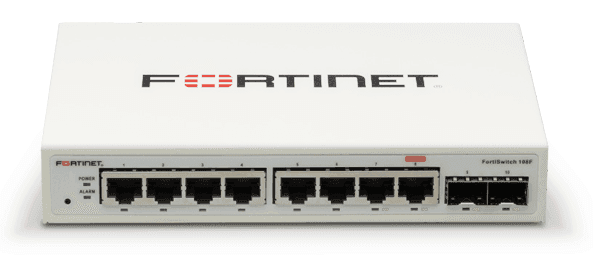
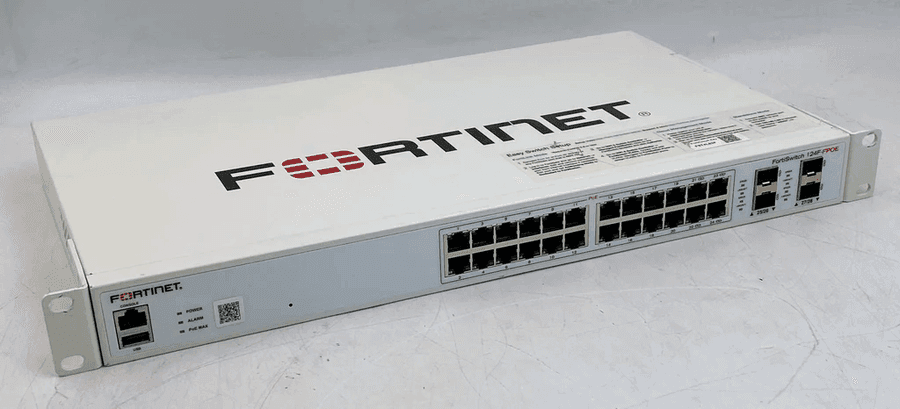
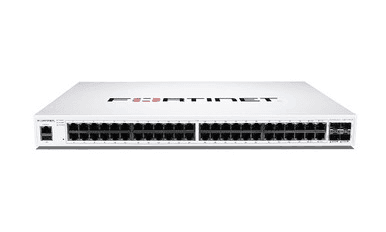
🔀 FortiSwitch FS-108F vs FS-124F vs FS-148F
AI-powered analysis across 25 matched specifications


Performance Overview
Scores based on quantifiable specification values (1-10 scale)
Detailed Specifications
| Specification | FortiSwitch FS-108F Fortinet | FortiSwitch FS-124F Fortinet | FortiSwitch FS-148F Fortinet |
|---|---|---|---|
| Key Metrics | |||
| Access ports | 8 × 1GbE RJ45 | 24 × 1GbE RJ45 | 48 × 1GbE RJ45 |
| Uplink ports | 2 × 1GbE SFP | 4 × 10GbE SFP+ | 4 × 10GbE SFP+ |
| Switching capacity | 20 Gbps | 128 Gbps | 176 Gbps |
| Forwarding rate | 14.9 Mpps | 190 Mpps | 131 Mpps |
| Cooling | Fanless | Fanless | Fanless |
| PoE support | No | No | No |
| Port density & uplinks | |||
| Total ports | 10 | 28 | 52 |
| Access port speed | 1 GbE | 1 GbE | 1 GbE |
| Uplink speed | 1 GbE (SFP) | 10 GbE (SFP+) | 10 GbE (SFP+) |
| Aggregate uplink bandwidth | 2 Gbps | 40 Gbps | 40 Gbps |
| Forwarding performance | |||
| Switching fabric | 20 Gbps | 128 Gbps | 176 Gbps |
| Forwarding rate (64-byte) | 14.9 Mpps | 190 Mpps | 131 Mpps |
| Non-blocking line rate | Yes | Yes | Yes (access ports) |
| Layer 2 features | |||
| VLANs | Yes | Yes | Yes |
| QoS | Yes | Yes | Yes |
| IGMP snooping | Yes | Yes | Yes |
| Spanning tree | RSTP/MSTP | RSTP/MSTP | RSTP/MSTP |
| Link aggregation (LACP) | Yes | Yes | Yes |
| Management | |||
| FortiLink (managed via FortiGate) | Yes | Yes | Yes |
| FortiManager support | Yes | Yes | Yes |
| FortiCloud support | Yes | Yes | Yes |
| Standalone CLI/Web GUI | Yes | Yes | Yes |
| Physical & environmental | |||
| Form factor | Compact desktop / rack | 1U rack | 1U rack |
| Acoustic noise | Silent (0 dB) | Silent (0 dB) | Silent (0 dB) |
| Certifications | FCC, CE, RoHS | FCC, CE, RoHS | FCC, CE, RoHS |
Expert Analysis
The practical difference between these three FortiSwitch F-series models is not features — they share the same FortiLink management, the same Layer 2 feature set and the same silent fanless design — it is scale and uplink headroom. The FS-108F is a 1GbE-only edge device with 1GbE SFP uplinks, while the FS-124F and FS-148F step up to 10GbE SFP+ uplinks, which matters the moment you trunk back to a FortiGate or a distribution switch carrying inter-VLAN traffic.
The FS-108F is the right answer for a small office, a meeting room, or a remote desk pod where you need fewer than eight wired ports and absolute silence. Its 20 Gbps fabric and 2 × 1GbE SFP uplinks are perfectly adequate for that role, but it is the wrong choice for anything that needs to aggregate user traffic — there is simply no 10GbE path out of the box. The FS-124F is the sweet spot for a typical UK SMB site of 20–40 users: 24 access ports, 4 × 10GbE SFP+ uplinks and the highest forwarding rate of the three at 190 Mpps. The FS-148F doubles the access density to 48 ports but keeps the same four 10GbE uplinks, so the uplink-to-access ratio is tighter; its 131 Mpps forwarding rate is also lower than the 124F's because of how the silicon is partitioned across more ports.
Note that none of these models is a PoE switch. If you need to power Wi-Fi access points, IP phones or cameras, you must move to the FS-108F-POE, FS-124F-POE or FS-148F-POE variants — selecting one of these three on the assumption that PoE is available is the single most common mistake we see.
Our recommendation framework: pick the FS-108F only when port count is genuinely below eight and you want a silent desktop unit. Default to the FS-124F for branch and SMB sites — it has the best forwarding-to-port ratio and meaningful 10GbE uplinks. Move to the FS-148F when you need a single switch to terminate 25+ users and you accept that the 40 Gbps of total uplink will be the bottleneck under heavy north-south load. All three only really make sense inside a Fortinet-managed estate where FortiLink turns the FortiGate into the controller; outside that context, the value proposition is weaker.
Ready to proceed?
Want to compare different products or add more to this comparison?
Open Interactive Comparison Tool →