
💻 ThinkPad P14s Gen 6 vs P16s Gen 4 Business Laptop Comparison
Lenovo ThinkPad P14s Gen 6 vs ThinkPad P16s Gen 4 compared across 22 matched specifications — scores, the full spec table and a verdict.
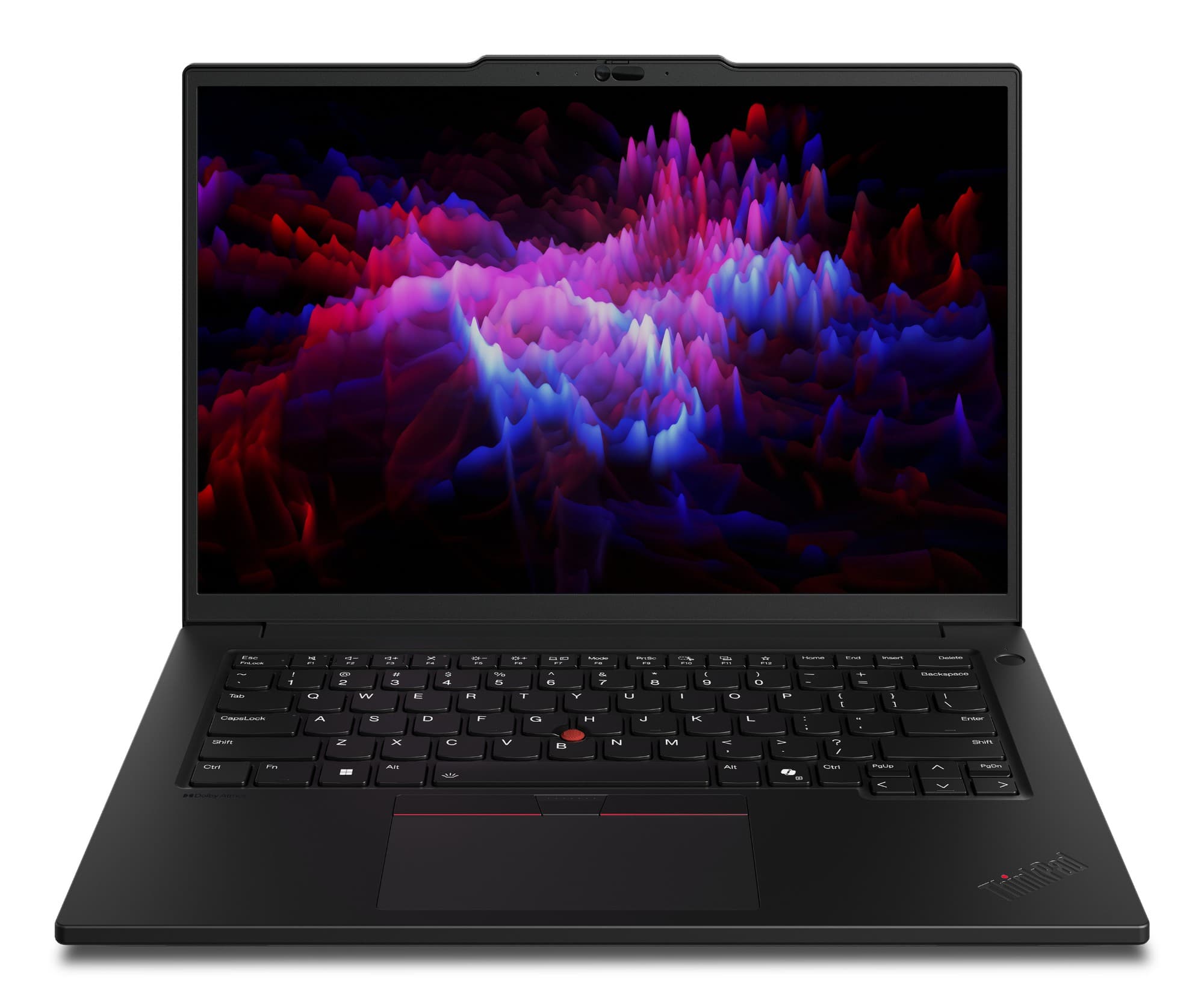
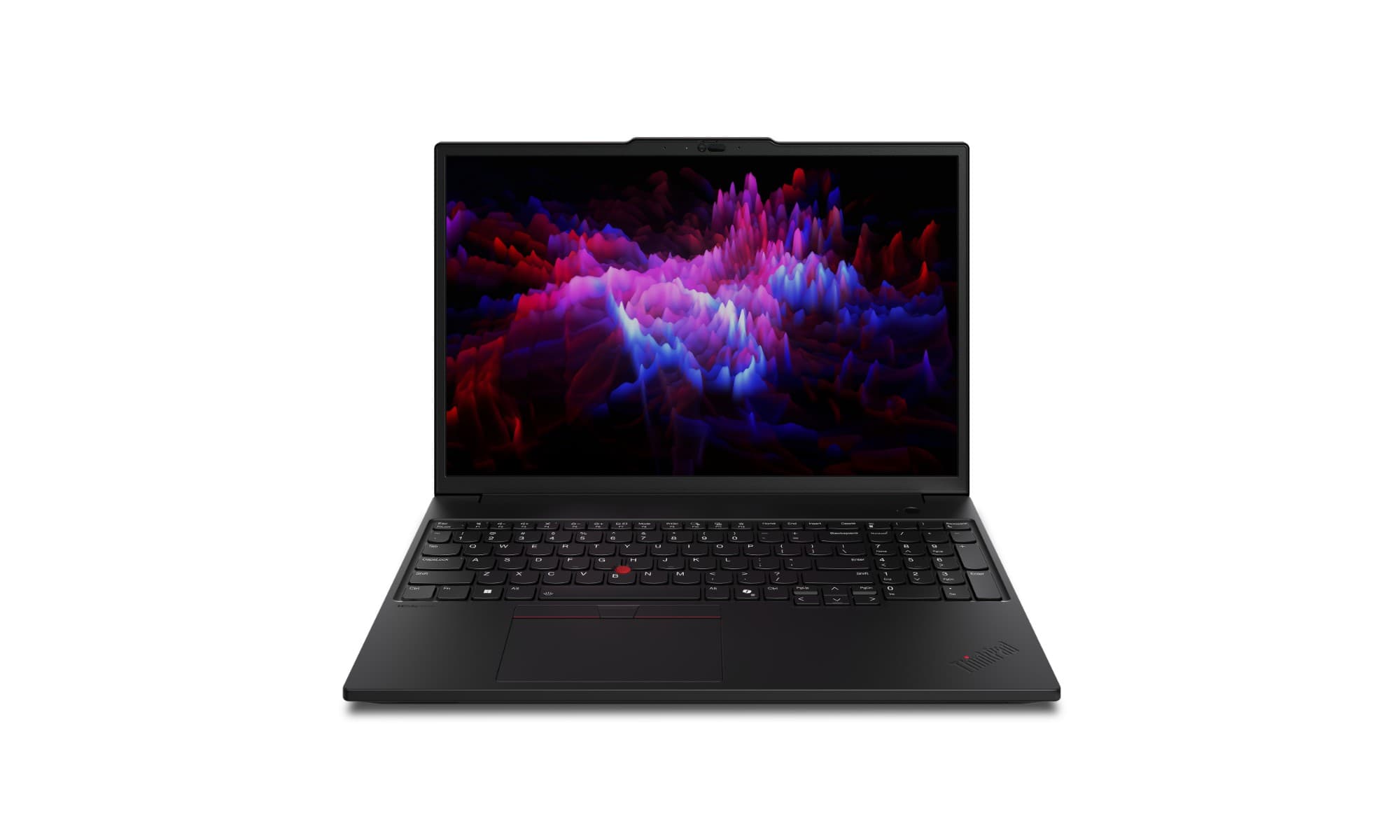
ThinkPad P14s Gen 6 vs P16s Gen 4 Business Laptop Comparison: performance overview
Scores based on quantifiable specification values (1-10 scale)
Detailed Specifications
| Specification | Lenovo ThinkPad P14s Gen 6 Lenovo | ThinkPad P16s Gen 4 Lenovo |
|---|---|---|
| Performance | ||
| Processor | Intel Core Ultra 7 255H / 265H / Ultra 9 285H (Series 2 H, up to 16 cores, to 5.4 GHz; vPro Enterprise on 265H/285H) · AMD Ryzen AI 7 PRO 350 / Ryzen AI 9 HX PRO 370 (to 12 cores, 5.1 GHz) | Intel Core Ultra 9 285H or Core Ultra 7 255H (H-Series 2, up to 16 cores, up to 5.4 GHz) · AMD Ryzen AI PRO 300: Ryzen AI 5 PRO 340 / 7 PRO 350 / 9 HX PRO 370 (up to 12 cores, up to 5.1 GHz) |
| CPU cores | Core Ultra 7 255H (up to 16 cores, to 5.4 GHz); AMD Ryzen AI PRO 300 to 12 cores | Core Ultra 9 285H / 7 255H (up to 16 cores); AMD Ryzen AI PRO 300 up to 12 cores / 24 threads (HX PRO 370) |
| Graphics | Intel Arc 140T, or NVIDIA RTX PRO 500 (6 GB GDDR7) / RTX PRO 1000 (8 GB GDDR7) Blackwell · AMD Radeon 860M / 890M integrated | Integrated Intel Arc 140T (Intel) or AMD Radeon 860M (AMD); optional NVIDIA RTX PRO 500 Blackwell 6 GB GDDR7 discrete GPU on Intel builds (RTX PRO 1000 8 GB to order) |
| Discrete GPU | Optional NVIDIA RTX PRO 500 / 1000 Blackwell discrete GPU on Intel builds | Optional NVIDIA RTX PRO 500 Blackwell 6 GB on Intel builds (2 of 3 stocked Intel builds) |
| Memory & storage | ||
| Maximum memory | Up to 96 GB DDR5 in two SO-DIMM slots, dual-channel (DDR5-5600; DDR5-6400 CSODIMM on Intel), non-ECC | DDR5 in two SO-DIMM slots, dual-channel, up to 96 GB (2× 48 GB), user-upgradeable; DDR5-5600, plus DDR5-6400 CSODIMM on Intel |
| Memory type | DDR5 SO-DIMM (2 slots); DDR5-5600 / DDR5-6400 CSODIMM (Intel) | DDR5 SO-DIMM (2 slots); DDR5-5600 / DDR5-6400 CSODIMM (Intel) |
| Maximum storage | M.2 2280 NVMe SSD up to 2 TB, Opal 2.0 — one PCIe 4.0 x4 slot on both; Intel offers a Gen5 Performance SSD that runs at PCIe 4.0 | One M.2 2280 slot, PCIe 4.0 x4, up to 2 TB, Opal 2.0; Intel offers a Gen5 Performance SSD |
| Display | ||
| Display size | 14.5″ (Intel) / 14″ (AMD) | 16.0″ |
| Resolution | 1920×1200 (WUXGA); 2560×1600 (Intel WQXGA) or 3072×1920 (Intel 3K), 2880×1800 OLED (AMD) options | 1920×1200 (WUXGA); 3840×2400 OLED option |
| Brightness | Intel WUXGA 400 nit; AMD WUXGA up to 500 nit; WQXGA / OLED options | 400-nit 45% NTSC or 500-nit 100% sRGB; WQUXGA OLED to order |
| Panel | 16:10 IPS anti-glare; Intel WQXGA 90 Hz X-Rite or 3K DCI-P3, AMD 2.8K OLED DCI-P3 options | WUXGA IPS anti-glare; WQUXGA OLED touch, DCI-P3, X-Rite calibrated, to order |
| Touchscreen | -- | WQUXGA OLED touch to order |
| Connectivity | ||
| Thunderbolt / USB4 ports | Intel 2× Thunderbolt 4; AMD 2× USB-C Thunderbolt 4 / USB4 40 Gbps (DP 1.4) | 2× Thunderbolt 4 (USB-C, PD 3.0, DisplayPort) |
| Ports | Intel: 2× Thunderbolt 4 (PD 3.0), HDMI 2.1 (4K60), 2× USB-A 5 Gbps (1 Always On), GbE RJ-45, 3.5 mm, Kensington Nano; AMD: 2× USB-C (TB4/USB4 40 Gbps, DP 1.4), HDMI 2.1, 2× USB-A, GbE RJ-45, NFC, optional nano-SIM | 2× Thunderbolt 4 (USB-C, PD 3.0, DisplayPort), HDMI 2.1 (4K/60), 2× USB-A 5 Gbps (1 Always On), gigabit RJ-45, 3.5 mm combo, Kensington Nano; optional nano-SIM & smart card; NFC on AMD |
| Mobile broadband (4G/5G) option | Optional 4G/5G WWAN (AMD, antenna-ready) | 4G LTE CAT16 eSIM (Intel) or 5G Sub-6 eSIM (AMD) on antenna-ready builds |
| Physical | ||
| Weight (from) | ✓Intel from 1.60 kg (1.64 kg with RTX PRO) · AMD from 1.39 kg | Intel from 1.82 kg · AMD from 1.71 kg |
| Dimensions | Intel 325.5 × 227.6 × 15.1 mm (21.7 mm max) · AMD 315.9 × 223.7 × 16.1 mm (21.95 mm max) | Intel 361.5 × 248.6 × up to 25.35 mm · AMD 359.7 × 251.7 × up to 23.5 mm |
| Security & management | ||
| Intel vPro | vPro Enterprise (Intel 265H/285H) / AMD PRO Manageability | Intel vPro Enterprise (Core Ultra 9 285H) or AMD PRO Manageability |
| Copilot+ PC (40+ TOPS NPU) | Copilot+ on AMD Ryzen AI PRO 300 (NPU up to 50 TOPS; up to 80 overall TOPS on HX PRO 370); Intel AI-Ready (up to 13 TOPS NPU) | Copilot+ on AMD Ryzen AI PRO 300 (NPU up to 50 TOPS); Intel AI-Ready Workstation (13 TOPS) |
| Battery | ||
| Battery capacity | Intel 57 / 75 Wh · AMD 52.5 / 57 Wh Li-ion; Rapid Charge to 80% in 1 hr | ✓Intel 57 Wh / 75 Wh · AMD 52.5 Wh / 86 Wh; Rapid Charge to 80% in 1 hr |
| Support | ||
| Operating system | Windows 11 Pro (Ubuntu / RHEL 10 available) | Windows 11 Pro (stocked); Ubuntu / Red Hat Enterprise Linux 10 available |
| Base warranty | 1-year base warranty — Premier Support and multi-year uplifts quoted | Lenovo base warranty (1-yr courier/carry-in up to 3-yr on-site); Premier Support uplift quoted |
Expert Analysis
The ThinkPad P14s Gen 6 is the superior choice for UK business users who prioritise portability, while the P16s Gen 4 suits those needing a larger screen. The P14s starts at just 1.39 kg (AMD) versus the P16s at 1.71 kg (AMD), and its Intel configuration is 1.60 kg against 1.82 kg. Intel builds of both offer 57 Wh or 75 Wh batteries, but on AMD the P16s offers an 86 Wh option against the P14s’s 57 Wh maximum. Both offer Intel up to Core Ultra 9 285H and AMD Ryzen AI PRO 300 processors up to the Ryzen AI 9 HX PRO 370. The P16s counters with a 16-inch display, available with a 4K OLED touch panel, compared to the P14s’s 14.5-inch maximum. Memory and storage expansion are identical, with dual SO-DIMM slots and a single M.2 SSD slot. Both offer Intel vPro Enterprise on selected Intel processors and AMD PRO Manageability on AMD builds; Copilot+ applies to the AMD models of both (NPU up to 50 TOPS), while Intel builds are AI-Ready workstations with a 13 TOPS NPU. Overall, the P14s is the more compelling all-rounder for mobile professionals, while the P16s is a capable desktop replacement.
Ready to proceed?
Not sure which one fits your environment?
Our UK specialists will recommend the right option for your workload and send itemised pricing — vendor-neutral, no obligation.
Response within 4 business hours · 20+ yr UK reseller
Want to compare different products or add more to this comparison?
Open Interactive Comparison Tool →Made your choice? Spread the cost.
Whichever you choose, you don't have to pay for it all upfront — finance your new hardware from £47/mo ex VAT on hire purchase or lease. Compare monthly payments and terms in seconds.
See finance from £47/mo →Indicative estimate · subject to change · no credit check at this stage · hire purchase, lease & subscription for UK businesses
Indicative illustration only. Servnet Limited is not authorised or regulated by the FCA and does not provide financial advice or arrange finance. All finance opportunities are referred to Number Eight Business Finance. Finance policy
Filter by role, spec and budget across the full range, then send the build for a fleet quotation.
Related comparisons
Other head-to-heads featuring these models — useful if you’re still shortlisting.
Talk to a UK specialist
Get expert advice or a no-obligation quote — servers, storage, networking, maintenance, finance and cloud. We reply the same working day.