

Disaster recovery planning in 2026 still commonly uses the foundational taxonomy of hot, warm, and cold sites, even though the underlying infrastructure has shifted decisively toward replicated colocation, cloud-based standby, and DRaaS. Where organisations once leased physical secondary data centres, modern resilience strategies map these categories onto replicated colocation, cloud-native pilot lights, and Disaster Recovery as a Service (DRaaS). Recovery speed dictates continuity expense: a hot site provides a fully operational duplicate with near-real-time replication restoring services in minutes to a few hours, while a cold site offers empty facility space taking days to weeks to rebuild. For UK infrastructure leaders, this choice is no longer just an internal architectural preference. UK cyber-resilience proposals expand reporting and resilience obligations for data centres, MSPs and certain critical suppliers where incidents could significantly affect service continuity. Navigating understanding RTO and RPO requirements against operational costs determines whether an organisation remains resilient or non-compliant during an outage.
View the data behind this chart
| Data sync state | Recovery window | Relative cost | |
|---|---|---|---|
| Hot site | Near-real-time continuous | Minutes to a few hours | Highest operational cost |
| Warm site | Asynchronous periodic | 4 to 12 hours | Roughly half of hot site |
| Cold site | Manual restore from backup | Days to weeks | Lowest operational cost |
Understanding Disaster Recovery Sites: Why Temperature Matters
In infrastructure engineering, the temperature metaphor—hot, warm, or cold—has long defined secondary recovery locations. The term does not denote climate control or server rack thermodynamics; rather, it describes operational readiness. A secondary data centre's temperature reflects how quickly its compute, network, storage, and application stacks can assume production traffic when the primary operational environment experiences a catastrophic failure.
As covered in trade analysis by The Register in mid-2026, disaster recovery guidance continues to frame secondary site selection around balancing recovery time objectives against continuity expenditure. A hot site represents continuous operational synchronisation, whereas a cold site provides only basic physical building capabilities. Between these two poles sits the warm site, providing pre-provisioned infrastructure that requires manual or automated activation before accepting operational workloads.
Historically, maintaining any secondary site required building or leasing a redundant physical facility. In 2026, modern secondary environments rarely involve duplicate, customer-owned server halls. Instead, enterprises translate these architectural categories into commercial colocation arrangements, cloud-hosted standby clusters, or managed DRaaS subscriptions. Deciding which model to deploy requires an understanding of technical synchronisation, system recovery mechanics, and organizational financial constraints.
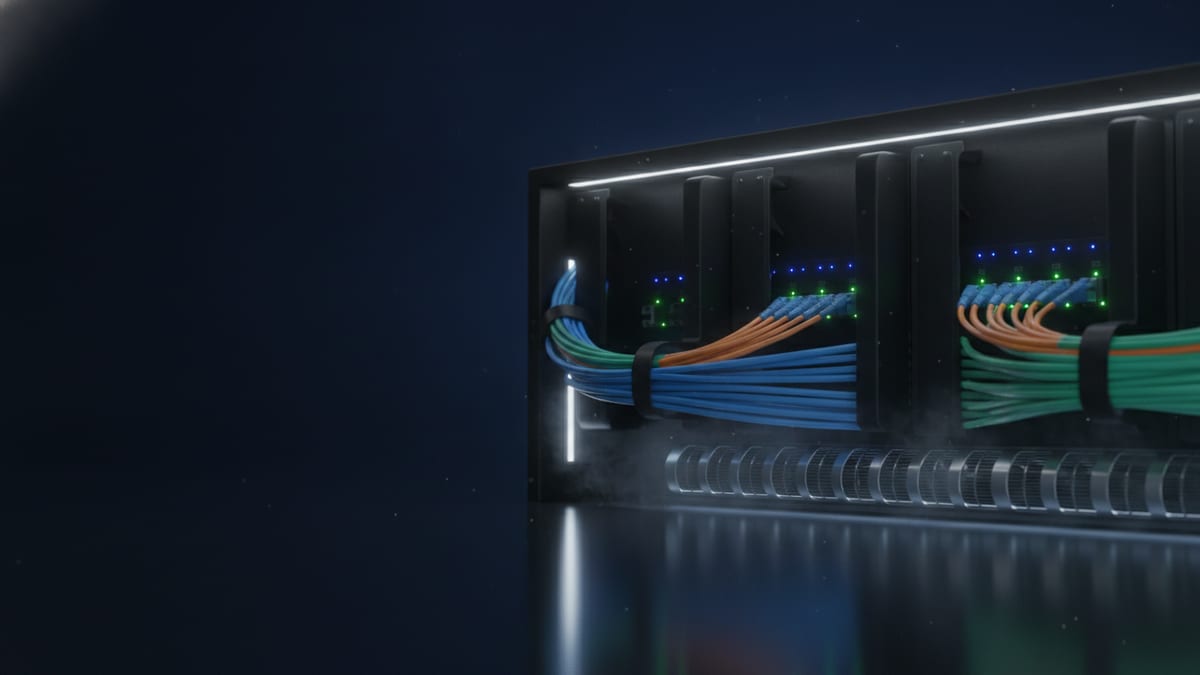
Hot Sites: Continuous Replication and Near-Zero Downtime
A hot disaster recovery site is generally defined as a fully operational, near-real-time redundant environment for an organisation's critical production workloads. In modern enterprise resilience architectures, a true hot site maintains continuous synchronisation or near-real-time data replication with primary systems. The compute hardware, hypervisors, storage arrays, operating systems, and network paths are kept continuously powered, patched, and configured to match live production.
Because the standby infrastructure is actively maintained, failover can occur almost instantaneously. CISSP-oriented infrastructure guidance, including Learn Security Management, describes hot-site recovery times as typically measured in minutes, sometimes extending to a few hours depending on failover orchestration. This brief recovery window accounts for traffic redirection, domain name service updates, and application state validation rather than hardware provisioning or operating system deployment.
However, operating a hot site carries significant commercial overhead. The organisation must effectively fund two parallel production environments, doubling software licensing, hardware maintenance, rack space, power allocation, and engineering oversight. Consequently, hot site deployments are reserved strictly for mission-critical services where an extended disruption would result in catastrophic financial loss, systemic operational failure, or direct regulatory penalties.
Warm Sites: Balancing Recovery Windows and Infrastructure Spend
A warm site introduces a pragmatic compromise between operational readiness and financial expense. Standard infrastructure definitions characterise a warm site as an environment equipped with pre-provisioned hardware, network connectivity, and established data replication links, but without all production workloads running actively in real time. The underlying servers are installed, configured, and capable of operating, but they do not maintain a live, parallel application state.
Data management in a warm site typically relies on asynchronous replication or regular snapshot synchronization rather than synchronous mirroring. Restoration typically completes within hours—commonly between 4 and 12 hours, depending on system complexity and vendor orchestration. During this activation window, engineering teams must power on dormant virtual instances, apply the most recent differential data sets, adjust network routing policies, and conduct integrity verifications before rerouting customer traffic.
From an operational expenditure perspective, standby environments avoid running duplicate active compute 24/7, frequently reducing baseline operational expenditure by up to 50% compared to a mirror hot site, although actual savings depend on software licensing and storage footprints. By keeping non-essential compute dormant and avoiding identical continuous active-active clustering, organisations can achieve an acceptable recovery window for business-critical platforms—restoring within hours to days—without incurring the extreme financial burden of a secondary production mirror.
Cold Sites: Bare Facilities for Long Recovery Objectives
At the lowest tier of operational readiness sits the cold site. Standard data centre taxonomy describes a cold site as a physical facility with power, cooling, security and connectivity, but with little or no pre-installed computing equipment or live storage infrastructure.
When an incident incapacitates the primary data centre, declaring a disaster at a cold site triggers an extensive logistical workflow. The organisation must source physical or virtual servers, transport hardware to the recovery facility, mount systems in racks, establish structured cabling, configure hypervisors, and rebuild application environments from off-site backup media. As reported across technical frameworks by Learn Security Management and The Register, cold site recovery windows typically extend from days to several weeks.
Cold sites remain the lowest-cost option among dedicated physical recovery strategies because day-to-day carrying costs are confined strictly to facility rent, basic power availability, and dormant circuit charges. However, cold sites carry profound operational risk. If supply chains encounter hardware procurement delays, or if backup restoration proves corrupt, recovery timelines can easily stretch beyond acceptable business continuity thresholds.
Hot vs Warm vs Cold: Direct Comparison of RTO, RPO, and Economics
Selecting an appropriate site strategy requires aligning recovery time objectives (RTO) and recovery point objectives (RPO) with the business cost of an outage. Comparing these site models reveals clear technical demarcations across latency, readiness, and ongoing operational maintenance.
A hot site achieves an RTO measured in minutes to a few hours, accompanied by a near-zero RPO due to continuous data replication. In contrast, a warm site extends recovery into an intermediate window—typically taking between half a business day to 24 hours to promote storage and validate configurations—with an RPO dependent on snapshot intervals. A cold site operates on an RTO of days to weeks, with RPO governed entirely by the timestamp of the latest restorable off-site backup. To determine whether the operational costs of active replication are commercially justified, organisations often calculate the true cost of downtime against these specific recovery intervals.
From an ongoing expenditure perspective, the financial hierarchy follows readiness: warm standby architectures deliver substantial savings over full active-active duplication, whereas cold facilities incur only nominal baseline retainers. Infrastructure leaders must evaluate these financial profiles against real operational impacts: choosing a cold site to economise on standby infrastructure will prove catastrophic if executive leadership cannot tolerate a multi-week operational shutdown.
View the data behind this chart
| Layer | Detail |
|---|---|
| Hot Site / Live Redundant Duplicate | Continuous replication, fully running compute, failover in minutes to hours |
| Warm Site / Cloud Pilot-Light | Pre-provisioned hardware, async sync, activation in 4 to 12 hours |
| Cold Site / Empty Standby Facility | Power and network only, hardware procurement and restore takes days to weeks |
The Cloud Shift: Pilot-Light Architectures and DRaaS Models
The expansion of hyperscale cloud providers and managed service providers has significantly broadened how many organisations apply traditional site definitions. Instead of building physical secondary data centres, modern enterprises increasingly implement cloud-native architectures that mirror classic temperature tiers at higher flexibility.
A primary example is the 'pilot-light' architecture. As documented in technical guidance from Amazon Web Services (AWS), a pilot-light design deploys a minimal core infrastructure—such as a VMware Cloud Disaster Recovery pilot-light cluster—continuously maintaining database and storage synchronization in the cloud. Unlike an active-active hot site that runs full compute capacity continuously, the pilot-light pattern keeps only the storage layer and critical supporting services active. Upon disaster declaration, orchestration pipelines scale compute nodes to full production capacity. This model broadly aligns with an advanced, automated warm site: it reduces running infrastructure fees compared to duplicate hot sites, while delivering recovery in minutes to hours rather than days or weeks, depending on configuration.
Simultaneously, Disaster Recovery as a Service (DRaaS) abstracts secondary data centre management entirely. Managed providers supply the underlying compute targets, automated failover tooling, and data replication pipelines under service-level agreements. For mid-market organisations, deciding whether to manage a replicated colocation suite or subscribe to a fully managed recovery target requires evaluating team capability; reviewing how to compare DRaaS with self-managed DR helps clarify operational accountability and staffing overhead.
UK Regulatory Pressures: The Cyber Security and Resilience Bill
For UK infrastructure buyers, disaster recovery design in 2026 is increasingly shaped by legislative scrutiny alongside business continuity, cyber insurance, and customer uptime expectations. The UK Government's Cyber Security and Resilience Policy Statement, published by the National Cyber Security Centre (NCSC) in August 2026, confirmed that expanded regulations under a strengthened Network and Information Systems (NIS) framework will bring data centres, managed service providers (MSPs), and critical supply chain vendors into statutory scope.
Legal and regulatory scrutiny surrounding the forthcoming Cyber Security and Resilience Bill highlights stringent requirements for critical digital infrastructure. Incidents must be formally reported to regulators when they could have a significant impact on the continuity or security of the regulated essential or digital services. Furthermore, data centres and service operators face statutory obligations covering physical security, risk management, incident reporting and demonstrable operational resilience measures.
This regulatory environment fundamentally changes how UK businesses select recovery sites. Regulators no longer accept theoretical disaster recovery plans; organisations must prove demonstrable, evidence-backed recovery objectives. Moreover, operational communications must remain resilient: established continuity standards emphasise that disaster recovery and backup alerts must reach operational personnel via an out-of-band communication pathway that survives the primary incident itself. Relying on an untested warm or cold site without documented failover validation introduces severe compliance exposure.
A Strategic Decision Framework for UK Infrastructure Leaders
Choosing between hot, warm, and cold recovery architectures requires a structured, workload-by-workload assessment rather than an arbitrary estate-wide choice. Modern enterprises rarely deploy a single recovery tier; instead, they adopt a hybrid approach based on business criticality, compliance demands, and budget boundaries.
The first step is workload tiering, which in the UK must now account for statutory incident-reporting triggers under the forthcoming Cyber Security and Resilience Bill. Systems whose failure could cause substantial public disruption or breach mandatory 24-to-72-hour notification windows must be classified as mission-critical, demanding hot site or cloud-native active replication to restore operations within minutes to a few hours. Business-critical internal applications whose downtime does not trip regulatory thresholds—such as secondary reporting engines or enterprise resource planning suites—align naturally with warm standby or cloud pilot-light patterns, where a 4 to 12 hour restoration window is acceptable. Archival records, non-essential development environments, and batch processing systems can default to cold site principles or off-site backup restoration, accepting multi-day or multi-week recovery timelines to conserve budget.
Next, evaluate vendor transparency and total operational expenditure. UK infrastructure buyers frequently encounter bespoke commercial models, and enterprise DR pricing is often bespoke and may be quoted in USD or via custom contracts rather than public GBP rate cards for full DR configurations. Organising budgets around hardware maintenance, network bandwidth for continuous replication, hypervisor licensing, and staffing guarantees is vital before signing contracts. Organisations seeking comprehensive resilience must look beyond raw infrastructure and explore comprehensive backup and disaster recovery solutions that pair immutable data protection with rigorous, scheduled testing.
Sources
Every figure in this article traces to the sources below.
- •The Register — Disaster recovery site classification and trade-offs
- •EON.io — Hot and warm disaster recovery operational definitions
- •Consilien — Cost ordering and modern DR site mapping
- •Amazon Web Services — VMware Cloud DR pilot-light architecture
- •Youstable — Hot site synchronization and failover mechanics
- •BCESG — Disaster recovery framework and activation timing
- •Learn Security Management — CISSP recovery time objectives across site types
- •NCSC — Cyber Security and Resilience Bill policy statement
- •Crowell — UK Cyber Security and Resilience Bill continuity reporting
- •Precursor Security — UK data centre compliance obligations