
💻 ThinkPad T14: Gen 6 vs Gen 5 vs Gen 4
ThinkPad T14 Gen 4 vs ThinkPad T14 Gen 5 vs ThinkPad T14 Gen 6 compared across 48 matched specifications — scores, the full spec table and a verdict.
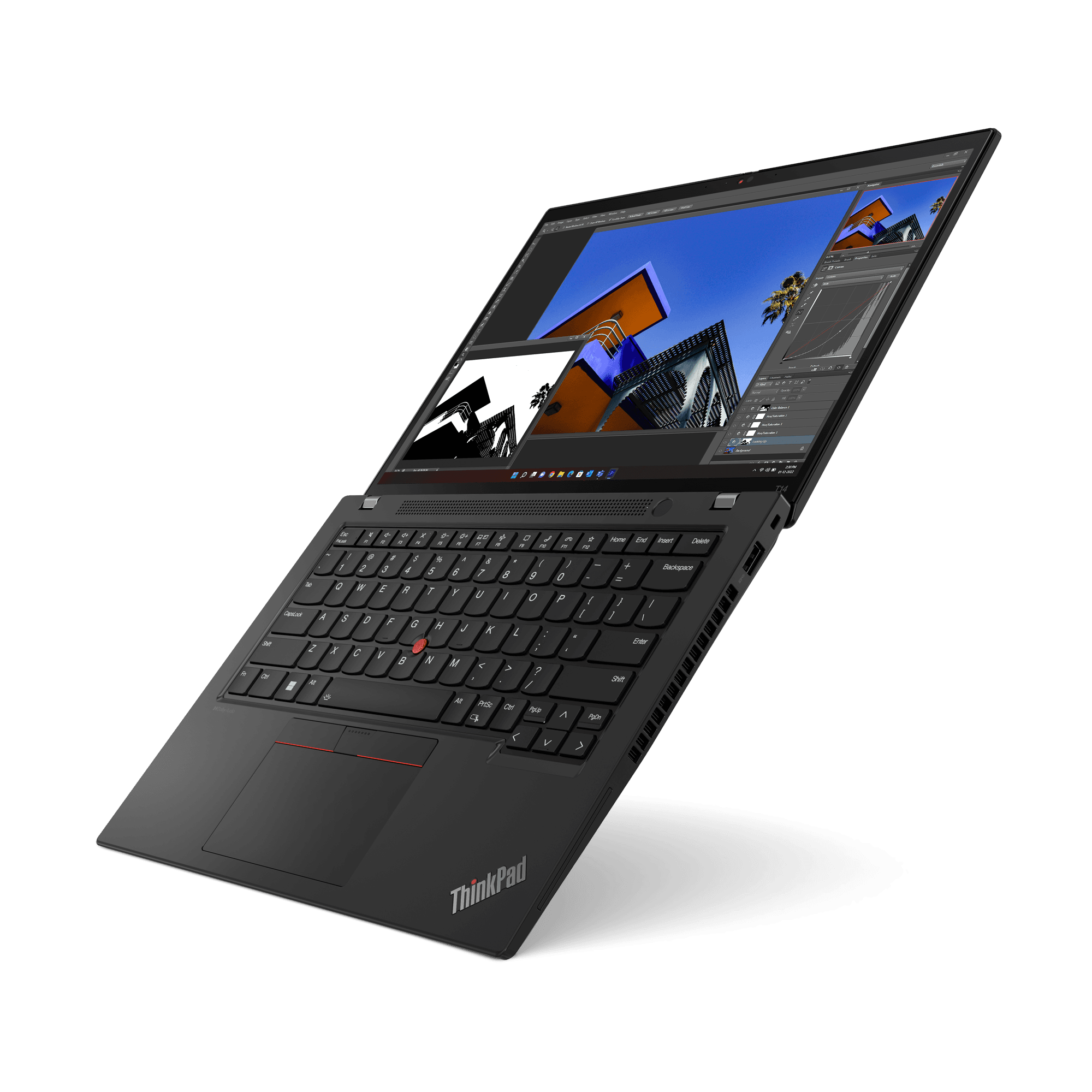
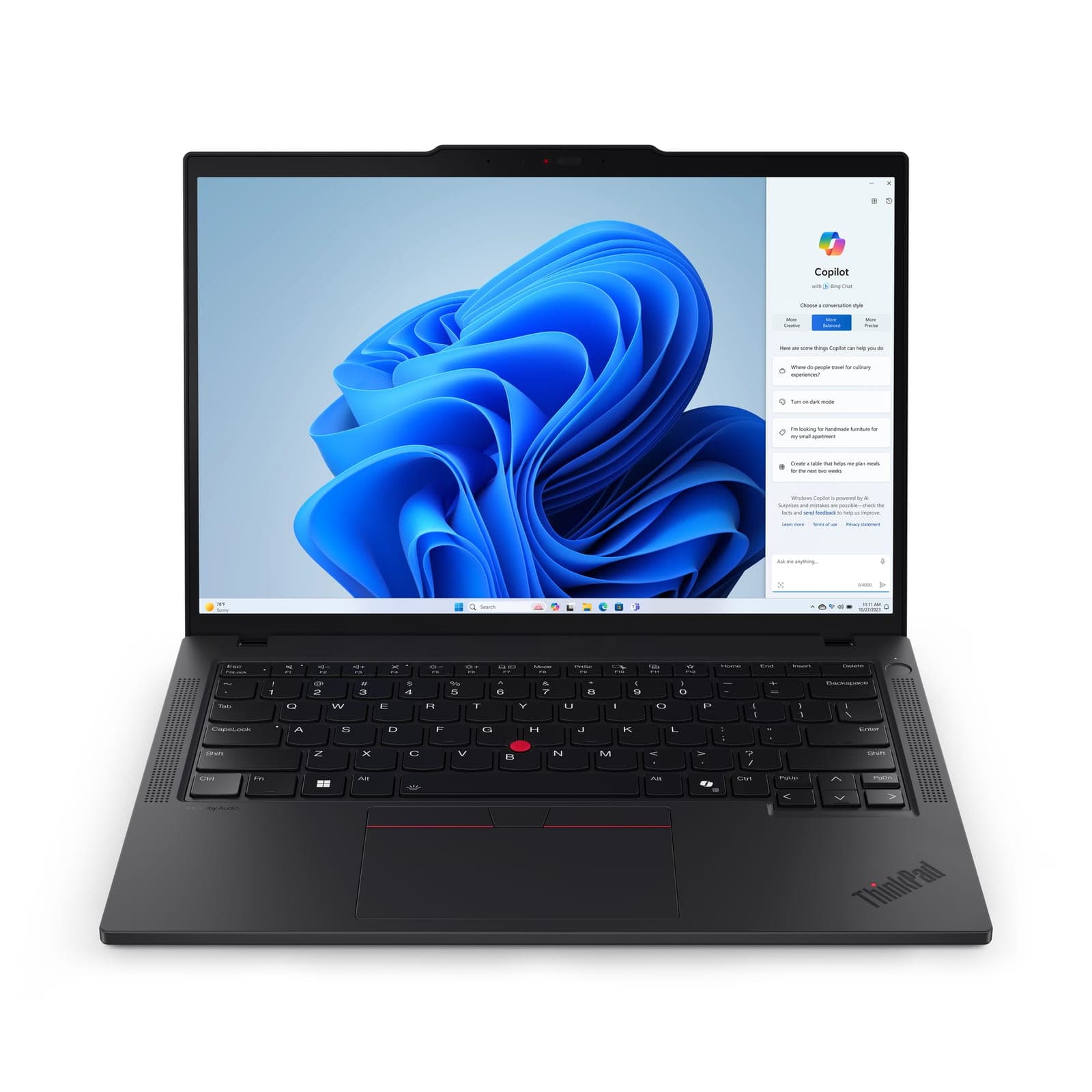
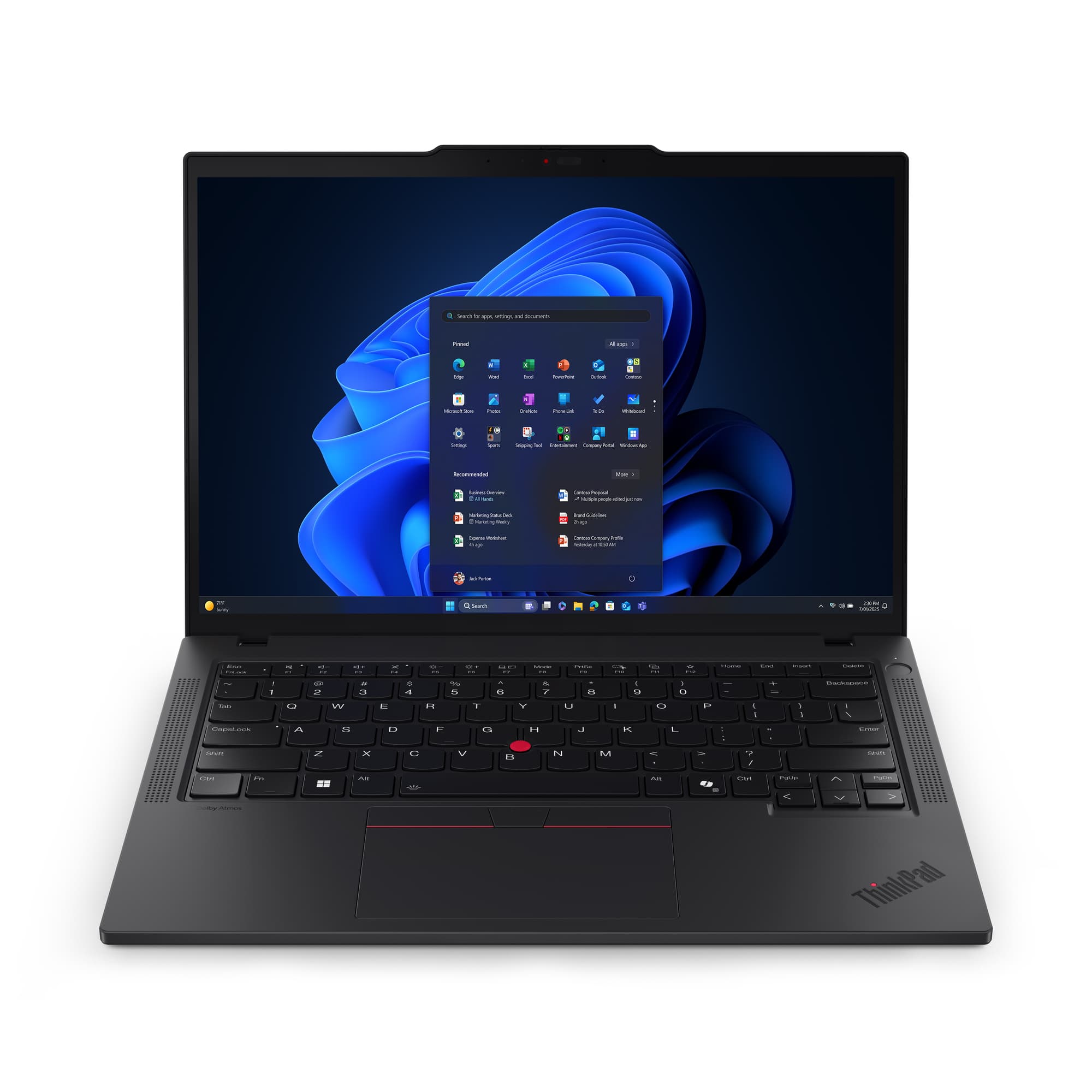
ThinkPad T14: performance overview
Scores based on quantifiable specification values (1-10 scale)
Detailed Specifications
| Specification | ThinkPad T14 Gen 4 Lenovo | ThinkPad T14 Gen 5 Lenovo | ThinkPad T14 Gen 6 Lenovo |
|---|---|---|---|
| Key Metrics | |||
| Launch year | 2023 | 2024 | 2025 |
| Intel platform | 13th Gen Core (Raptor Lake-U/P) | Core Ultra Series 1 (Meteor Lake) | Core Ultra Series 2 (Lunar Lake V / Arrow Lake U, H) |
| Top Intel processor | Core i7-1370P (vPro) | Core Ultra 7 165H (vPro) | Core Ultra 7 268V (Lunar Lake) / 265H (Arrow Lake) |
| AMD option | Ryzen 7 PRO 7040 series | Ryzen 7 PRO 8040 series | Ryzen AI 5 / 7 PRO 300 series (340, 350) |
| Copilot+ NPU class | No NPU on Intel; up to 10 TOPS on AMD Ryzen 7 PRO 7840U (not Copilot+) | Up to 11 TOPS Intel / 16 TOPS AMD (not Copilot+) | Up to 48 TOPS Lunar Lake / 50 TOPS AMD (Copilot+); Arrow Lake up to 13 TOPS (AI PC) |
| Maximum memory | DDR5 32 GB / DDR4 40 GB | 64 GB DDR5-5600 SO-DIMM | 64 GB DDR5-5600 SO-DIMM (Arrow Lake, AMD) / 32 GB soldered (Lunar Lake) |
| Battery life (MobileMark 25) | Up to 9.5 hr (Intel) / 14.3 hr (AMD) | Up to 11.5 hr (Intel) / 13.6 hr (AMD) | Up to 18.76 hr (Intel) / 15.5 hr (AMD) |
| Starting weight | 1.32 kg | 1.31 kg | 1.38 kg |
| Display | |||
| Standard panel | 14" WUXGA (1920×1200) IPS | 14" WUXGA (1920×1200) IPS | 14" WUXGA (1920×1200) IPS |
| Mid panel option | 2.2K (2240×1400) IPS | 2.2K (2240×1400) IPS | WUXGA low-power IPS, 100% sRGB (500 nits) |
| Premium panel | 2.8K (2880×1800) OLED, 60 Hz | 2.8K (2880×1800) OLED, 120 Hz | 2.8K (2880×1800) OLED, 120 Hz VRR (Arrow Lake Intel / AMD) |
| Max refresh rate | 60 Hz | 120 Hz (OLED) | 120 Hz (OLED) |
| Peak brightness | 300 / 400 / 500 nits (by panel) | 300 / 400 / 500 nits (by panel) | 400 / 500 nits (by panel) |
| HDR / Dolby Vision (OLED) | DisplayHDR True Black 500, Dolby Vision | DisplayHDR True Black 500, Dolby Vision | DisplayHDR True Black 500, Dolby Vision |
| ePrivacy panel option | Yes (Privacy Guard) | Yes (Privacy Guard) | Yes (Privacy Guard) |
| Aspect ratio | 16:10 | 16:10 | 16:10 |
| Compute & Memory | |||
| CPU architecture | Raptor Lake, hybrid P+E cores | Meteor Lake, P+E+LP-E tiles | Lunar Lake P+LP-E (memory on-package) / Arrow Lake P+E+LP-E |
| Integrated graphics | Intel Iris Xe | Intel Arc Graphics (H-series) | Intel Arc 130V / 140V (Lunar Lake); Arc 130T / 140T or Intel Graphics (Arrow Lake) |
| Discrete GPU option | NVIDIA GeForce MX550 option | None (integrated only) | None (integrated only) |
| Memory type | DDR4-3200 / DDR5-5200 / LPDDR5x | DDR5-5600 SO-DIMM | LPDDR5X-8533 on-package (Lunar Lake) / DDR5-5600 SO-DIMM (Arrow Lake, AMD) |
| Upgradeable memory | Partial on Intel DDR4/DDR5 (1 SO-DIMM + soldered); none on AMD or LPDDR5x | Yes (2 SO-DIMM slots) | Arrow Lake / AMD: yes (2 SO-DIMM slots); Lunar Lake: no (soldered) |
| Memory ceiling | 40 GB (DDR4) / 32 GB (DDR5) | 64 GB | 64 GB (Arrow Lake, AMD) / 32 GB (Lunar Lake) |
| Storage interface | M.2 2280 PCIe 4.0 ×4 (Opal 2.0) | M.2 2280 PCIe 4.0 ×4 (Opal 2.0) | M.2 2280 PCIe 5.0 ×4 (Intel V/H) or 4.0 ×4 (Intel U, AMD) (Opal 2.0) |
| Maximum storage | 2 TB | 2 TB | 2 TB |
| Connectivity & Ports | |||
| Thunderbolt / USB-C | 2× Thunderbolt 4 (DP 1.4) | 2× Thunderbolt 4 (DP 2.1) | 2× Thunderbolt 4 (DP 2.1) |
| USB-A | 2× USB-A 3.2 Gen 1 (5 Gbps) | 2× USB-A 3.2 Gen 1 (5 Gbps) | 2× USB-A 3.2 Gen 1 (5 Gbps) |
| Video out | HDMI 2.1 (4K/60) | HDMI 2.1 (4K/60) | HDMI 2.1 (4K/60) |
| Wired Ethernet | RJ-45 Gigabit (vPro: i219-LM) | RJ-45 Gigabit (vPro: i219-LM) | RJ-45 Gigabit (built in) |
| Card reader | None | None | None |
| Wireless | Wi-Fi 6E AX211 + BT 5.3 | Wi-Fi 6E AX211 or Wi-Fi 7 BE200 (Intel); Qualcomm Wi-Fi 6E / 7 (AMD) | Wi-Fi 6E AX211 or Wi-Fi 7 BE201 (Intel); MediaTek Wi-Fi 7 (AMD) |
| WWAN option | 4G LTE (Fibocom L860-GL) | 4G/5G (Quectel RM520N-GL) | 5G Sub-6 (Quectel) + eSIM |
| Camera | FHD + IR option (privacy shutter) | 5 MP or 5 MP + IR (privacy shutter) | 5 MP or 5 MP + IR (privacy shutter) |
| Form Factor & Power | |||
| Chassis | Carbon-fibre hybrid or aluminium top; PPS bottom (aluminium on grey AMD) | PC + 20% CF (black) or aluminium (grey) top; PC + 20% CF bottom | PC + 20% CF (black) or aluminium (grey) top; PC + 20% CF bottom |
| Dimensions (W×D×H) | 317.7 × 226.9 × 17.9 mm | 315.9 × 223.7 × 17.7 mm | 315.9 × 223.7 × 10.9–16.13 mm (21.8 mm max) |
| Starting weight | 1.32 kg | 1.31 kg | 1.38 kg |
| Battery options | 39.3 Wh / 52.5 Wh | 39.3 Wh / 52.5 Wh | 52.5 Wh / 57 Wh |
| Charging | 65 W USB-C, Rapid Charge (80% / 1 hr) | 65 W USB-C, Rapid Charge (80% / 1 hr) | 65 W USB-C, Rapid Charge (80% / 1 hr) |
| Serviceability | User-accessible SSD + 1 RAM slot (Intel DDR4/DDR5 models) | User-accessible SSD + 2 RAM slots | User-accessible SSD + 2 RAM slots (Arrow Lake / AMD) |
| Durability | MIL-STD-810H tested | MIL-STD-810H tested | MIL-STD-810H tested |
| Recycled materials | Recycled magnesium / aluminium | 90% recycled magnesium keyboard frame (Intel), 50% recycled Al top (grey) | 90% recycled magnesium, 50% recycled Al top |
| Management & Business Fit | |||
| Intel vPro | vPro Enterprise / Essentials | vPro Enterprise / Essentials | vPro Enterprise / non-vPro |
| Security chip | Discrete TPM 2.0 (FIPS 140-2) | Discrete TPM 2.0 (FIPS 140-2) | dTPM 2.0, ThinkShield stack |
| Biometrics | Fingerprint (power button) + IR option | Fingerprint (power button) + IR option | Fingerprint (power button) + IR Hello |
| Smart card reader option | Yes (ISO 7816 / EMV) | Yes (ISO 7816 / EMV) | Yes (optional) |
| Copilot+ on-device AI | No | No | Yes on Lunar Lake and AMD builds (Arrow Lake: AI PC) |
| Warranty (UK) | 1–3 yr on-site, Premier option | 1–3 yr on-site, Premier option | 1–3 yr carry-in or on-site, Premier option |
| OS options | Windows 11 Pro, Ubuntu | Windows 11 Pro, Ubuntu | Windows 11 Pro, Ubuntu 24.04 LTS |
| Dock compatibility | ThinkPad Universal TB4 / USB-C docks | ThinkPad Universal TB4 / USB-C docks | ThinkPad Universal TB4 / USB-C docks |
Expert Analysis
The T14 is the model most UK ThinkPad fleets standardise on, and across these three generations the practical workhorse formula is intact — RJ-45 Gigabit Ethernet built in, two user-upgradeable SO-DIMM slots on Gen 5 and on Gen 6 Arrow Lake and AMD builds, full ThinkPad keyboard with TrackPoint, vPro and MIL-STD-810H durability. The platform jump is the main reason to move: Gen 4 (13th-gen) caps DDR5 at just 32 GB, has no NPU on Intel (the AMD Ryzen 7 PRO 7840U’s is just 10 TOPS) and manages only ~9.5 hr MobileMark on Intel; Gen 5 (Meteor Lake) lifts memory to a proper 64 GB DDR5-5600, adds DisplayPort 2.1 docking and pushes Intel runtime to ~11.5 hr; Gen 6 (Core Ultra Series 2 or Ryzen AI PRO 300) keeps 64 GB SO-DIMM headroom on Arrow Lake and AMD builds (Lunar Lake memory is soldered at 16 or 32 GB), extends battery life to up to 18.76 hr MobileMark 25 (Intel), and brings Copilot+ NPUs of up to 48 TOPS (Lunar Lake) or 50 TOPS (AMD). The trade-off worth flagging to buyers is configuration: on Gen 6 the 2.8K OLED panel (now 500 nits with 120 Hz VRR) comes only with Arrow Lake Intel or AMD processors, and Intel Lunar Lake builds solder their memory — only the AMD Ryzen AI PRO builds combine the OLED option, upgradeable RAM and a Copilot+ NPU. For UK refresh planning, Gen 4 fleets should be prioritised for replacement now (memory-constrained, no Copilot+ capability, falling resale), Gen 5 remains a strong hold for one more cycle, and Gen 6 is the right standard build for new rollouts — choose the AMD builds where upgradeable RAM, wired Ethernet and a Copilot+ NPU are all required, since Intel Lunar Lake solders its memory and Arrow Lake is an AI PC rather than a Copilot+ PC.
Ready to proceed?
Not sure which one fits your environment?
Our UK specialists will recommend the right option for your workload and send itemised pricing — vendor-neutral, no obligation.
Response within 4 business hours · 20+ yr UK reseller
Want to compare different products or add more to this comparison?
Open Interactive Comparison Tool →Made your choice? Spread the cost.
Whichever you choose, you don't have to pay for it all upfront — finance your new hardware from £47/mo ex VAT on hire purchase or lease. Compare monthly payments and terms in seconds.
See finance from £47/mo →Indicative estimate · subject to change · no credit check at this stage · hire purchase, lease & subscription for UK businesses
Indicative illustration only. Servnet Limited is not authorised or regulated by the FCA and does not provide financial advice or arrange finance. All finance opportunities are referred to Number Eight Business Finance. Finance policy
Filter by role, spec and budget across the full range, then send the build for a fleet quotation.
Related comparisons
Other head-to-heads featuring these models — useful if you’re still shortlisting.
Talk to a UK specialist
Get expert advice or a no-obligation quote — servers, storage, networking, maintenance, finance and cloud. We reply the same working day.