

Google is reconfiguring its eighth-generation TPU line so training and inference now run on different silicon and network topologies. For UK buyers weighing datacenter GPU accelerators against Google Cloud, the split changes how to price and plan inference capacity.
View the data behind this chart
| TPU 8t (torus) | TPU 8tx reported pod | Ironwood (prior gen) | |
|---|---|---|---|
| Accelerators per superpod | 9600accelera… | 1152accelera… | 256accelera… |
Training and inference are no longer the same chip
Until now, a single TPU generation tried to serve both frontier model training and everyday inference. Google's new approach treats them as separate engineering problems. The TPU 8t ("Sunfish") is built for training at enormous scale: pods of 9,600 accelerators linked by a 3D torus interconnect into a shared coherent memory space, with a reported cluster of more than one million TPU 8t devices — distinct from the 9,600-accelerator pod — delivering 121 exaflops of FP4 compute. Google says a cluster of that size trained its Gemini 4 Carbon frontier model, announced on 28 October, a few weeks after the related Gemini 4 Argon release.
The TPU 8i ("Zebrafish") line, in contrast, is tuned for inference: optimised around memory, bandwidth and latency rather than peak compute, with a different balance of SRAM and HBM than the training-focused chips, built around serving tokens quickly rather than crunching gradients. Buyers used to thinking of TPU capacity as one undifferentiated pool now need to ask which variant a workload actually needs, a question covered in more depth in our guide to buying for inference not training.
TPU 8tx and TPU 8i Max: the inference-specific hardware arriving in 2027
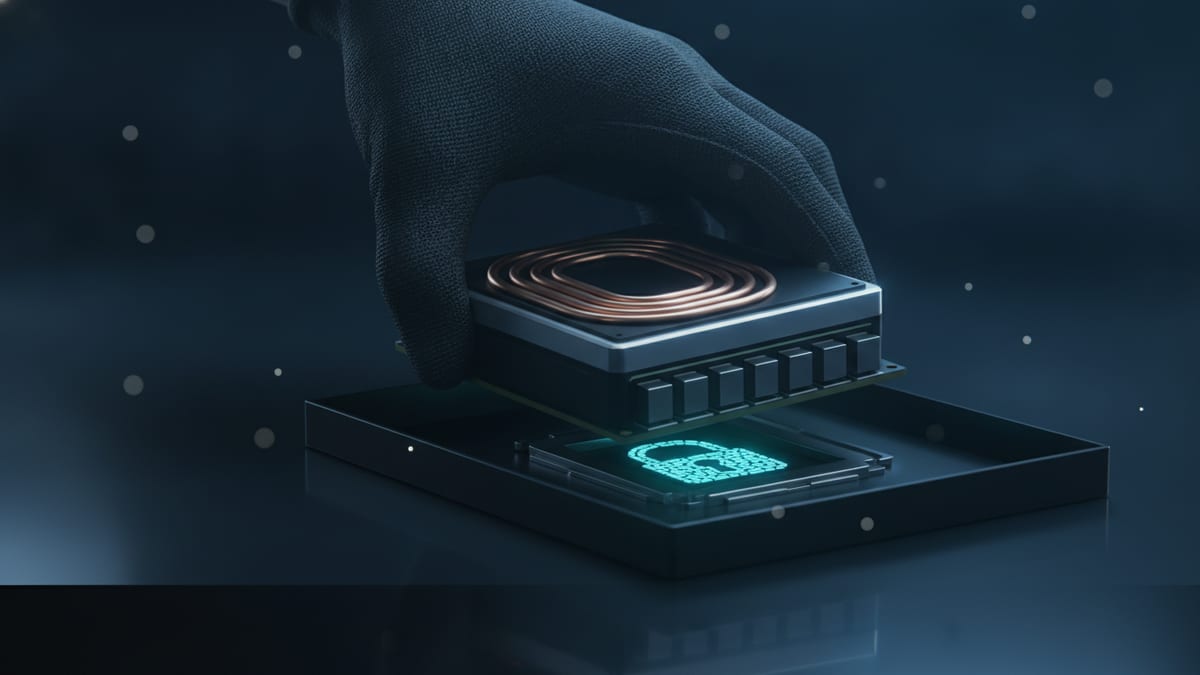
Two further variants push the split even deeper. The TPU 8tx takes the training-focused 8t die and reportedly pairs it with a different interconnect topology: Google's "boardfly" (a dragonfly variant) in place of the 3D torus. Secondary reporting describes this as shrinking pod size from 9,600 accelerators down to 1,152 and cutting the fabric diameter by 8.3x, with average latency through the system roughly halved versus the torus topology — figures that should be attributed to that reporting rather than treated as a confirmed Google specification, since Google's own announcement describes 8tx primarily as a secure, confidential-inference system. This would still be a meaningful detail for agentic workloads that run many concurrent inference streams rather than one long training job.
The TPU 8tx also swaps Google's own Axion Arm CPU for an AMD Epyc processor, reportedly to gain on-board root-of-trust and encryption acceleration so data stays encrypted until the moment it hits the TPU. It has been speculated, though not confirmed by Google, that this is a custom Arm variant, or a current Turin Epyc 9005 or upcoming Venice Epyc 9006 part, and that the design is a short-term stopgap ahead of the functionality migrating into Google's own silicon and Axion CPUs with the next TPU generation. These remain speculative points pending further technical disclosure.
The TPU 8i Max, meanwhile, combines two 8i-class chips per socket for long-context and agentic workloads. Google's announcement describes 8i Max as a two-chip system; derived figures indicate roughly double the compute, SRAM and HBM bandwidth of standard TPU 8i, but exact system specifications should be treated as provisional pending a complete technical disclosure. The practical effect, per Google, is a larger shared memory pool and higher bandwidth for context and KV-cache storage — detail we track in our AI accelerator specifications database.
What this means for UK Google Cloud pricing
The clearest pricing signal for UK buyers right now isn't Sunfish or Zebrafish at all — it's the predecessor Ironwood TPU v7p, which Google deployed internally from Q4 2025. Google Cloud's regional TPU pricing page lists rates for specific Ironwood instance and reservation types in its Europe-West2 region and in US-Central1 (Iowa); buyers should check that page directly for the exact instance type, reservation terms and region covered rather than relying on a general claim of availability. That gives UK teams an actual rate card to model against today, rather than a roadmap promise.
Google hasn't published pricing for Sunfish or Zebrafish, but the expected pattern is informative: TPU 8t is likely to cost more per flop and per HBM capacity than TPU 8i, since training workloads justify a premium while inference pricing needs to keep falling for the wider GenAI market to stay elastic. TPU 8tx is expected to carry a slight hourly premium over both 8t and 8i, and TPU 8i Max is pencilled in at a little under 2x the hourly rate of standard 8i. None of this is an official price sheet, so procurement teams should budget against ranges and revisit once UK regional pricing lands.
TPU versus Nvidia: the question UK buyers actually need to answer
The headline comparison people reach for — peak FP4 flops, exaflops per pod — understates what actually separates these platforms. TPU 8i's own case rests on per-dollar inference efficiency rather than peak throughput: Google claims up to 80% higher performance per dollar for LLM inference than Ironwood, driven by memory and interconnect choices suited to serving rather than training. Nvidia remains the safer default where workloads are mixed training-and-inference, where multi-cloud portability matters, or where broad framework support outweighs a single cloud's claimed economics — a trade-off worth running through our NVIDIA DGX systems comparisons and AI GPU sizing calculator before committing budget.
The workload shape matters more than any single spec. Persistent, latency-sensitive, high-volume inference — customer-facing assistants, coding copilots, long-context reasoning agents — is exactly the profile TPU 8i and its Max variant are built around. Training-heavy or exploratory workloads, or anything needing to move between clouds without rework, still tilt toward the incumbent GPU ecosystem. Our AI servers data study has more on how utilisation patterns shift that calculus.
Rollout timeline: what's real now versus what's still a 2027 promise
The TPU 8t, reported to be developed with Broadcom, is reportedly rolling into Google datacenters now. The TPU 8i, reported to involve MediaTek, suffered delays earlier in the year and it's unclear whether it's shipping to Google at all yet; standard TPU 8i's current UK or nearby-region availability has not been separately verified here, distinct from the not-yet-documented 8tx and 8i Max variants. The source expects, optimistically, that installations of the modified 8tx and 8i Max variants could begin around Q1 2027, with ramping across multiple Google Cloud regions globally stretching out over roughly the following year and a half — an expectation, not a confirmed schedule.
That gap between announcement and availability matters for UK procurement cycles. Teams building 2027 budgets around TPU 8tx or 8i Max should treat those as roadmap items, not purchasable capacity, and plan interim inference workloads around whatever is actually priced and available in-region today. Reviewing current server configuration options against this timeline helps avoid overcommitting to hardware that isn't yet orderable in Europe.
View the data behind this chart
| Phase | Starts (week) | Duration (weeks) |
|---|---|---|
| TPU 8t entering datacenters now | 0 | 16 |
| 8tx/8i Max installs targeted Q1 2027 | 16 | 16 |
| Multi-region Cloud ramp — timing TBD | 32 | 64 |
A procurement checklist before signing anything
Before any Google Cloud AI inference commitment, UK buyers should pin down a handful of basics rather than negotiate off headline specs.
- •Confirm which TPU generation and variant is actually priced and available in a UK or nearby EU region today, not just announced globally
- •Model cost per million output tokens at your real prompt length, concurrency and latency target, not peak FP4 flops
- •Check whether a workload is training-shaped, inference-shaped, or genuinely mixed before picking 8t-family versus 8i-family hardware
- •Treat TPU 8tx and TPU 8i Max as 2027-and-later capacity for planning purposes, given the stated installation timeline
- •Keep a comparable Nvidia-based baseline costed in parallel until Google publishes firm Sunfish and Zebrafish pricing
- 01The Next Platform — Google Rejiggers TPU Accelerators For Broader AI Inference Work · 9 November 2026
- 02The Register — Google dual-tracks TPU 8 to conquer training and inference · 22 April 2026
- 03Tom's Hardware — Google adds two new specialized chips for AI agents and security to 8th gen TPU lineup · 9 November 2026
- 04DataCenterDynamics — Google expands eighth-generation TPU portfolio with two new TPU systems · 9 November 2026
- 05ServeTheHome — Google's TPUv8s for training and inference at Hot Chips 2026 · 25 August 2026
- 06Ars Technica — Google unveils two new TPUs designed for the agentic era · 22 April 2026
- 07tomshardware.com
- 08tomshardware.com