
💻 dell-pro-max-16 vs apple-macbook-pro-16-m5 vs lenovo-thinkpad-t16-gen-4
AI-powered analysis across 24 matched specifications
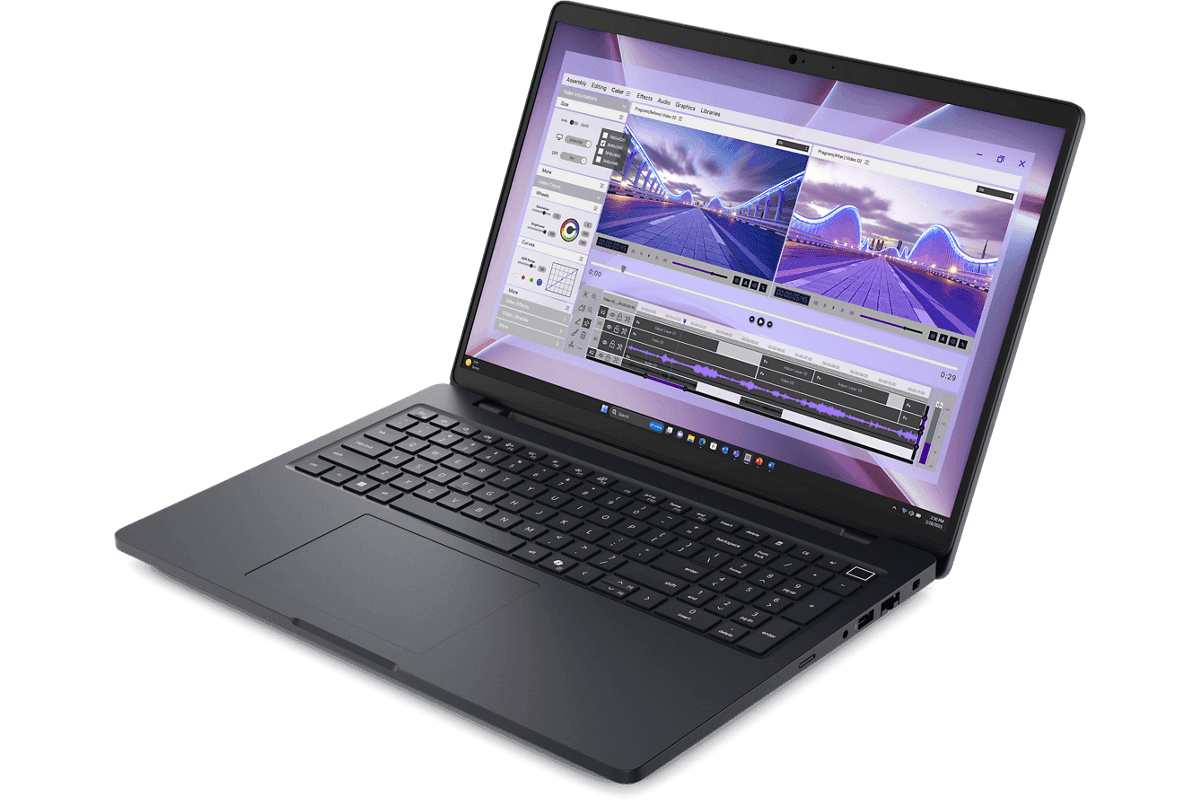
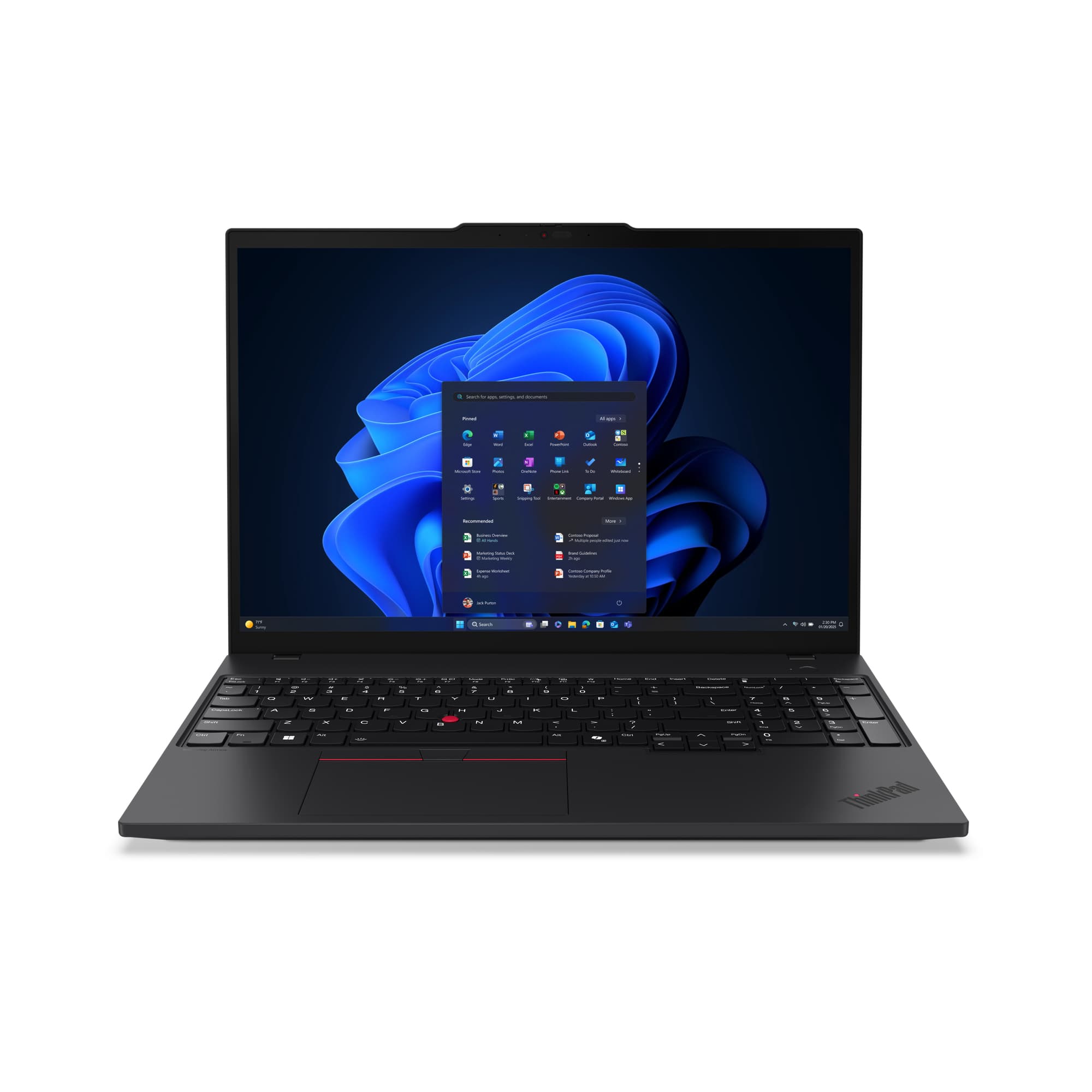
Performance Overview
Scores based on quantifiable specification values (1-10 scale)
Detailed Specifications
| Specification | Dell Pro Max 16 Dell | apple-macbook-pro-16-m5-pro | ThinkPad T16 Gen 4 Lenovo |
|---|---|---|---|
| Performance | |||
| Processor | Intel Core Ultra 5 235H / Ultra 7 255H / Ultra 7 265H / Ultra 9 285H (up to 16 cores) | M5 Pro (18C CPU, 20C GPU) or M5 Max (18C CPU, 32C or 40C GPU) | Intel Core Ultra 5 225U or Core Ultra 7 255U — Series 2 'Arrow Lake' U, 12 cores (2P + 8E + 2LP) / 14 threads; the 255U is vPro Essentials only. Full vPro Enterprise needs a Core Ultra 235U/265U build |
| CPU cores | Up to 16 cores / 16 threads (Core Ultra 7 255H / 265H, Ultra 9 285H) | M5 Pro: 18-core CPU · M5 Max: 18-core CPU | 12 cores (2P + 8E + 2LP) / 14 threads |
| Graphics | Intel Graphics (integrated) or NVIDIA RTX PRO 500 (6 GB) / RTX PRO 1000 (8 GB) / RTX PRO 2000 (8 GB) Blackwell, GDDR7 | M5 Pro: up to 20-core GPU · M5 Max: up to 40-core GPU | Intel Graphics (integrated); Intel AI Boost NPU up to 12 TOPS |
| Discrete GPU | ✓NVIDIA RTX 500 / 1000 / 2000 discrete option, up to 8 GB GDDR7 | Integrated Apple silicon GPU (M5 Pro / M5 Max SoC) | Integrated only |
| Memory & storage | |||
| Maximum memory | Up to 64 GB DDR5-6400 (2 × 32 GB CSODIMM), 2 slots | ✓M5 Pro: up to 64 GB · M5 Max: up to 128 GB unified (up to 614 GB/s bandwidth) | 16 GB DDR5-5600 (2 × 8 GB SO-DIMM), dual-channel; user-upgradeable to 64 GB across two slots |
| Memory type | DDR5 SODIMM (5600 MT/s) or CSODIMM (6400 MT/s), 2 slots | Unified memory (307 GB/s on M5 Pro; 460 or 614 GB/s on M5 Max) | DDR5-5600 SO-DIMM (2 slots), dual-channel |
| Maximum storage | 2× M.2 PCIe Gen4 NVMe slots (drives up to 2 TB each, up to 4 TB total; self-encrypting options) | Up to 8 TB SSD | 512 GB M.2 2280 PCIe Gen4 NVMe SSD (Opal 2.0); single drive, to 2 TB |
| Display | |||
| Display size | 16.0" | 16.2" | 16.0″ |
| Resolution | 1920 × 1200 or 2560 × 1600 | 3456 × 2234 | 1920×1200 (WUXGA) |
| Brightness | 300 nits (WVA) | ✓1000-nit sustained / 1600-nit peak HDR | 400-nit 45% NTSC (Ultra 5) or 500-nit low-power 100% sRGB (Ultra 7) |
| Panel | 16.0" FHD+ (1920 × 1200) 60 Hz WVA (touch option) or QHD+ (2560 × 1600) 120 Hz WVA 100% sRGB, anti-glare, 300 nits, 16:10 | Liquid Retina XDR mini-LED, ProMotion 10-120 Hz, P3 wide colour | WUXGA IPS anti-glare, 16:10, 60 Hz — no OLED option this generation |
| Touchscreen | FHD+ touch panel option | -- | -- |
| Connectivity | |||
| Thunderbolt / USB4 ports | 2× Thunderbolt 4 (40 Gbps, PD, DisplayPort) | ✓3× Thunderbolt 5 (80 / 120 Gbps) | 2× Thunderbolt 4 (USB4 40 Gbps, PD 15–100 W, DP 2.1) |
| Ports | 2× Thunderbolt 4 (40 Gbps, PD, DisplayPort), 2× USB 3.2 Gen 1 (one PowerShare), HDMI 2.1, RJ-45 1 GbE, microSD, headset jack; smart-card reader optional | MagSafe 3, 3× Thunderbolt 5 (80 / 120 Gbps), HDMI 2.1, SD card (UHS-II), 3.5 mm combo | 2× Thunderbolt 4 (USB4 40 Gbps, PD 15–100 W, DP 2.1), 2× USB-A 5 Gbps (one Always On), HDMI 2.1 (4K/60), RJ-45 GbE, 3.5 mm combo, smart card reader; nano-SIM on WWAN builds |
| Mobile broadband (4G/5G) option | 5G MediaTek T700 (DW5933e), eSIM capable (option) | -- | WWAN-upgradeable (antenna-ready) |
| Physical | |||
| Weight (from) | From 2.10 kg (4.65 lb) | From 2.14 kg (M5 Pro) — 2.15 kg (M5 Max) | ✓From 1.76 kg (52.5 Wh) / 1.89 kg (86 Wh) |
| Dimensions | 358.0 × 256.0 × 15.08–25.60 mm | 355.7 × 248.1 × 16.8 mm | 359.7 × 250.8 × 23.5 mm max (11.8 mm front / 18.14 mm rear) |
| Security & management | |||
| Intel vPro | vPro on Core Ultra 5 235H, Ultra 7 265H and Ultra 9 285H (Ultra 7 255H is non-vPro) | N/A — Apple silicon (Secure Enclave) | Stocked builds non-vPro (255U vPro Essentials only); full vPro Enterprise via Core Ultra 235U/265U build to order |
| Secured-core PC | -- | N/A — Secured-core PC is a Windows feature; Apple silicon uses the Secure Enclave | -- |
| Copilot+ PC (40+ TOPS NPU) | -- | N/A — Copilot+ PC is a Windows programme; Apple ships Apple Intelligence | AI PC — Intel AI Boost NPU up to 12 TOPS; Copilot+ 'Lunar Lake' 200V configurable to order |
| Battery | |||
| Battery capacity | 4-cell 64 Wh or 6-cell 96 Wh (ExpressCharge capable) | ✓100 Wh — up to 24 hours video / 17 hours wireless web | 52.5 Wh (21QE002UUK) or 86 Wh (21QE002XUK / 21QE004QUK) Li-ion, Rapid Charge to 80% in ~1 hr |
| Rated battery life | ExpressCharge capable; Dell lists no rated runtime | Up to 24 hours video / 17 hours wireless web | up to 11.5 hours (MobileMark 25) on the low-power WUXGA panel |
| Support | |||
| Operating system | Windows 11 Pro or Home, Ubuntu Linux 22.04 LTS | macOS Tahoe (with Apple Intelligence) | Windows 11 Pro (stocked); Windows 11 Home / Ubuntu Linux configurable |
| Base warranty | 1- to 5-year hardware warranty or ProSupport options; Accidental Damage Protection available | 1-year limited; AppleCare+ for Business extends to 3 years + ADP | Lenovo base warranty — cover level varies by configuration; Lenovo Premier Support uplifts quoted |
Expert Analysis
The Apple MacBook Pro 16 M5 offers the strongest overall package with its high-performance M5 Pro/Max chip, outstanding 1000-nit mini-LED display, and long battery life. However, the Dell Pro Max 16 is the only one of the three offering discrete graphics, with NVIDIA RTX 500, 1000 or 2000 GPUs (up to 8 GB GDDR7) alongside two socketed DDR5 slots taking up to 64 GB—well suited to engineering and CAD workloads. The Lenovo ThinkPad T16 Gen 4 is substantially lighter at 1.76 kg and provides sufficient performance for everyday business tasks, though it is constrained by integrated graphics, a lower-resolution display, and limited storage. For manageability, Dell and Lenovo offer Intel vPro options and Windows 11 Pro, while Apple relies on its Secure Enclave and macOS ecosystem. Battery life is exceptional on the MacBook (up to 24 hours), whereas the ThinkPad achieves 11.5 hours on its low-power panel and the Pro Max lists no rated figure for its 64 Wh or 96 Wh battery. Connectivity favours the MacBook with three Thunderbolt 5 ports, but Dell includes RJ-45 Gigabit Ethernet and an optional smart-card reader. Ultimately, the MacBook Pro excels for creative and developer roles, the Dell Pro Max for discrete NVIDIA graphics and upgradeable memory, and the ThinkPad for lightweight fleet deployments.
Ready to proceed?
Not sure which one fits your environment?
Our UK specialists will recommend the right option for your workload and send itemised pricing — vendor-neutral, no obligation.
Response within 4 business hours · 20+ yr UK reseller
Want to compare different products or add more to this comparison?
Open Interactive Comparison Tool →Made your choice? Spread the cost.
Whichever you choose, you don't have to pay for it all upfront — finance your new hardware from £47/mo ex VAT on hire purchase or lease. Compare monthly payments and terms in seconds.
See finance from £47/mo →Indicative estimate · subject to change · no credit check at this stage · hire purchase, lease & subscription for UK businesses
Indicative illustration only. Servnet Limited is not authorised or regulated by the FCA and does not provide financial advice or arrange finance. All finance opportunities are referred to Number Eight Business Finance. Finance policy
Filter by role, spec and budget across the full range, then send the build for a fleet quotation.
Related comparisons
Other head-to-heads featuring these models — useful if you’re still shortlisting.
Talk to a UK specialist
Get expert advice or a no-obligation quote — servers, storage, networking, maintenance, finance and cloud. We reply the same working day.