
🖥️ Raritan KX IV-101 vs Vertiv HMX 8000
AI-powered analysis across 27 matched specifications
Performance Overview
Scores based on quantifiable specification values (1-10 scale)
Detailed Specifications
| Specification | Dominion KX IV-101 Raritan | Avocent HMX 8000 Vertiv |
|---|---|---|
| Key Metrics | ||
| Maximum Video Resolution | 4K (3840×2160 @ 30fps) | 4K (3840×2160 via 10Gbps fiber) |
| HD Video Resolution | 1920×1200 / 1920×1080 @ 60fps | 1920×1200 (HMX 5000 model) |
| Target Switching Speed | Not specified | <1 second |
| Remote Sessions | Up to 8 simultaneous user sessions | Not specified |
| Virtual Media Performance | 3× faster than KX III generation | Not specified |
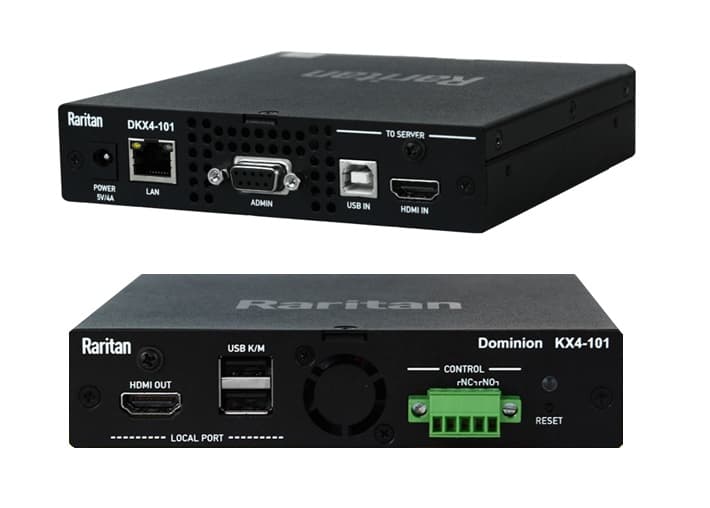
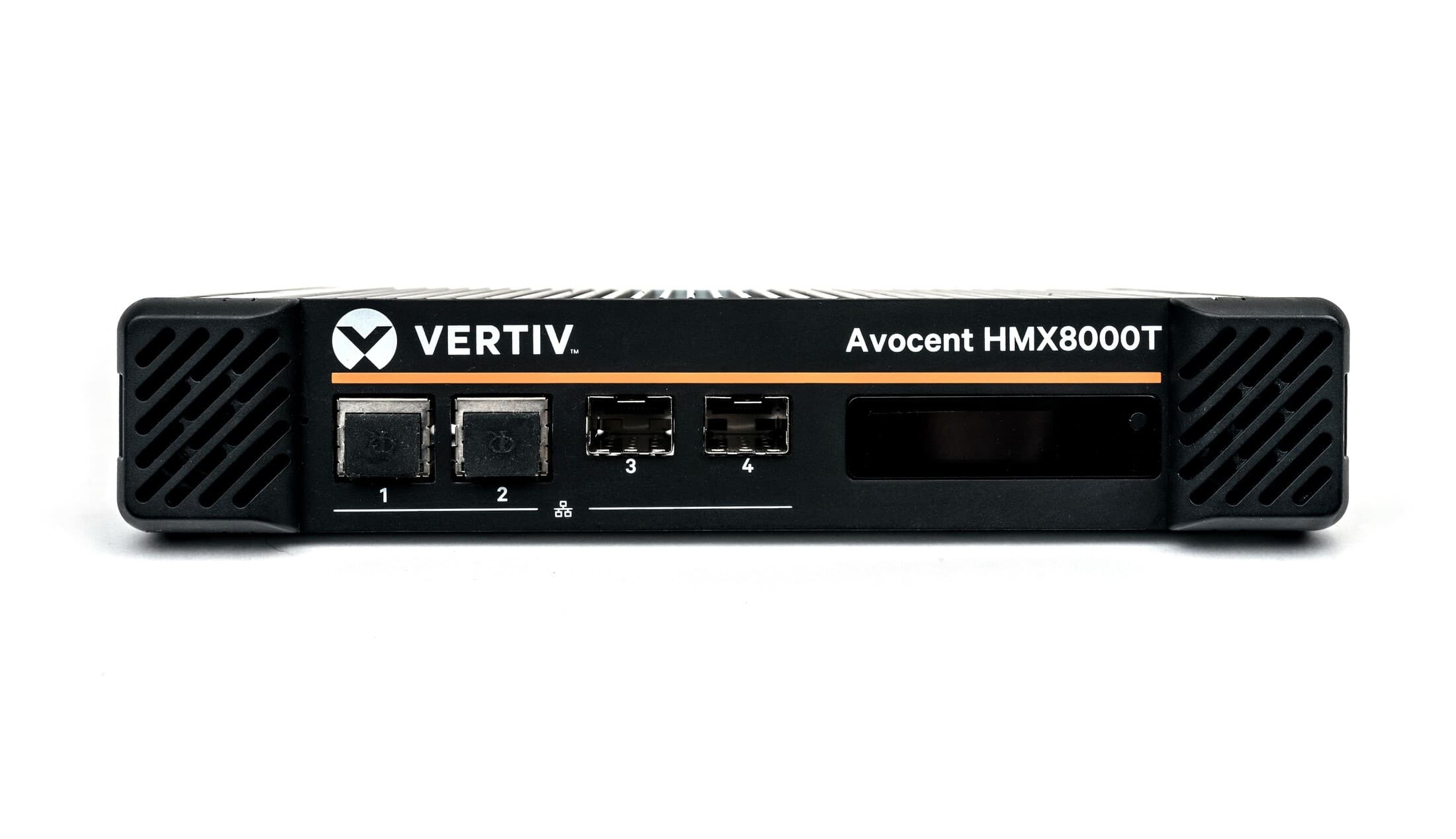
| Transmitter Form Factor | Compact appliance (non-rack or 1U bracket mount) | Zero-U — mounts to server rear; no rack space |
| Compute | ||
| Processor | Not specified | Not specified |
| Memory | ||
| Memory | Not specified | Not specified |
| Storage | ||
| Storage | Not specified | Not specified |
| Networking | ||
| Network Connectivity | Gigabit Ethernet (LAN, WAN, Internet) | 10Gbps fiber (HMX 8000); CAT-x cable options (lower models) |
| Multicast Support | Not specified | Yes — point-to-point multicast to multiple receivers |
| Distance Limitations | Not specified | IP eliminates limits |
| GPU / Accelerators | ||
| GPU Support | Not specified | Not specified |
| Expansion / PCIe | ||
| Serial Expansion | Up to 8 serial devices via optional DSAM modules | Not specified |
| I/O & Ports | ||
| Video Inputs | Native HDMI; adapters for VGA, DVI, Mini DisplayPort, USB-C | VGA, DVI-D, DisplayPort (transmitter model-dependent) |
| USB Support | USB pass-through for at-rack access | USB 2.0 — HID devices, tablets, joysticks, storage |
| Local Access Ports | HDMI + USB pass-through for at-rack access | Not specified |
| Management | ||
| Management Interface | Java-free browser, CommandCenter Secure Gateway, REST API | Avocent HMX Advanced Manager; Active Directory integration |
| Authentication | LDAP, RADIUS, Active Directory; 2FA support | Active Directory integration |
| Power | ||
| Power Design | Fanless; no moving parts; external PSU | Not specified |
| Physical / Environmental | ||
| Form Factor | Compact appliance (non-rack or 1U bracket mount) | Zero-U — mounts to server rear; no rack space |
| Cooling | Fanless; no moving parts | Not specified |
| Security | ||
| Encryption | FIPS 140-2 validated AES; TLS in transit | Not specified |
| Redundancy | Not specified | Fully redundant with automatic failover |
| Software & OS Compatibility | ||
| Browser Compatibility | Java-free browser access — Windows, Linux, macOS | Not specified |
| Firmware Version | v4.5.0 (released September 2025) | Not specified |
| Warranty & Support | ||
| Warranty & Support | Not specified | Not specified |
Expert Analysis
The Dominion KX IV-101 and Avocent HMX 8000 represent distinct approaches to enterprise KVM-over-IP solutions, each excelling in different operational contexts. The Raritan device offers superior multi-user management capabilities with support for up to eight simultaneous remote sessions, comprehensive authentication integration (LDAP, RADIUS, AD with 2FA), and flexible deployment options including rack-mount or standalone appliance. Its 3× faster virtual media performance and FIPS 140-2 validated encryption make it particularly suitable for regulated environments requiring stringent security compliance and efficient remote media mounting. The fanless design ensures silent operation, beneficial for office environments where noise reduction is valued.
Conversely, the Vertiv solution prioritises high-performance video delivery and physical efficiency with its 10Gbps fiber connectivity enabling lossless 4K transmission and sub-second target switching. The zero-U transmitter design eliminates rack space consumption entirely, mounting directly to server rears—ideal for dense data centre deployments where physical space is at a premium. The point-to-point multicast capability allows multiple workstations to access a single server simultaneously, while the fully redundant architecture with automatic failover provides critical resilience for always-on operations. However, it lacks the explicit multi-user session management and comprehensive security certifications of the Dominion KX IV-101.
These products serve fundamentally different use cases: the Dominion KX IV-101 excels in secure, multi-administrator remote management scenarios with its session management and authentication strengths, while the Avocent HMX 8000 delivers superior video performance and physical efficiency for high-density data centre environments requiring pristine 4K visualisation and minimal rack footprint. Organisations should prioritise the Dominion for collaborative remote administration with strong compliance requirements, while the Avocent better serves visual-intensive workloads in space-constrained facilities where video quality and switching speed are paramount.
Ready to proceed?
Not sure which one fits your environment?
Our UK specialists will recommend the right option for your workload and send itemised pricing — vendor-neutral, no obligation.
Response within 4 business hours · 20+ yr UK reseller
Want to compare different products or add more to this comparison?
Open Interactive Comparison Tool →Made your choice? Spread the cost.
Whichever you choose, you don't have to pay for it all upfront — finance your new hardware from £129/mo ex VAT on hire purchase or lease. Compare monthly payments and terms in seconds.
See finance from £129/mo →Indicative estimate · subject to change · no credit check at this stage · hire purchase, lease & subscription for UK businesses
Indicative illustration only. Servnet Limited is not authorised or regulated by the FCA and does not provide financial advice or arrange finance. All finance opportunities are referred to Number Eight Business Finance. Finance policy
Related comparisons
Other head-to-heads featuring these models — useful if you’re still shortlisting.
Talk to a UK specialist
Get expert advice or a no-obligation quote — servers, storage, networking, maintenance, finance and cloud. We reply the same working day.