UK’s trusted IT infrastructure partner since 2003
Servnet
ToolsConfiguratorGet in Touch
← Comparison Tool

🖥️ Dell PowerEdge R760 vs HPE ProLiant DL380 Gen12 vs Lenovo SR650 V3

AI-powered analysis across 31 matched specifications

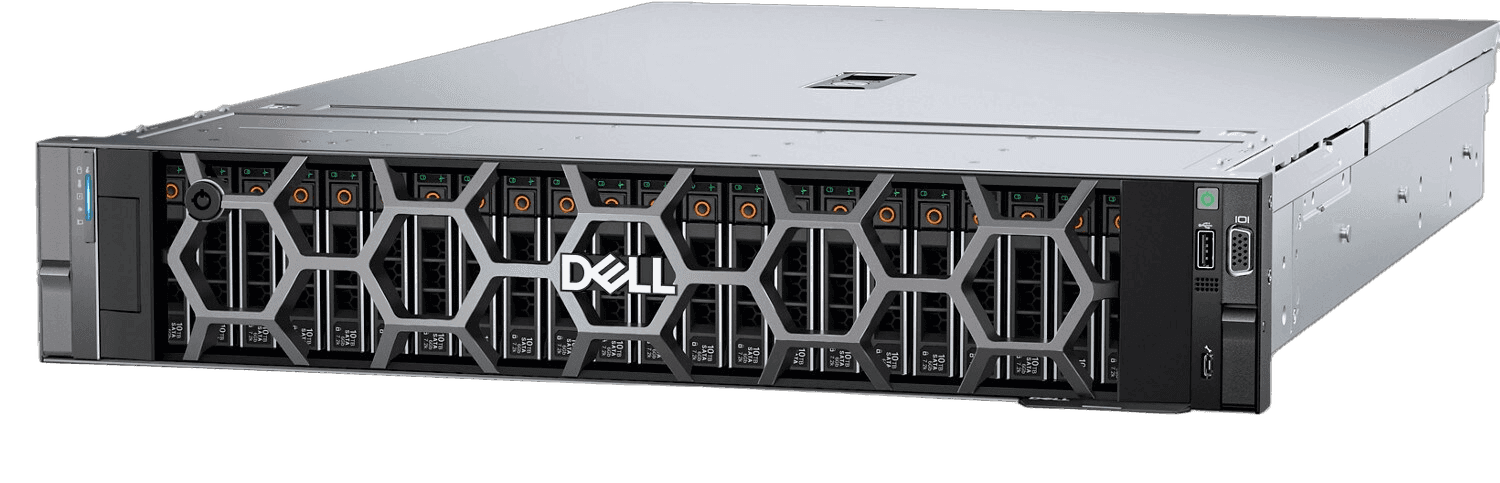
Dell PowerEdge R760 2U 2-socket rack server front view
Dell PowerEdge R760
Dell PowerEdge
8.1
Overall Score
Balanced general-purpose virtualisation and database consolidation for estates standardised on Dell iDRAC/OpenManage management.
View Full Details
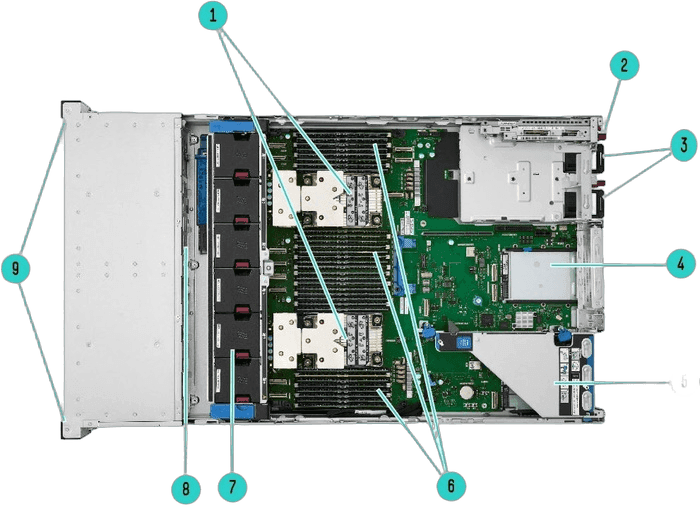
HPE ProLiant DL380 Gen12 2U 2-socket rack server front view
HPE ProLiant DL380 Gen12
HPE ProLiant
9.3
Overall Score
Highest-density, future-proofed compute and AI/hybrid-cloud workloads needing maximum cores, memory bandwidth and up to 200GbE networking.
View Full Details
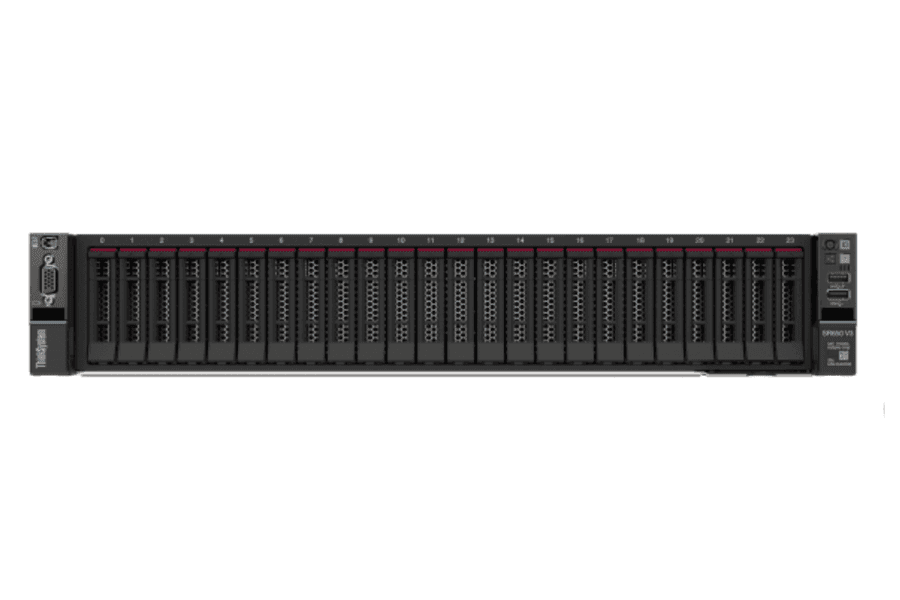
Lenovo ThinkSystem SR650 V3 2U dual-socket rack server front view
ThinkSystem SR650 V3
Lenovo ThinkSystem
8.2
Overall Score
Storage-dense deployments and software-defined storage needing up to 40 drive bays and 12 PCIe slots in 2U.
View Full Details

Performance Overview

Scores based on quantifiable specification values (1-10 scale)

ComputeMemoryStorageNetworkingExpandabilityManagement
Dell PowerEdge R760
HPE ProLiant DL380 Gen12
ThinkSystem SR650 V3
Compute
Dell PowerEdge R760
8.0
HPE ProLiant DL380 Gen12
10.0
ThinkSystem SR650 V3
8.0
Memory
Dell PowerEdge R760
8.0
HPE ProLiant DL380 Gen12
9.0
ThinkSystem SR650 V3
8.0
Storage
Dell PowerEdge R760
8.0
HPE ProLiant DL380 Gen12
9.0
ThinkSystem SR650 V3
9.0
Networking
Dell PowerEdge R760
8.0
HPE ProLiant DL380 Gen12
9.0
ThinkSystem SR650 V3
7.0
Expandability
Dell PowerEdge R760
8.0
HPE ProLiant DL380 Gen12
8.0
ThinkSystem SR650 V3
9.0
Management
Dell PowerEdge R760
9.0
HPE ProLiant DL380 Gen12
9.0
ThinkSystem SR650 V3
9.0

Detailed Specifications

Specification
Dell PowerEdge R760
Dell PowerEdge
HPE ProLiant DL380 Gen12
HPE ProLiant
ThinkSystem SR650 V3
Lenovo ThinkSystem
Key metrics
Form factor2U rack server, 2-socket (2P)2U rack server, 2-socket (2P)2U rack server, 2-socket (2P)
Max cores per socket64 (5th Gen Xeon Scalable)144 (Xeon 6 E-Core)64 (5th Gen Xeon Scalable)
Max memory8 TB8 TB8 TB
Max PCIe slots8812
Max GPUs6 single-wide / 2 double-wide8 single-wide / 3 double-wide8 single-wide / 3 double-wide
Processor
ProcessorUp to two 4th Gen Intel Xeon Scalable / Xeon Max (up to 56c) or 5th Gen Intel Xeon Scalable (up to 64c)Up to two Intel Xeon 6 processors, E-Core (up to 144c) or P-CoreUp to two 4th or 5th Gen Intel Xeon Scalable (up to 64c)
SocketLGA 4677Intel Xeon 6 (6500/6700 series)LGA 4677
Max core count (per socket)6414464
Max TDP--330W (6780E) / 350W (P-Core)385W
Memory
Memory typeDDR5 RDIMM (ECC)HPE DDR5 Smart Memory RDIMMLenovo TruDDR5 RDIMM
Memory (DIMM slots)323232
Memory channels per CPU888
Max memory speed5600 MT/s (5th Gen, 1DPC)6400 MT/s (1DPC)5600 MT/s (1DPC); 4800 MT/s (2DPC)
Max memory capacity8 TB8 TB8 TB
Storage
Drive bay optionsUp to 12 x 3.5" or up to 24 x 2.5" (SAS/SATA/NVMe); up to 16 x EDSFF E3.S; optional rear baysUp to 24 SFF, 8/12 LFF, or up to 36 EDSFF E3.S; optional rear baysUp to 40 x 2.5" or 20 x 3.5" AnyBay (SAS/SATA/NVMe); rear + M.2
Max NVMe drives24 x 2.5" NVMe / 16 x EDSFF E3.S36 EDSFF E3.S NVMeUp to 36 NVMe (20 at 1:1 non-oversubscribed)
RAID / storage controllersPERC H965i, H755, H755N, H355; HBA355i; BOSS-N1 bootHPE MR416i-p/MR416i-o, MR216i-p/MR216i-o, MR408i; Intel VROCLenovo RAID adapters; VROC (VMD) software RAID; M.2 boot
Networking
NetworkingOCP 3.0 NIC and/or PCIe NIC; optional 2 x 1GbE LOM; MIC for DPU (25/100GbE)OCP 3.0 and/or PCIe NIC; up to 200GbE; optional front OCP (post-launch)OCP 3.0 NIC slot and/or PCIe NIC
OCP 3.0 support1 x OCP 3.0Up to 2 x OCP 3.0 (rear)1 x OCP 3.0
Max network speed--200GbE100GbE
Expandability
Max PCIe slotsUp to 8 (Gen4/Gen5 mix)Up to 8 PCIe Gen5 + up to 2 OCP 3.0Up to 12 (Gen4/Gen5)
PCIe generationGen4 / Gen5Gen5Gen4 / Gen5
GPU supportUp to 6 single-wide or 2 double-wideUp to 8 single-wide or 3 double-wideUp to 8 single-wide or 3 double-wide
Management
Management controlleriDRAC9 with Lifecycle ControllerHPE iLO 7 (secure enclave)Lenovo XClarity Controller 2 (XCC2)
APIs / standardsRedfish API; OpenManage EnterpriseRedfish API; HPE Compute Ops ManagementRedfish; IPMI 2.0; XClarity Administrator
SecuritySilicon Root of Trust, SCV, MFA, TPM 2.0, Secure Boot, signed firmwareSilicon Root of Trust, secure enclave, PQC/CNSA 2.0 firmware signing, SGX, TDXTPM 2.0, Root of Trust, Platform Firmware Resiliency, ThinkShield
Power & cooling
Power supplies700W–3200W Titanium / 1400W–2400W Platinum, hot-swap redundantFlex Slot Titanium (e.g. 1000W), hot-plug redundant750W / 1100W / 1800W / 2400W / 2600W Platinum or Titanium, redundant
CoolingAir (Smart Flow chassis); optional Direct Liquid CoolingAir (standard/performance), closed-loop liquid (CLLC), or direct liquid coolingAir cooling (hexagonal vent design)
Form factor
Chassis2U rack-mountable2U rack-mountable2U rack-mountable
Dimensions (H x W x D)86.8 x 482 x 758 mm (without bezel)----
Warranty
Standard warranty3-year ProSupport (varies by configuration)3/3/3 (3-yr parts, labour, on-site)1- or 3-year CRU + on-site NBD; mission-critical upgrades optional

Expert Analysis

Specs web-verified from manufacturer datasheets · Servnet-reviewed · Last reviewed 17 Jun 2026

All three are mainstream 2U dual-socket workhorses, but they sit on two different processor generations, which is the single most important factor for a UK buyer weighing a refresh. The Dell PowerEdge R760 and Lenovo ThinkSystem SR650 V3 both use 4th/5th Gen Intel Xeon Scalable on the LGA 4677 socket, topping out at 64 cores per socket, 8 memory channels per CPU and DDR5 at 5600 MT/s. The HPE ProLiant DL380 Gen12 moves to the newer Intel Xeon 6 platform, reaching up to 144 cores per socket (E-Core), 16 DIMM channels per processor and DDR5 at 6400 MT/s, giving it a clear lead on raw core density, memory bandwidth and per-watt efficiency. For organisations buying now and intending to keep the fleet for 5+ years, the Gen12's newer silicon is the better future-proofing bet; the Dell and Lenovo remain strong, well-proven choices where standardising on an existing Xeon Scalable estate matters more than peak core count.

On I/O and storage the differences are practical rather than dramatic. The Lenovo SR650 V3 stands out for raw spindle/flash density, supporting up to 40 x 2.5" or 20 x 3.5" bays and up to 12 PCIe slots, making it the natural pick for storage-heavy or software-defined storage builds. The HPE DL380 Gen12 leads on networking headroom (up to 200GbE and dual OCP 3.0) and EDSFF E3.S NVMe density (up to 36 drives), suiting high-throughput and hybrid-cloud roles. The Dell R760 offers the most balanced envelope of the trio with broad GPU, EDSFF and rear-bay flexibility, plus mature iDRAC9 management that many UK estates already operate.

From a procurement standpoint, management tooling and warranty terms are decisive at fleet scale. HPE ships a 3/3/3 parts/labour/on-site warranty and AI-driven Compute Ops Management with iLO 7's quantum-resistant firmware signing; Dell's iDRAC9 and OpenManage are battle-tested across large UK installs; Lenovo's XCC2 and ThinkShield pair with flexible warranty tiers from 1- to 3-year on-site NBD with mission-critical upgrades. A vendor-neutral reseller such as Servnet can quote all three, so the choice should follow workload profile and existing estate standardisation rather than brand loyalty.

Dell PowerEdge R760
Balanced general-purpose virtualisation and database consolidation for estates standardised on Dell iDRAC/OpenManage management.
HPE ProLiant DL380 Gen12
Highest-density, future-proofed compute and AI/hybrid-cloud workloads needing maximum cores, memory bandwidth and up to 200GbE networking.
ThinkSystem SR650 V3
Storage-dense deployments and software-defined storage needing up to 40 drive bays and 12 PCIe slots in 2U.

Frequently asked questions

What are the key differences between these three servers?

The Dell R760 and Lenovo SR650 V3 both use 4th/5th Gen Intel Xeon Scalable (up to 64 cores per socket, DDR5 5600 MT/s), while the HPE DL380 Gen12 uses the newer Intel Xeon 6 platform with up to 144 cores per socket and DDR5 6400 MT/s. The Lenovo leads on drive bays (up to 40) and PCIe slots (up to 12), and the HPE leads on core density and networking up to 200GbE.

Which is best for virtualisation?

All three are excellent virtualisation hosts with 32 DIMM slots and 8 TB maximum memory. The Dell R760 is a strong balanced choice for estates already on iDRAC/OpenManage, while the HPE DL380 Gen12's higher core count and memory bandwidth suit dense VM consolidation where you want the most VMs per host.

Which server has the newest processor generation?

The HPE ProLiant DL380 Gen12 runs Intel Xeon 6 processors (up to 144 cores per socket, DDR5 at 6400 MT/s), a generation newer than the 4th/5th Gen Intel Xeon Scalable used by the Dell R760 and Lenovo SR650 V3.

Can Servnet supply all three servers?

Yes. Servnet is a vendor-neutral UK reseller and can quote and configure the Dell PowerEdge R760, HPE ProLiant DL380 Gen12 and Lenovo ThinkSystem SR650 V3 as build-to-order platforms to your chosen CPU, memory, storage and networking specification.

Specs verified from

Ready to proceed?

Not sure which one fits your environment?

Our UK specialists will recommend the right option for your workload and send itemised pricing — vendor-neutral, no obligation.

Response within 4 business hours · 24-yr UK reseller

Dell PowerEdge R760
View Full Details →
HPE ProLiant DL380 Gen12
View Full Details →
ThinkSystem SR650 V3
View Full Details →

Want to compare different products or add more to this comparison?

Open Interactive Comparison Tool →