🔀 FortiSwitch FS-224E vs FS-248E
AI-powered analysis across 23 matched specifications


Performance Overview
Scores based on quantifiable specification values (1-10 scale)
Detailed Specifications
| Specification | FortiSwitch FS-224E Fortinet | FortiSwitch FS-248E Fortinet |
|---|---|---|
| Key Metrics | ||
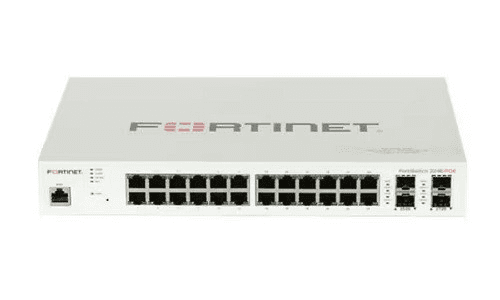
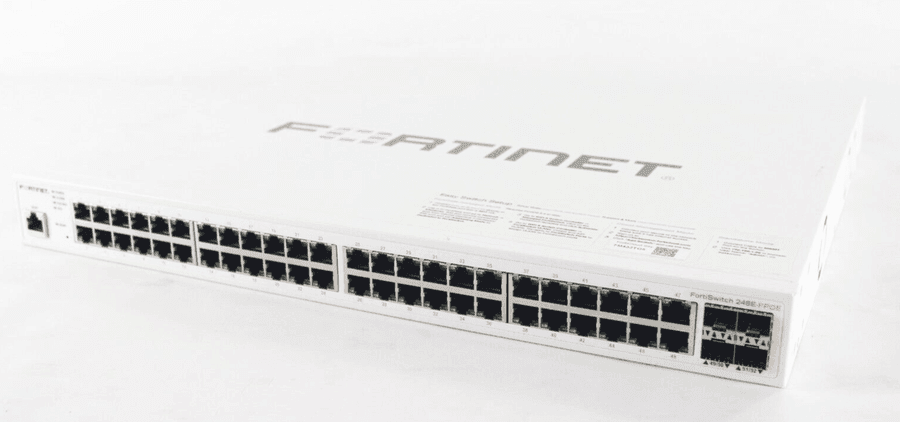
| Access ports | 24 × 1GbE RJ-45 | 48 × 1GbE RJ-45 |
| Uplink ports | 4 × 1G SFP | 4 × 1G SFP |
| Switching capacity | 56 Gbps | 104 Gbps |
| Forwarding rate | 83 Mpps | 77.4 Mpps |
| PoE | No (non-PoE) | No (non-PoE) |
| Form factor | Desktop / rack, fanless | 1U rack-mount |
| Port density & uplinks | ||
| 1GbE copper ports | 24 | 48 |
| SFP uplinks | 4 × 1G | 4 × 1G |
| 10G uplinks | -- | -- |
| Stacking via FortiLink | Up to 300 switches per FortiGate | Up to 300 switches per FortiGate |
| Forwarding performance | ||
| Switching capacity | 56 Gbps | 104 Gbps |
| Forwarding rate | 83 Mpps | 77.4 Mpps |
| Latency | Sub-1µs | -- |
| Line-rate at all ports | Yes | Yes |
| Management & security | ||
| FortiLink integration | Yes (FortiGate / FortiManager) | Yes (FortiGate / FortiManager) |
| VLAN / QoS | Yes | Yes |
| 802.1X authentication | Yes | Yes |
| IGMP snooping | Yes | Yes |
| Standalone CLI / GUI | Yes | Yes |
| Physical & environmental | ||
| Cooling | Fanless (silent) | Active cooling (fans) |
| Rack units | 1U | 1U |
| Certifications | FCC, CE, RoHS2, UL, CB | CE, FCC, RoHS (typical FortiSwitch E-series) |
| Suitability | Office, classroom, quiet workspace | Comms cabinet / wiring closet |
Expert Analysis
The practical decision between the FS-224E and FS-248E is simply one of sizing and where the switch will live. Both are non-PoE, 1GbE access switches with four 1G SFP uplinks, both run the same FortiSwitchOS, and both integrate identically into a FortiGate via FortiLink — so the management experience, security feature set (VLANs, 802.1X, QoS, IGMP) and stacking model (up to 300 switches per FortiGate) are effectively the same.
The FS-224E's distinctive strength is that it is fanless. For a 24-user office, a meeting-room AV rack, a classroom, a GP surgery or any environment where the switch sits in the same room as people, silent operation is a genuine differentiator that the 48-port model cannot match. It also publishes a sub-1µs latency figure and a slightly higher per-port forwarding headroom (83 Mpps across 24 ports vs 77.4 Mpps across 48).
The FS-248E is the better value when you need density. Doubling the port count for well under double the price is the standard wiring-closet economics, and the 104 Gbps fabric is appropriately sized for 48 gigabit ports plus uplinks. The trade-off is active cooling — it belongs in a comms cabinet, not on a desk.
For UK buyers the framework is straightforward: if you have 24 or fewer endpoints and want a switch that can sit out in the open without acoustic complaints, choose the FS-224E. If you are cabling a floor, a wiring closet or a school IT room with 30+ drops, the FS-248E is the more cost-effective choice and you should plan for a ventilated cabinet. Bear in mind neither switch offers PoE or 10G uplinks — if you need to power Wi-Fi 6 APs or IP phones, look at the FS-224E-POE / FS-248E-POE variants or the F-series 10G-uplink models instead.
Ready to proceed?
Want to compare different products or add more to this comparison?
Open Interactive Comparison Tool →