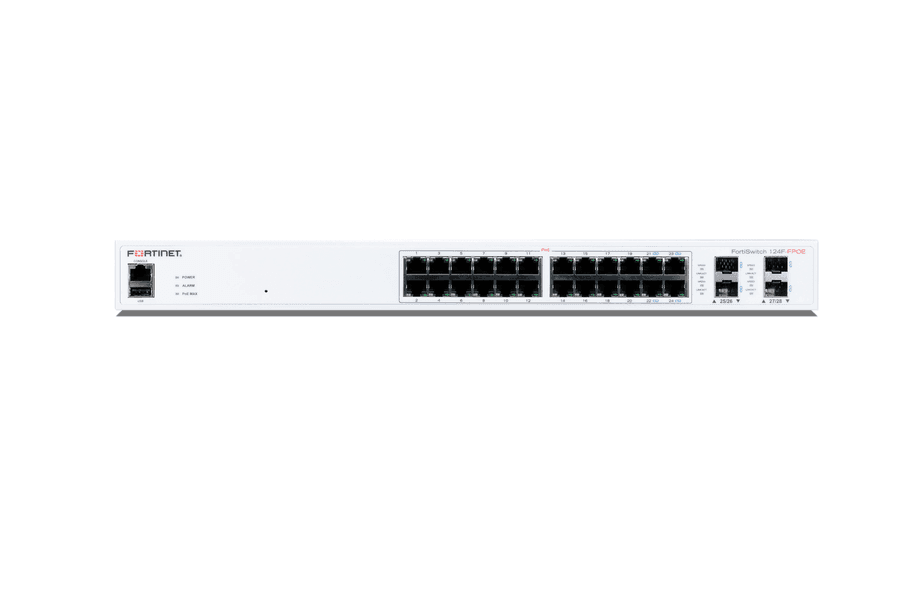
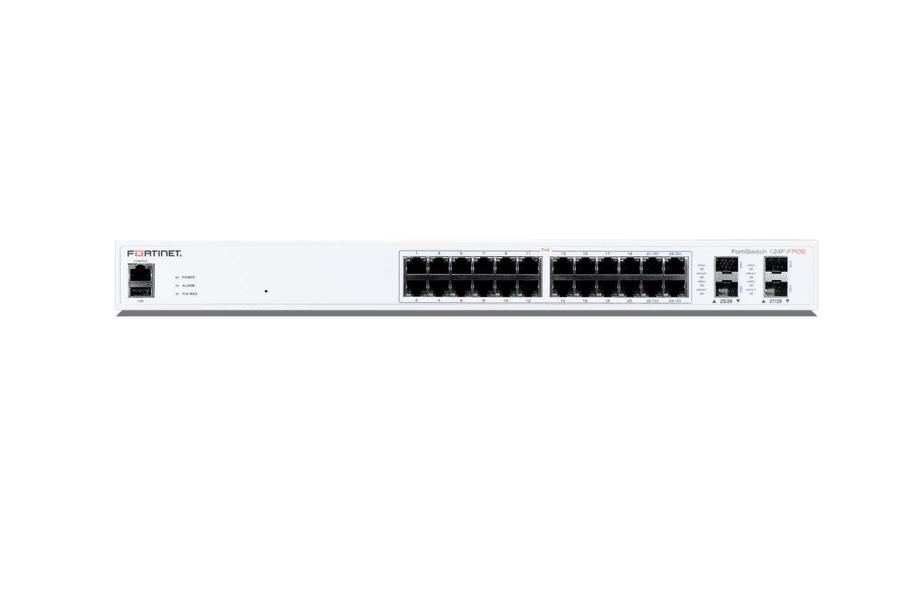
🔀 FortiSwitch FS-424E vs FS-448E (10GE)
AI-powered analysis across 24 matched specifications


Performance Overview
Scores based on quantifiable specification values (1-10 scale)
Detailed Specifications
| Specification | FortiSwitch FS-424E Fortinet | FortiSwitch FS-448E Fortinet |
|---|---|---|
| Key Metrics | ||
| Access ports | 24 × GE RJ45 | 48 × GE RJ45 |
| 10GE SFP+ uplinks | 4 | 4 |
| Switching capacity | 128 Gbps | 176 Gbps |
| Forwarding rate | 190 Mpps | 262 Mpps |
| Form factor | 1U rack | 1U rack |
| Port Density & Connectivity | ||
| 1GbE copper access ports | 24 | 48 |
| 10GE SFP+ uplinks | 4 | 4 |
| Total port count | 28 | 52 |
| PoE / PoE+ support | No | No |
| Stacking via FortiLink | Yes | Yes |
| Forwarding Performance | ||
| Switching capacity (non-blocking) | 128 Gbps | 176 Gbps |
| Forwarding rate | 190 Mpps | 262 Mpps |
| Line-rate at 64-byte frames | Yes | Yes |
| Latency class | Sub-microsecond cut-through class | Sub-microsecond cut-through class |
| Layer 2 / Layer 3 Features | ||
| Layer 3 routing | Yes (static, OSPF, BGP, VRRP) | Yes (static, OSPF, BGP, VRRP) |
| VLANs (802.1Q) | Yes | Yes |
| Link aggregation (LACP) | Yes | Yes |
| Spanning Tree (RSTP/MSTP) | Yes | Yes |
| IGMP snooping / multicast | Yes | Yes |
| Management & Power | ||
| FortiLink (FortiGate-managed) | Yes | Yes |
| Standalone CLI / Web GUI | Yes | Yes |
| FortiSwitch Cloud | Yes | Yes |
| Redundant PSU | Optional (supported) | Optional (supported) |
| Hot-swappable fans | Yes | Yes |
Expert Analysis
The practical difference between these two FortiSwitches is simple: port count and the headroom that comes with it. Both are 1U FortiLink-managed aggregation/access switches with identical 4 × 10GE SFP+ uplinks, identical Layer 3 feature sets (OSPF, BGP, VRRP), the same redundant-PSU option and the same FortiGate-driven management model. Neither is PoE — these are data-only switches intended for desk-side copper aggregation or server-room top-of-rack roles where powered endpoints sit elsewhere.
The FS-424E gives you 24 × 1GbE copper ports backed by 128 Gbps of switching capacity and 190 Mpps of forwarding — comfortably line-rate for its port count. It is the right choice for smaller UK sites, branch comms rooms, or a secondary cabinet where 24 ports plus four 10GE uplinks into a FortiGate cluster is the natural fit. Buying a 48-port unit for a 20-port requirement is wasted capital and wasted rack power.
The FS-448E doubles the access ports to 48 and scales the fabric appropriately to 176 Gbps and 262 Mpps. With only four 10GE uplinks shared across 48 access ports, the uplink-to-access oversubscription is roughly 3:1 — fine for general office traffic and FortiLink-stacked deployments, but worth modelling if you intend to push sustained north-south traffic from every port. For a single main comms room consolidating a floor or a mid-sized office, the 448E is materially better value per port than buying two 424Es.
Recommendation: pick the FS-424E when your port count today is under ~22 and you don't expect to fill a 48-port chassis within the refresh cycle; pick the FS-448E whenever you are consolidating an entire floor, fitting out a new UK office, or want a single SKU to standardise across multiple sites under FortiGate/FortiLink management. If PoE is required for phones, APs or cameras, neither of these is the right model — look at the FortiSwitch 424E-POE / 448E-POE variants instead.
Ready to proceed?
Want to compare different products or add more to this comparison?
Open Interactive Comparison Tool →