
🖥️ Dell R660 vs HPE DL360 Gen11 vs Lenovo SR630 V3
AI-powered analysis across 21 matched specifications

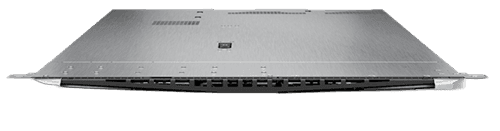
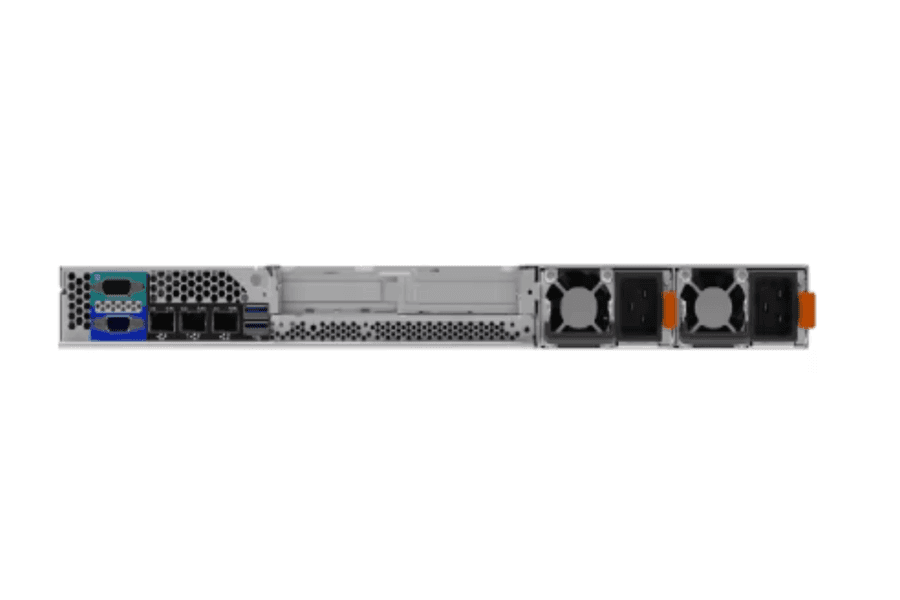
Performance Overview
Scores based on quantifiable specification values (1-10 scale)
Detailed Specifications
| Specification | Dell PowerEdge R660 Dell PowerEdge | HPE ProLiant DL360 Gen11 HPE ProLiant | ThinkSystem SR630 V3 Lenovo ThinkSystem |
|---|---|---|---|
| Key Metrics | |||
| Form Factor | 1U rack-mountable, 2-socket (2P) | 1U rack-mountable, 2-socket (2P) | 1U Rack Server |
| Max CPU Cores | 128 (2×64) | 128 (2×64) | 128 (2×64) |
| Max Memory | 8 TB | 8 TB | 8 TB |
| Max Raw Storage | 204.8 TB | 307.2 TB | 10 NVMe drives (capacity varies) |
| PCIe Generation | Gen5 + OCP 3.0 | Gen5 + 2 OCP 3.0 | Gen4/Gen5 + OCP 3.0 |
| Compute | |||
| Processor | Up to two 4th Gen Xeon Scalable / Xeon Max (up to 56c) or 5th Gen Xeon Scalable (up to 64c) | 4th Gen Intel Xeon Scalable (Sapphire Rapids) or 5th Gen (Emerald Rapids) — up to 64 cores, 5600 MT/s, 385W TDP | Up to 2× 5th Gen Intel Xeon Scalable (LGA 4677), up to 64 cores, 385W TDP |
| Processor TDP Support | Up to highest TDP processors with optional DLC | Up to 385W TDP | Up to 385W TDP |
| Memory | |||
| Memory | DDR5 RDIMM (Registered ECC) / 32 DIMM slots / 8 TB at 4800 MT/s (4th Gen) / 5600 MT/s (5th Gen) | HPE DDR5 SmartMemory RDIMM / 32 DIMM slots (16 per processor, 8 channels per processor) / 8 TB (32 × 256 GB RDIMM) at up to 5600 MT/s (5th Gen); 4800 MT/s (4th Gen) / Advanced ECC, ADDDC, memory mirroring, online spare | TruDDR5 5600 MHz / 32 DIMM slots / Up to 8 TB (max 256 GB 3DS RDIMM per slot) |
| Storage | |||
| Storage Options | 10 × 2.5" NVMe/SAS4/SATA (153.6 TB max); 8 × 2.5" (122.88 TB); 16 × EDSFF E3.S Gen5 (204.8 TB); 14 × EDSFF E3.S (179.2 TB); + rear bays optional | 8+2 SFF (SAS/SATA/NVMe U.3), 4 LFF (SAS/SATA), 20 EDSFF E3.S NVMe | Up to 10× 2.5" AnyBay™ (SAS/SATA/NVMe); 2× rear 2.5"; 2× M.2 SATA/NVMe |
| RAID Controllers | PERC H965i, PERC H755, PERC H755N, PERC H355i; BOSS-N1 boot | HPE MR416i-p (8 GB cache), HPE SR932i-p (8 GB wide cache, 32 lanes); Intel VROC | VROC/VMD software RAID |
| NVMe Support | Yes | Yes | Up to 10 direct-connect NVMe with PCIe retimer |
| Networking | |||
| Network | Optional 2 × 1GbE LOM + OCP 3.0 or MIC for DPU | No embedded NIC; OCP 3.0 or PCIe NIC: 1GbE to 200GbE options | -- |
| GPU / Accelerators | |||
| GPU Support | Up to 3 × 75W single-wide GPU | -- | NVIDIA A2 (single-width); NVIDIA L4 (single-width) |
| Expansion / PCIe | |||
| PCIe Slots | Up to 3 × PCIe (Slot 1: x16 Gen5; Slot 2: x16 Gen5; Slot 3: x8/x16 Gen5) + 1 × OCP 3.0 | Up to 3 PCIe Gen5 (Slot 1 FH x16, Slot 2 LP x16, optional Slot 3 x16) + 2 OCP 3.0 x16 | Up to 3× PCIe Gen4/Gen5 rear + 1× OCP 3.0 |
| Management | |||
| Management | iDRAC9 (Redfish API, Direct, Quick Sync 2), OpenManage Enterprise | HPE iLO 6, HPE GreenLake Compute Ops Management (3-yr included) | Lenovo XClarity Controller 2 (XCC2), Redfish, IPMI 2.0 |
| Power | |||
| Power Supply | 700W–1800W Titanium / 800W–1400W Platinum hot-swap; full redundant | 500W / 800W / 1000W / 1600W / 1800–2200W HPE Flex Slot (Platinum 94% / Titanium 96%) | 750W / 1100W / 1800W Platinum or Titanium hot-swap (redundant) |
| Physical / Environmental | |||
| Cooling | Air (Smart Flow chassis); optional Direct Liquid Cooling (DLC) | Air (standard/performance fan kits); optional closed-loop liquid cooling; direct liquid cooling | -- |
| Dimensions (H×W×D) | 42.8 × 482 × 809 mm (1.68 × 18.97 × 31.85 in without bezel) | -- | -- |
| Security | |||
| Security | Silicon Root of Trust, SCV, MFA, TPM 2.0, Secure Boot, Signed firmware | -- | TPM 2.0, Root of Trust, Platform Firmware Resiliency, ThinkShield |
| Software & OS Compatibility | |||
| Operating Systems | Windows Server, RHEL, SLES, Ubuntu, VMware ESXi | Windows Server, VMware ESXi, RHEL, SLES, Ubuntu, Oracle Linux | Windows Server, RHEL, SUSE, Ubuntu, VMware ESXi |
| Warranty & Support | |||
| Warranty | 3-year ProSupport (varies by configuration) | 3/3/3 (3-year parts, 3-year labour, 3-year on-site) | 1- or 3-year CRU + Onsite NBD; optional mission-critical upgrades |
Expert Analysis
These three 1U dual-socket servers offer compelling options for different enterprise workloads, with all supporting up to 128 cores and 8TB of DDR5 memory. The HPE ProLiant DL360 Gen11 stands out with superior storage density, offering up to 307.2TB via 20 EDSFF E3.S NVMe drives—making it ideal for data-intensive applications like big data analytics, AI training datasets, or high-performance storage clusters. Its dual OCP 3.0 slots provide exceptional networking flexibility, supporting up to 200GbE adapters for high-throughput environments. However, this comes with the trade-off of no embedded NIC, requiring additional investment for basic connectivity.
The Dell PowerEdge R660 offers balanced capabilities with strong GPU support for up to three 75W accelerators, making it well-suited for AI inference, virtual desktop infrastructure with GPU acceleration, or media processing workloads. Its optional Direct Liquid Cooling enables support for the highest TDP processors in demanding compute environments. The Lenovo ThinkSystem SR630 V3 provides reliable, cost-effective compute with excellent memory performance and direct-connect NVMe support, though its storage capacity is more limited. Its focus on reliability (rated #1 by ITIC for 11 years) makes it particularly appealing for mission-critical applications where uptime is paramount.
Value propositions differ significantly: HPE offers maximum storage density and networking flexibility at a premium, Dell provides balanced performance with strong acceleration options, while Lenovo delivers proven reliability with competitive pricing. Organisations should prioritise the HPE for storage-heavy workloads, the Dell for GPU-accelerated applications, and the Lenovo for general-purpose enterprise applications where reliability and total cost of ownership are key considerations.
Ready to proceed?
Not sure which one fits your environment?
Our UK specialists will recommend the right option for your workload and send itemised pricing — vendor-neutral, no obligation.
Response within 4 business hours · 20+ yr UK reseller
Want to compare different products or add more to this comparison?
Open Interactive Comparison Tool →Made your choice? Spread the cost.
Whichever you choose, you don't have to pay for it all upfront — finance your new hardware from £129/mo ex VAT on hire purchase or lease. Compare monthly payments and terms in seconds.
See finance from £129/mo →Indicative estimate · subject to change · no credit check at this stage · hire purchase, lease & subscription for UK businesses
Indicative illustration only. Servnet Limited is not authorised or regulated by the FCA and does not provide financial advice or arrange finance. All finance opportunities are referred to Number Eight Business Finance. Finance policy
CPU, memory, drive cages, controllers, network and warranty, configured against the real option list for that generation. We quote the exact build.
Related comparisons
Other head-to-heads featuring these models — useful if you’re still shortlisting.
Talk to a UK specialist
Get expert advice or a no-obligation quote — servers, storage, networking, maintenance, finance and cloud. We reply the same working day.