š¾ Dell PowerStore 3200T vs NetApp AFF A70 vs Pure FlashArray//X
AI-powered analysis across 19 matched specifications


Performance Overview
Scores based on quantifiable specification values (1-10 scale)
Detailed Specifications
| Specification | Dell PowerStore 3200T Dell Storage | AFF A70 NetApp | FlashArray//X Pure Storage |
|---|---|---|---|
| Key Metrics | |||
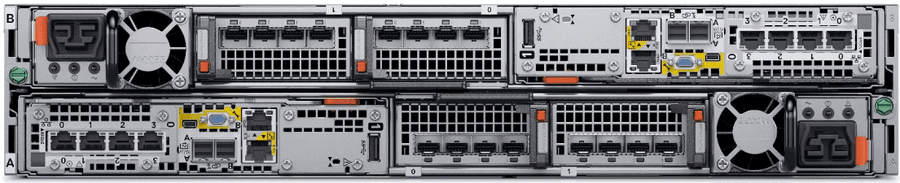
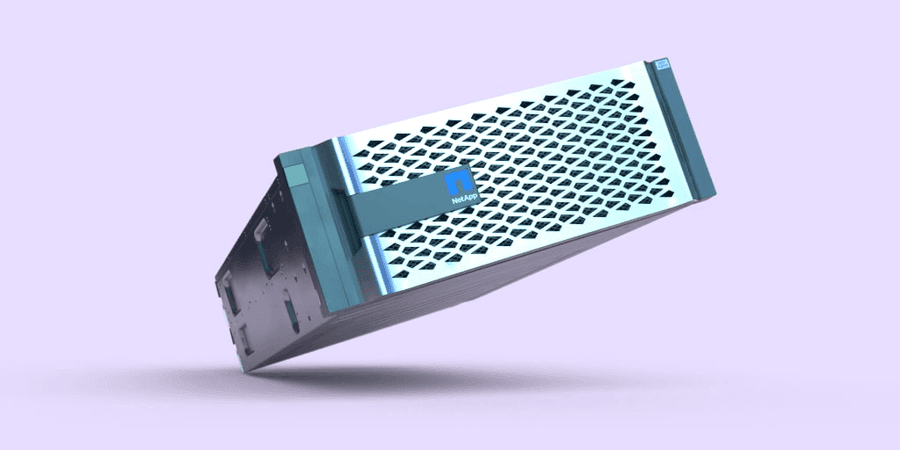
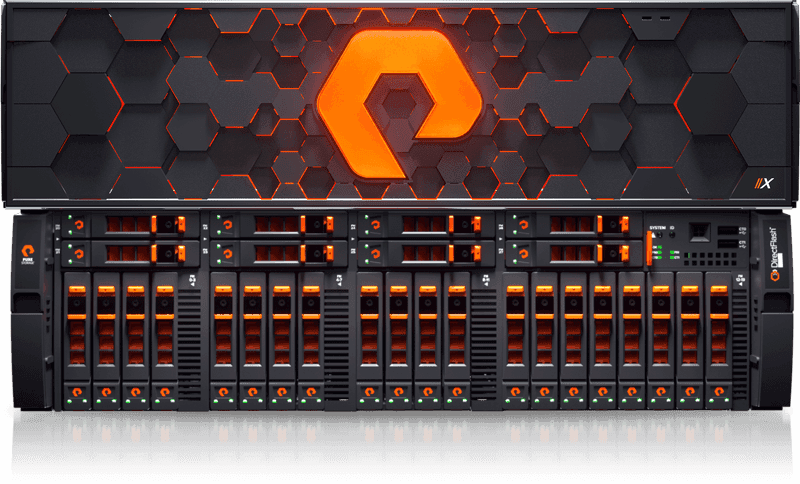
| Form Factor | 2U rack-mountable | 4U chassis, 2 HA controllers | 3U base chassis; 3ā9U with DirectFlash Shelf expansion |
| Max Effective Capacity (Appliance/HA Pair) | 5.90 PBe | 6.6 PB raw per HA pair (330 PB effective at 24-node scale) | Up to 4.4 PB (X90 R5) |
| Max Effective Capacity (Cluster) | 23.60 PBe (4-node) | 330 PB (24-node NAS cluster) | N/A (scales with expansion shelves) |
| Data Reduction Guarantee/Average | 5:1 guaranteed | N/A | 5:1 average (up to 10:1 with thin provisioning) |
| Availability | 99.9999% (6-nines) | 99.9999% (six nines) | Proven 99.9999% |
| Latency | N/A | N/A | As low as 250µs |
| Peak Performance | N/A | Up to 40M IOPs / 1 TB/s throughput (cluster) | N/A |
| Compute | |||
| Processor | 4 Ć Intel Xeon, 64 cores, 2.1 GHz | N/A | N/A |
| Memory | |||
| Controller Memory | 768 GB per controller node | 256 GB per controller | N/A |
| Storage | |||
| Max Drives/Slots | 93 NVMe SSDs | 48 internal NVMe SSD slots | N/A (varies by model) |
| Max Raw Capacity | N/A | 6.6 PB per HA pair | Up to 1,207 TB (X90 R5) |
| Max Volumes | 10,000 | N/A | N/A |
| Max Snapshots | 200,000 | N/A | Unlimited instant snapshots |
| Networking | |||
| Front-End Ports/Networking | Up to 24 (FC 16/32Gb, iSCSI 10/25G, NVMe-oF) | 24Ć 200Gbps Ethernet, 36Ć 100GbE, 56Ć 25GbE, 56Ć 64Gbps NVMe/FC | N/A |
| Software & OS Compatibility | |||
| Protocols | FC, iSCSI, NVMe-oF, NFS, SMB | NVMe/FC, NVMe/TCP, NFSv3/RDMA, NFSv4/RDMA, FC, iSCSI, NFS, SMB/CIFS, S3 | NVMe/FC, NVMe/RoCE, NVMe/TCP, iSCSI, FC, NFS, SMB |
| Software/Management | N/A | NetApp ONTAP 9.16.1 (min. 9.15.1RC2) | Purity OS, Everpure Fusion, Pure1 AIOps ā single unified API |
| Cloud Integration | N/A | N/A | Pure Cloud Block Store (AWS, Azure); SnapMirror to cloud |
| Security | |||
| Security Features | Zero Trust cybersecurity ā SafeMode snapshots, anomaly detection | AI/ML ARP, SnapLock Compliance, AES-256, FIPS 140-2, government validated | SafeMode Snapshots (default), AES-256, ransomware remediation |
| Warranty & Support | |||
| Warranty/Support | N/A | Flex hardware support ā 3 or 5 year options | Evergreen Architecture ā nondisruptive data-in-place upgrades across generations |
Expert Analysis
These three enterprise all-flash arrays represent distinct architectural approaches to modern storage challenges. The Dell PowerStore 3200T offers a balanced, compute-rich platform with 64 cores and 768GB memory per controller, making it particularly well-suited for environments requiring substantial on-array processing for data services like deduplication, compression, and replication. Its 5:1 guaranteed data reduction and 10,000 volume limit provide predictable performance for mixed block and file workloads. The NetApp AFF A70 excels in extreme scalability and high-performance networking, with a 24-node NAS cluster capability reaching 330PB effective capacity and an impressive 56Ć 64Gbps NVMe/FC ports. This makes it ideal for large-scale file services, AI/ML workloads (certified for NVIDIA DGX SuperPOD), and environments requiring massive parallel throughput up to 1TB/s.
The Pure Storage FlashArray//X distinguishes itself through operational simplicity and consistent low latency, with sub-250µs response times and unlimited snapshots that incur zero performance overhead. Its Evergreen architecture eliminates planned downtime through non-disruptive upgrades, while the unified management platform (Purity OS with Pure1 AIOps) reduces administrative overhead significantly. Value propositions differ substantially: Dell offers strong compute resources for data-intensive processing, NetApp provides unparalleled scale-out capabilities for massive datasets, and Pure delivers operational excellence with predictable performance and simplified lifecycle management. Organisations should prioritise the PowerStore for compute-heavy storage workloads, the AFF A70 for massive scale file services and AI infrastructure, and the FlashArray//X for environments where operational simplicity and consistent low latency are paramount.
Ready to proceed?
Want to compare different products or add more to this comparison?
Open Interactive Comparison Tool ā