UK’s trusted IT infrastructure partner since 2003
Servnet
ToolsConfiguratorGet in Touch
← Comparison Tool

💾 HPE Nimble AF60 vs Pure FlashArray//X vs NetApp AFF A70

AI-powered analysis across 27 matched specifications

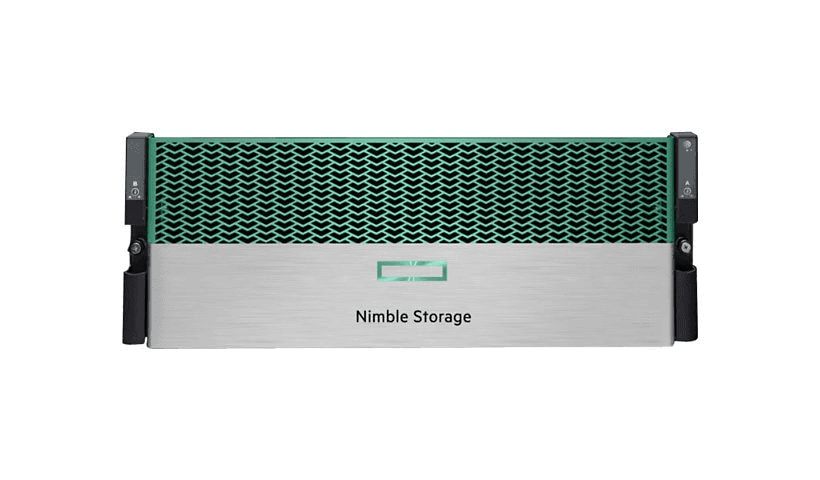
HPE Nimble Storage AF60 all-flash array front view
HPE Nimble Storage AF60
HPE
5.7
Overall Score
Cost-conscious block storage for existing HPE Nimble/InfoSight estates where end-to-end NVMe is not required.
View Full Details
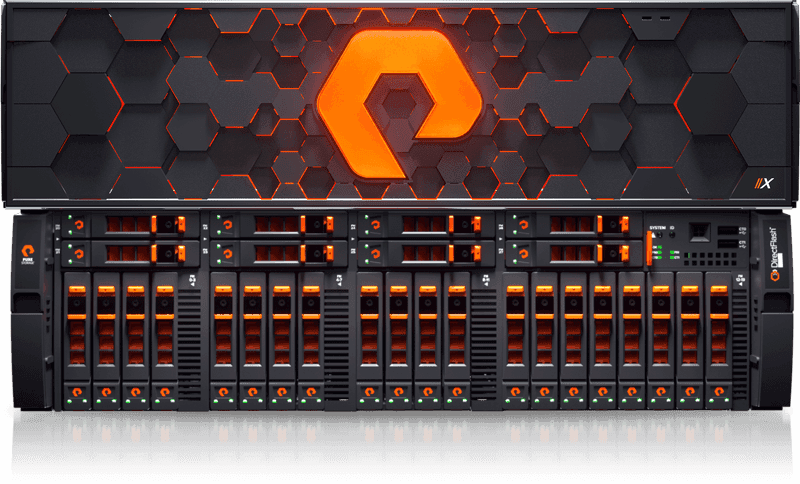
Pure Storage FlashArray X R5 mission-critical all-flash storage array front view
FlashArray//X
Pure Storage
7.8
Overall Score
Simple, low-latency NVMe block/SAN consolidation with Evergreen nondisruptive upgrades and built-in ransomware protection.
View Full Details
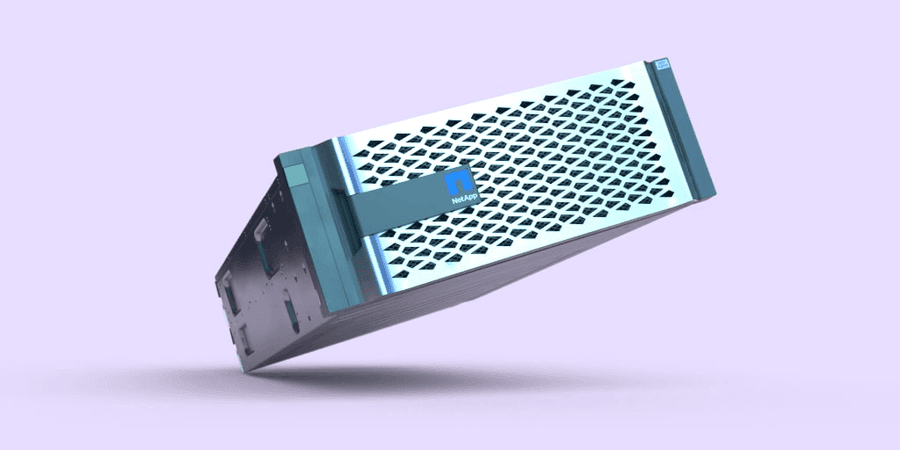
NetApp AFF A70 4U all-flash unified storage system front view
AFF A70
NetApp
8.8
Overall Score
Unified NAS/SAN/S3 consolidation and AI-ready data services needing the widest capacity, protocol and scale-out envelope.
View Full Details

Performance Overview

Scores based on quantifiable specification values (1-10 scale)

ComputeMemoryStorageNetworkingExpandabilityManagement
HPE Nimble Storage AF60
FlashArray//X
AFF A70
Compute
HPE Nimble Storage AF60
6.0
FlashArray//X
8.0
AFF A70
9.0
Memory
HPE Nimble Storage AF60
5.0
FlashArray//X
7.0
AFF A70
8.0
Storage
HPE Nimble Storage AF60
6.0
FlashArray//X
8.0
AFF A70
9.0
Networking
HPE Nimble Storage AF60
5.0
FlashArray//X
8.0
AFF A70
9.0
Expandability
HPE Nimble Storage AF60
5.0
FlashArray//X
7.0
AFF A70
9.0
Management
HPE Nimble Storage AF60
8.0
FlashArray//X
9.0
AFF A70
9.0

Detailed Specifications

Specification
HPE Nimble Storage AF60
HPE
FlashArray//X
Pure Storage
AFF A70
NetApp
Key metrics
Maximum raw capacity553 TB (single AF60 array, base + 2 expansion shelves)1,207 TB (//X90 R5); 695 TB (//X70 R5)6.6 PB per HA pair
Maximum effective capacity2,037 TB (~2 PB) at 5:1 data reduction4.4 PB (//X90 R5); 2.5 PB (//X70 R5) at 5:1330 PB at 24-node scale; 185 PB cited in earlier datasheet revisions
LatencySub-millisecondAs low as 250µs (family: sub-150µs cited on newer models)--
Availability99.9999% guaranteed99.9999% proven99.9999%
Data reduction5:1 (deduplication + compression)5:1 average; up to 10:1 with thin provisioning5:1 (NAS) storage efficiency basis
Processor
ArchitectureDual-controller (active/standby) multi-core CPU per controllerDual-controller active/standby per chassisDual-controller active-active HA pair, Intel-based with QAT offload
Controller memory----256 GB per HA pair
Memory
Cache / accelerationNVDIMM per controller; flash-optimised cacheOptional DirectMemory (Optane) on prior //X70/X90 R2/R3; NVRAM in R5NVRAM-backed; QuickAssist (Intel QAT) compression offload
Storage
Internal drive bays24 SSD slots (4U chassis, dual flash carriers)DirectFlash Modules (NVMe) in 3U base chassis48 internal NVMe SSD slots (4U chassis)
Drive typeSAS/SATA SSDDirectFlash NVMe SSDNVMe SSD (TLC)
Max expansion shelves2 (per AF60 array)DirectFlash Shelf (3U–9U total chassis height)NS224 NVMe shelves (2U, 24 drives each)
Max drives per system / HA pair----240 NVMe SSD per HA pair (2,880 per cluster)
RAID / data protectionTriple+ Parity (tolerates 3 simultaneous drive failures)RAID-HA (dual-parity, NVMe)RAID-TEC / RAID-DP (ONTAP)
Networking
Onboard ports4 × 10GBASE-T per array (2 per controller)----
Optional iSCSI / Ethernet1GbE/10GbE (4–24 ports); 25GbE optionConfigurable Ethernet (iSCSI, NVMe/RoCE, NVMe/TCP, NFS, SMB)Up to 16 × 100GbE; 24 × 25GbE; 24 × 10GBASE-T per HA pair (no onboard 200GbE on A70)
Fibre Channel8Gb/16Gb FC (4–24 ports)32Gb FC, 64G-capable, NVMe/FC (4-port)64Gb FC (autoranging), NVMe/FC
Supported protocolsiSCSI, FC, vVols (block)NVMe/FC, NVMe/RoCE, NVMe/TCP, iSCSI, FC, NFS, SMBNVMe/FC, NVMe/TCP, NFSv3/RDMA, NFSv4/RDMA, FC, iSCSI, NFS, SMB/CIFS, S3
Expandability
Scale-outUp to 4 arrays (4× AF80 = 4,423 TB raw)Unified pool; nondisruptive data-in-place generational upgradesNAS: up to 24 nodes; SAN: up to 6 nodes
PCIe expansion slots----18 per HA pair (PCIe 5.0, 9 per controller)
Management
Management platformHPE InfoSight predictive analytics; resolves ~86% of issues proactivelyPurity OS, Pure1 AIOps, Everpure Fusion — single unified APINetApp ONTAP (9.16.1; min 9.15.1RC2)
Data servicesDedup, compression, snapshots, replication, QoS, FIPS encryption, vVolsUnlimited instant snapshots (metadata-only), QoS, ActiveClusterSnapshots, SnapMirror, SnapLock, QoS, tiering
SecurityFIPS encryption; encryption of data at restSafeMode Snapshots (default), AES-256, ransomware remediationAI/ML ransomware protection (ARP), SnapLock Compliance, AES-256, FIPS 140-2
Power & cooling
Power drawUp to 850 W / 0.944 kVA per array1,500–1,736 W (//X90 R5, 3U typical–peak); 1,370–1,616 W (//X70 R5)1,232 W median (HA pair)
Input voltage--200–240 V200–240 V
Form factor
Chassis4U dual-controller array3U base; 3U–9U with DirectFlash Shelf expansion4U chassis, 2 HA controllers, 48 NVMe slots
CertificationsNEBS Level 3 certifiedGovernment-validated; certified for NVIDIA DGX SuperPOD
Warranty
Support modelMandatory HPE support SKU; up to 5 yrs 24×7, NBD/4-hr parts/onsite optionsEvergreen subscription (nondisruptive upgrades)NetApp Flex hardware support — 3 or 5 year options

Expert Analysis

Specs web-verified from manufacturer datasheets · Servnet-reviewed · Last reviewed 17 Jun 2026

All three are six-nines all-flash platforms, but they target different points in a UK buyer's refresh cycle. The HPE Nimble AF60 is the oldest design here and is approaching end-of-service-life (HPE has published EOSL dates around 2028 for many AF/HF models), with SAS/SATA SSDs, 10GBASE-T onboard networking and a 553 TB raw ceiling per array. It remains a dependable block-storage workhorse with excellent InfoSight analytics and all-inclusive licensing, but it is not an end-to-end NVMe platform and should only be considered where an existing Nimble estate, InfoSight familiarity or budget constraints dominate — not for a long-horizon investment.

Pure Storage FlashArray//X R5 and NetApp AFF A70 are both current-generation, end-to-end NVMe systems and are the right candidates for a multi-year refresh. The FlashArray//X is the strongest fit for pure block/SAN consolidation: its Evergreen model removes disruptive forklift upgrades, Purity is famously simple to operate, SafeMode snapshots ship on by default for ransomware resilience, and it supports the full NVMe-oF stack (FC, RoCE, TCP). The //X90 R5 reaches up to 4.4 PB effective in a compact 3U–9U footprint, making it efficient on rack space and operations for teams that want set-and-forget storage.

The NetApp AFF A70 is the most capable and most expandable of the three: true unified storage (block, file, S3) on ONTAP, 48 internal NVMe slots in 4U, up to 6.6 PB raw per HA pair, PCIe 5.0 I/O, 64Gb FC and up to 16×100GbE per HA pair, plus 24-node NAS scale-out and DGX SuperPOD certification for AI pipelines. For UK organisations consolidating mixed NAS/SAN workloads, virtualisation, databases and emerging AI/GenAI data services under one OS, the A70 offers the widest envelope and the longest growth runway — at the cost of greater configuration complexity than Pure's deliberately minimal approach. Servnet can quote and configure any of the three vendor-neutrally.

HPE Nimble Storage AF60
Cost-conscious block storage for existing HPE Nimble/InfoSight estates where end-to-end NVMe is not required.
FlashArray//X
Simple, low-latency NVMe block/SAN consolidation with Evergreen nondisruptive upgrades and built-in ransomware protection.
AFF A70
Unified NAS/SAN/S3 consolidation and AI-ready data services needing the widest capacity, protocol and scale-out envelope.

Frequently asked questions

Which is best for unified NAS and SAN consolidation?

The NetApp AFF A70 is the only true unified system here, serving block, file and S3 on ONTAP with up to 24-node NAS scale-out. The Pure FlashArray//X and HPE Nimble AF60 are primarily block-oriented, though the //X also supports NFS and SMB.

Which platform supports end-to-end NVMe?

Both the Pure FlashArray//X R5 (NVMe DirectFlash, NVMe/FC, NVMe/RoCE, NVMe/TCP) and the NetApp AFF A70 (NVMe SSDs, NVMe/FC, NVMe/TCP) are end-to-end NVMe. The HPE Nimble AF60 uses SAS/SATA SSDs and is not an NVMe platform.

What are the key capacity differences?

The AF60 tops out at 553 TB raw / ~2 PB effective per array, the FlashArray//X90 R5 reaches 1,207 TB raw / 4.4 PB effective, and the AFF A70 scales to 6.6 PB raw per HA pair and up to 330 PB effective across a 24-node cluster.

Should refresh timing influence the choice?

Yes. The HPE Nimble AF60 is an older design with published end-of-service-life dates around 2028, whereas the Pure FlashArray//X R5 and NetApp AFF A70 are current-generation NVMe systems better suited to a long-horizon investment. Servnet can quote all three.

Specs verified from

Ready to proceed?

Not sure which one fits your environment?

Our UK specialists will recommend the right option for your workload and send itemised pricing — vendor-neutral, no obligation.

Response within 4 business hours · 24-yr UK reseller

HPE Nimble Storage AF60
View Full Details →

Want to compare different products or add more to this comparison?

Open Interactive Comparison Tool →