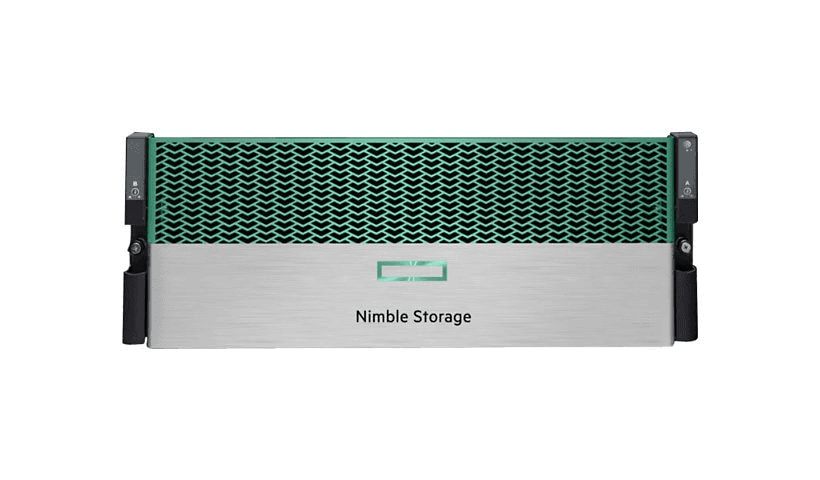
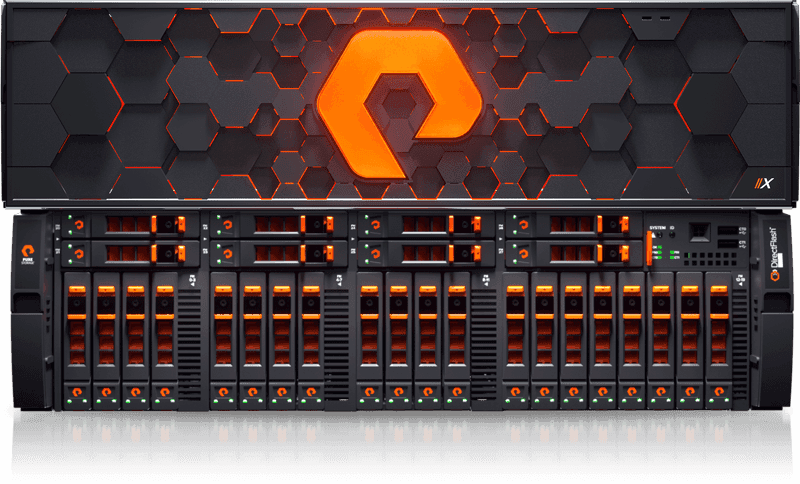
💾 HPE Nimble AF60 vs Pure FlashArray//X
AI-powered analysis across 19 matched specifications


Performance Overview
Scores based on quantifiable specification values (1-10 scale)
Detailed Specifications
| Specification | HPE Nimble Storage AF60 HPE | FlashArray//X Pure Storage |
|---|---|---|
| Key Metrics | ||
| Maximum Effective Capacity | 2,037 TB (2 PB) | 4.4 PB |
| Maximum Raw Capacity | 553 TB | 1,207 TB |
| Availability Guarantee | 99.9999% (6-nines) | 99.9999% (6-nines) |
| Data Reduction Ratio | 5:1 average (deduplication + compression) | 5:1 average (deduplication + compression); up to 10:1 with thin provisioning |
| Latency | Sub-millisecond response time | As low as 250µs |
| Storage | ||
| Drive Bays / Form Factor | 24 SSD bays (4U chassis) | 3U base chassis; 3–9U with DirectFlash Shelf expansion |
| Maximum Expansion Shelves | 2 | DirectFlash Shelf expansion available |
| Scale-Out Capability | Up to 4 arrays; 4× AF80 = 8,148 TB raw / ~8.1 PB effective | Unified storage pool with single API |
| RAID Level / Protection | Triple+ Parity (tolerates 3 simultaneous drive failures + intra-drive parity) | R5 models available |
| Data Services | Deduplication, compression, snapshots, replication, QoS, FIPS encryption, vVols | Unlimited instant snapshots (metadata-only, zero performance overhead), SafeMode Snapshots (default), AES-256 encryption, ransomware remediation |
| Protocols | iSCSI (1GbE/10GbE), FC (8Gb/16Gb) | NVMe/FC, NVMe/RoCE, NVMe/TCP, iSCSI, FC, NFS, SMB |
| Networking | ||
| Built-in Ports | 4 × 1GbE/10GbE ports per array (2 per controller) | -- |
| Optional Ports | iSCSI: 1GbE (4–24 ports), 10GbE (4–24 ports); FC: 8Gb/16Gb FC (4–24 ports) | -- |
| Management | ||
| Management Platform | HPE InfoSight predictive analytics | Purity OS, Everpure Fusion, Pure1 AIOps — single unified API |
| Cloud Integration | -- | Pure Cloud Block Store (AWS, Azure); SnapMirror to cloud |
| Upgrade Architecture | -- | Evergreen Architecture — nondisruptive data-in-place upgrades across generations |
| Software & OS Compatibility | ||
| Compatible Operating Systems | Windows Server, VMware vSphere, RHEL, SLES, Ubuntu, Oracle Linux, IBM AIX | -- |
| Physical / Environmental | ||
| Power Consumption | 850 W / 0.944 kVA | -- |
| Certifications | NEBS Level 3 certified | -- |
Expert Analysis
The HPE Nimble Storage AF60 and Pure Storage FlashArray//X represent two distinct approaches to enterprise all-flash storage, each with compelling strengths for different environments. The AF60 offers robust, predictable performance with its 4U chassis design, triple+ parity RAID protection, and proven HPE InfoSight analytics platform that resolves 86% of issues proactively. Its NEBS Level 3 certification makes it particularly suitable for telecommunications and edge deployments requiring ruggedised hardware. With sub-millisecond latency and flexible iSCSI/FC connectivity options, it provides excellent value for organisations seeking reliable, high-availability storage with straightforward expansion through up to two additional shelves.
In contrast, the FlashArray//X delivers cutting-edge performance with latency as low as 250µs and comprehensive NVMe-oF support across multiple protocols without manual tuning. Its Evergreen Architecture enables truly nondisruptive upgrades across generations, while the unified storage pool with single API simplifies management at scale. The unlimited instant snapshots with zero performance overhead and default SafeMode Snapshots provide superior ransomware protection. With up to 4.4 PB effective capacity and cloud integration through Pure Cloud Block Store, it excels in modern, software-defined environments where performance consistency, automation, and future-proofing are paramount.
The key trade-off lies between the AF60's proven reliability in traditional enterprise environments and the FlashArray//X's next-generation architecture with superior performance and management capabilities. Organisations with existing HPE infrastructure and conservative upgrade cycles will find the AF60's familiar management and certification advantages compelling, while those prioritising maximum performance, automation, and cloud integration will benefit more from the FlashArray//X's modern approach. Both deliver guaranteed six-nines availability, but achieve it through different architectural philosophies.
Ready to proceed?
Want to compare different products or add more to this comparison?
Open Interactive Comparison Tool →