
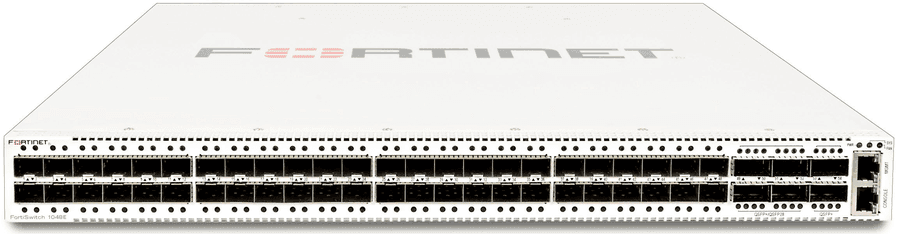
🔀 FortiSwitch FS-1024E vs FS-1048E
AI-powered analysis across 22 matched specifications


Performance Overview
Scores based on quantifiable specification values (1-10 scale)
Detailed Specifications
| Specification | FortiSwitch FS-1024E Fortinet | FortiSwitch FS-1048E Fortinet |
|---|---|---|
| Key Metrics | ||
| 10GE SFP+/SFP ports | 24 | 48 |
| Uplink ports | 2 × 100GE/40GE QSFP28/QSFP+ | 6 × 40GE QSFP+ or 4 × 100GE QSFP28 |
| Switching capacity | 880 Gbps | 1,760 Gbps |
| Forwarding rate | 1,309 Mpps | 1,518 Mpps |
| Form factor | 1U top-of-rack | 1U top-of-rack |
| Port density & uplinks | ||
| Access ports (10GE/1GE) | 24 | 48 |
| Maximum 100GE uplinks | 2 | 4 |
| Maximum 40GE uplinks | 2 | 6 |
| Total uplink bandwidth (100GE mode) | 200 Gbps | 400 Gbps |
| Forwarding performance | ||
| Switching capacity | 880 Gbps | 1,760 Gbps |
| Forwarding rate | 1,309 Mpps | 1,518 Mpps |
| Per-port headroom (capacity ÷ access ports) | ~36.7 Gbps/port | ~36.7 Gbps/port |
| Layer 2/3 & overlay | ||
| VXLAN | Yes | Yes |
| EVPN | Yes | Yes |
| Layer 3 routing | Yes | Yes |
| Dynamic routing | OSPF, BGP | OSPF, BGP |
| Management | ||
| FortiLink (managed from FortiGate) | Yes | Yes |
| Standalone CLI/GUI | Yes | Yes |
| FortiSwitch Manager / FortiCloud | Yes | Yes |
| Resilience & power | ||
| Redundant power supplies | Dual hot-swap | Dual hot-swap |
| Redundant fans | Hot-swap | Hot-swap |
| Front-to-back / back-to-front airflow | Yes | Yes |
Expert Analysis
The practical decision between the FS-1024E and FS-1048E is sizing, not capability. Both run the same FortiSwitchOS, support VXLAN/EVPN with OSPF and BGP, can be driven from a FortiGate via FortiLink or managed standalone, and ship with dual hot-swap PSUs and fans. The differences are port count and uplink fan-out: the 1048E doubles access ports from 24 to 48, doubles switching capacity from 880 Gbps to 1,760 Gbps, and offers up to 4 × 100GE (or 6 × 40GE) uplinks against the 1024E's 2 × 100GE.
The FS-1024E suits smaller racks, edge cabinets, or environments where you'd rather scale horizontally with more leaves than concentrate hosts. With 24 × 10GE downlinks and 2 × 100GE up, it gives a clean 1.2:1 oversubscription in a fully populated rack — fine for general virtualisation, mixed workloads, or a FortiGate-anchored security fabric where the switch is a downstream extension of the firewall.
The FS-1048E is the natural top-of-rack choice for denser server racks — typically 40+ hosts per cabinet — and for sites that want a 100GE spine without revisiting cabling later. The extra uplink flexibility (4 × 100GE vs 2) matters most when you're building EVPN-VXLAN fabrics or planning growth; it also avoids the trap of buying two 1024Es to cover one rack, which costs more in licences, U-space and management overhead than a single 1048E.
For UK buyers: pick the 1024E when access-port demand is genuinely under ~24 today and unlikely to double within the refresh cycle, or when you need a small leaf for a remote DC/colo cage. Pick the 1048E whenever you're building a new leaf-spine fabric, consolidating racks, or want headroom for 100GE spine growth — the cost-per-port and cost-per-Gbps almost always favour the 48-port model once you're past about 30 hosts.
Ready to proceed?
Want to compare different products or add more to this comparison?
Open Interactive Comparison Tool →