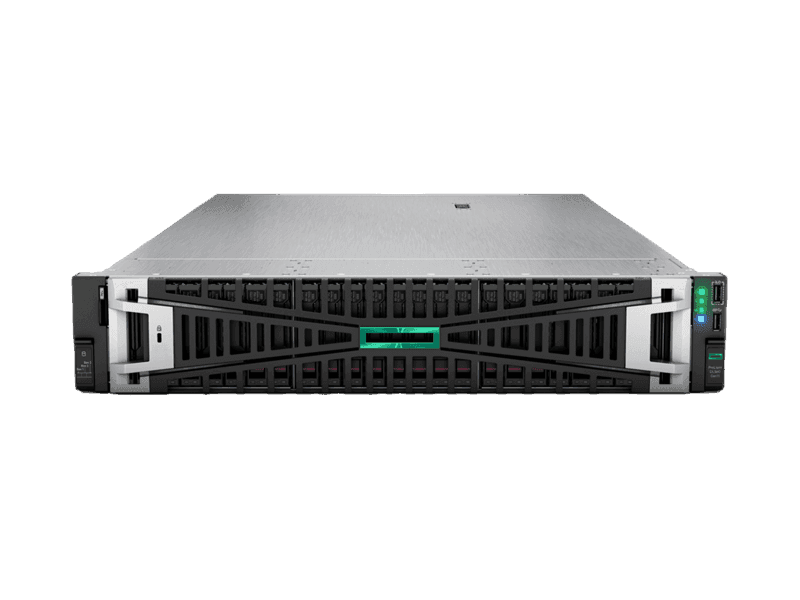
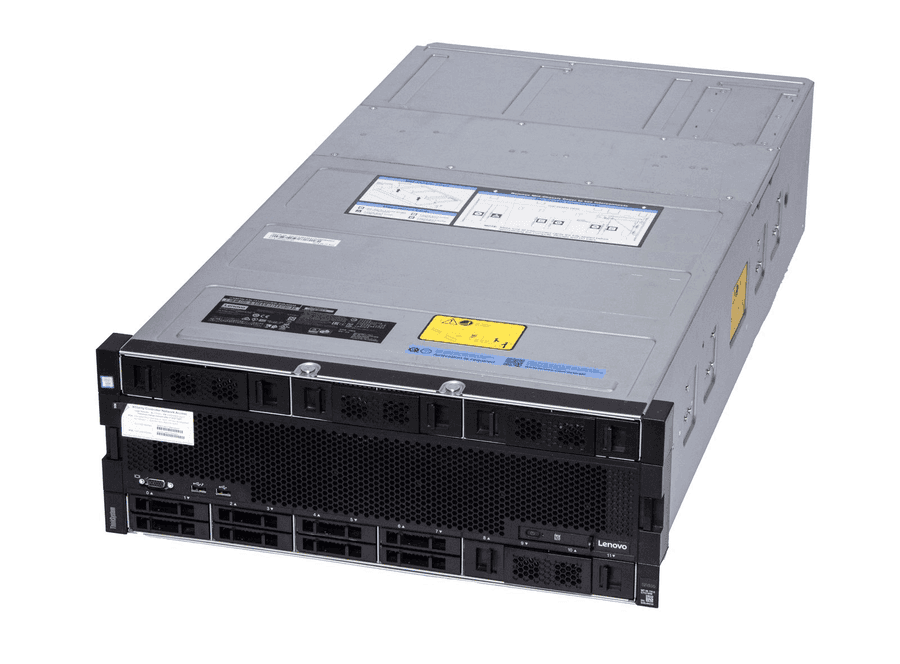
π₯οΈ HPE DL580 Gen12 vs Lenovo SR950 V3
AI-powered analysis across 19 matched specifications


Performance Overview
Scores based on quantifiable specification values (1-10 scale)
Detailed Specifications
| Specification | HPE ProLiant DL580 Gen12 HPE ProLiant | ThinkSystem SR950 V3 Lenovo ThinkSystem |
|---|---|---|
| Key Metrics | ||
| Form Factor | 4U rack-mountable, 4-socket (4P) | 8U Rack Server (2 Γ 4U modules) |
| Max Total Cores | 344 (4 Γ 86-core) | 480 (8 Γ 60-core) |
| Max Memory | 16 TB | 48 TB |
| Max PCIe Expansion Slots | 12 Γ x16 PCIe Gen5 + 2 OCP 3.0 | 24 Γ PCIe expansion slots |
| Max Processor Sockets | 4 | 8 |
| Compute | ||
| Processor | 2 or 4 Γ Intel Xeon 6 P-Core, 8β86 cores, up to 336 MB L3 cache, 4.0 GHz max | Up to 8Γ 4th Gen Intel Xeon Scalable (LGA 4677), up to 60 cores, 350W TDP |
| Memory | ||
| Memory | HPE DDR5 Smart Memory RDIMM / 64 DIMM slots (16 per processor, 16 DIMM channels per processor) / 16 TB (64 Γ 256 GB) at 6400 MT/s / Advanced ECC, ADDDC (HPE Fast Fault Tolerant Memory), online spare, mirroring | Up to 48 TB TruDDR5 4800 MHz (192 DIMM slots; up to 256 GB 3DS RDIMM per slot) |
| Storage | ||
| Storage Options | Up to 32 SFF NVMe or 32 EDSFF E3.S NVMe drives; optional front boot device | Hot-swap SAS/SATA/NVMe drive bays; M.2 boot drives |
| RAID Controllers | HPE MR416i-p, MR416i-o, MR408i-p, MR408i-o, MR216i-p, MR216i-o, MR408e-p | -- |
| Networking | ||
| Network | 1GbE to 200GbE via OCP 3.0 or PCIe adapter | -- |
| Expansion / PCIe | ||
| PCIe Expansion | Up to 12 Γ x16 PCIe Gen5 + 2 OCP 3.0 (rear) | Up to 24Γ PCIe expansion slots (distributed across 8-socket chassis) |
| Scale-Up Path | -- | Expandable 2β4β8 sockets with modular chassis upgrade |
| Management | ||
| Management | HPE iLO 7 Standard (FIPS 140-3 L3), HPE OneView Standard, HPE Compute Ops Management | XClarity Controller 2 (XCC2), Redfish; XClarity Administrator |
| Power | ||
| Power Supply | 1500W / 2400W / 3200W; 1+1, 2+2, or 3+1 hot-plug redundant HPE Flex Slot | N+N redundant hot-swap Platinum/Titanium PSUs |
| Physical / Environmental | ||
| Cooling | Air β high-performance hot-plug redundant fan kit | -- |
| High Availability | -- | PFA all subsystems; hot-swap drives, fans, PSUs; light-path diagnostics |
| Security | ||
| Security | HPE TPM 2.0, iLO 7 Security Enclave, FIPS 140-3 Level 3, CNSA 2.0 quantum-resistance | TPM 2.0, Root of Trust, Platform Firmware Resiliency, ThinkShield |
| Software & OS Compatibility | ||
| Operating Systems | Windows Server, VMware ESXi, RHEL, SLES, Ubuntu, Oracle Linux | Windows Server, RHEL, SUSE, Ubuntu, VMware ESXi |
| Warranty & Support | ||
| Warranty | 3/3/3 (3-year parts, 3-year labour, 3-year on-site) | 1- or 3-year CRU + Onsite NBD; optional mission-critical upgrades |
Expert Analysis
The HPE ProLiant DL580 Gen12 and Lenovo ThinkSystem SR950 V3 represent two distinct approaches to high-end enterprise computing. The DL580 Gen12 offers a more compact 4U form factor with newer Intel Xeon 6 processors featuring higher per-core performance (up to 86 cores per socket at 4.0 GHz) and PCIe Gen5 connectivity, making it particularly suitable for compute-intensive workloads like virtualisation, high-performance computing, and AI inference where single-thread performance and modern I/O bandwidth are critical. Its 16 TB memory capacity, while substantial, is complemented by advanced memory protection features and FIPS 140-3 Level 3 certified management security.
Conversely, the ThinkSystem SR950 V3 pursues an extreme scale-up strategy with its modular 8U design supporting up to eight processors and 48 TB of memory across 192 DIMM slots. This architecture is purpose-built for massive in-memory databases like SAP HANA and Oracle, where maximum memory capacity and linear scalability outweigh the need for the latest processor generation. The 24 PCIe slots provide exceptional expansion capability, though they're likely Gen4 rather than Gen5. The trade-off is significant rack space consumption and potentially higher power requirements for the full 8-socket configuration.
Value propositions differ substantially: HPE delivers cutting-edge technology in a denser package with superior security certifications, while Lenovo offers unparalleled scalability for specific mission-critical applications. Organisations should choose based on whether their priority is maximum memory capacity and processor count (SR950 V3) or the latest processor architecture, I/O technology, and security features in a more space-efficient design (DL580 Gen12).
Ready to proceed?
Want to compare different products or add more to this comparison?
Open Interactive Comparison Tool β